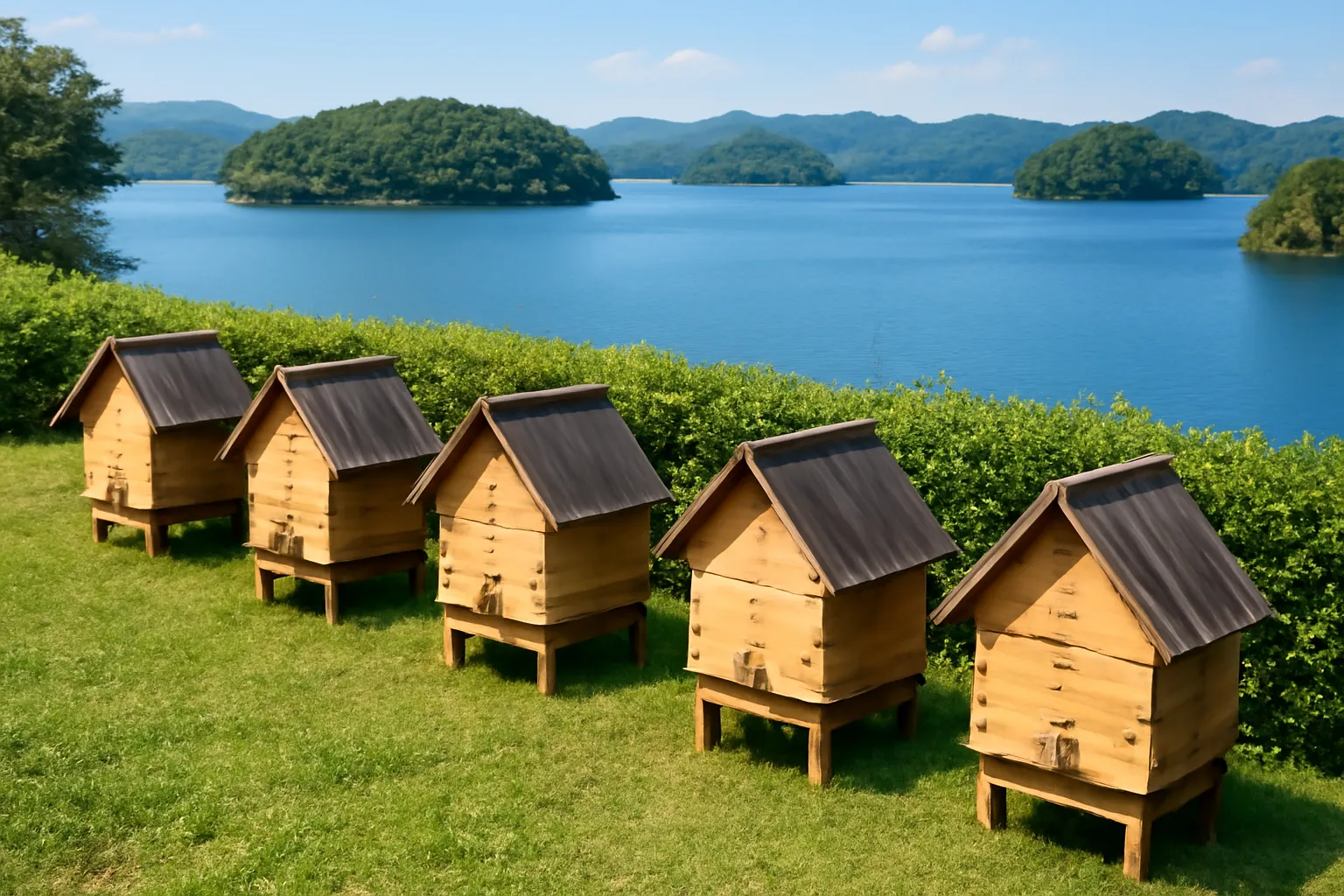
Windy Sites and Stingless Bee Hives Near a Lake
A windy site, such as an open slope above a lake, is hard on stingless bees because their foragers are tiny and are easily blown off course or grounded by gusts. The answer is shelter: put hives behind a hedge, trees or a wall, face the entrance away from the prevailing wind, fix the boxes so they cannot shift or fall, and make sure flowers are close enough that the bees do not need long exposed flights. With those in place, a lakeside site can work very well.
Our farm sits not far from Ta Dung lake, a large reservoir in the highlands of Lam Dong with forested islands scattered across it. The views are wide, and so is the wind. This article explains how wind affects small bees and what we and other keepers do about it.
How wind affects such small bees
A stingless bee forager is a fraction of the size of a honey bee. Small flyers have less momentum and are pushed around more easily by moving air. A breeze that a person barely notices can make a loaded forager struggle to reach the entrance, and stronger gusts can stop foraging entirely.
You can see this at the hive. On a calm warm day, bees leave and return in smooth lines. On a gusty day, returning foragers hover, drift sideways, land short of the tube and crawl the last bit, or give up and wait in the grass. Each failed approach costs energy, and a bee that ends up on cold, wet ground may not make it home.
Wind also changes what is available. Flowers dry out faster in wind, and some blossoms are battered or stripped by strong gusts. Shrubs on the exposed side of a hill may flower less generously than those in sheltered folds. Bees from a windy hive often have to work further or harder for the same load.
Then there is cooling. Moving air carries heat away from the hive walls, and in the cool highlands this adds to the challenge of keeping the brood warm. A hive on an exposed slope near water may be noticeably colder than one a short distance away in shelter.
None of this makes a lakeside site unusable. It means the site must be shaped to suit the bees, rather than chosen for the view.
Building shelter on a windy slope
Plant a hedge before the hives arrive. Living windbreaks take time to fill out. Planting first means the shelter is ready when the bees need it.
Choose flowering shrubs. A hedge that also flowers gives shelter and forage at once. Mix species so something is in bloom through more of the year.
Use a porous screen, not a solid wall. A hedge or slatted fence slows the wind. A solid wall can create turbulence and eddies on its sheltered side.
Place hives close behind the shelter. The calmest zone is usually just behind the windbreak. Too far away and the benefit fades.
Work with the landscape. Small dips, the lee side of a building or a line of trees may already offer shelter. Walk the site on a windy day to find it.
Avoid funnels. Gaps between buildings or along valleys can concentrate wind. Do not place hives at the mouth of such a channel.
Keep shelter from shading too much. In the cool highlands, a windbreak that also blocks the morning sun can leave hives cold. Balance wind protection with light.
Maintain the hedge. Trim it so it stays dense near the bottom where it matters, and keep it from touching hives where ants could cross.
Use temporary shelter while plants grow. A slatted panel or woven screen can protect the hives in the first season.
Check after storms. Strong storms can flatten young hedges or blow screens over. Walk the line after bad weather.
Plant forage nearby, not just shelter. Flowering plants close to the hives mean fewer exposed flights across open ground or water.
Which way should the entrance face?
There are two forces to balance in the highlands: the morning sun and the prevailing wind. Ideally the entrance faces towards the sun and away from the wind. When the two conflict, shelter usually comes first, because a warm entrance is useless if foragers cannot land at it.
Learn the local wind before deciding. Near a large lake, winds often follow a daily pattern, and they can shift between seasons. Spend a few days, at different times, noticing which way grass bends and where you feel the gusts. Locals who fish or farm by the water usually know the pattern well and are worth asking.
If the hives must face into the wind for some reason, a small baffle or overhang in front of the entrance can help, as can placing the hive lower on its stand where the hedge shelters it most. Never point an entrance straight down a slope that funnels wind upward.
Once a hive is placed and the colony is established, do not keep rotating it. Foragers learn their approach, and changing direction repeatedly confuses them.
Securing hives against gusts and storms
Strap every box to its stand. A strap or cord around the box and stand stops it lifting or sliding in strong gusts.
Fix the stand to the ground. Stakes, a heavy base or digging the legs in prevents the whole stand toppling.
Weigh down the roof. Lightweight roofs blow off. A stone or tie-down keeps them in place.
Keep stands low enough. A taller stand catches more wind. Find a height that is comfortable to work at but not exposed.
Avoid hanging hives in open wind. Hives hung from branches can swing and knock in storms, which disturbs the nest.
Check the lid seal. Wind drives rain sideways into gaps that stay dry in still weather.
Do not open hives on windy days. Cold air rushing into the nest and bees blown about make inspections harder and riskier.
Watch for broken entrance tubes. Gusts and debris can damage the resin tube. The bees will rebuild, but note it.
Clear branches that could fall. Trim dead limbs above the hives before the stormy months.
Prepare before forecast storms. When a big storm is coming, check straps and roofs, and move the most exposed hives to shelter only if you can do so gently and in one go.
Inspect after the storm. Look for shifted boxes, leaks and damage as soon as the weather is calm and dry.
What a lakeside site gives back
After all the talk of wind, it is fair to ask why anyone would keep bees by a lake. Water is one reason. Bees need it, especially in the dry season, and damp margins along a shore or around inlets offer easy drinking spots that do not dry up.
Vegetation is another. Lake margins and the slopes above them often hold a mix of grasses, shrubs, scattered trees and garden plots, and around Ta Dung the forested islands and shores add more variety. Where the shore is sheltered, flowering plants can be plentiful.
There is also the human side. A lake draws visitors, and a well-kept apiary near the water is a quiet, pleasant place to show people what stingless bees are and how little they need from us: shelter, flowers, clean surroundings and to be left mostly alone.
The trick is not to choose between the lake and the bees, but to find the folds and corners of the landscape where both can be had. A hive ten steps behind a hedge can have the same view as one on the open crest, without the wind.
Frequently asked questions
Can stingless bees fly in strong wind?
Only with difficulty. Their small size makes them easy to blow off course, so foraging slows or stops on very windy days. Sheltered hives lose far fewer flying hours.
What is the best windbreak for a bee hive?
A porous barrier such as a dense hedge or slatted fence works better than a solid wall, because it slows the wind without creating strong turbulence. Flowering shrubs add forage at the same time.
Is it good to keep stingless bees near a lake?
It can be, as lakes often have water and vegetation nearby. The main concerns are wind exposure and long flights over open water, so shelter and forage close to the hives matter.
Should the hive entrance face away from the wind?
Yes, in most cases. Facing the entrance away from the prevailing wind lets foragers land more easily. If you can also catch morning sun, all the better.
How do I stop my hive from blowing over?
Strap the box to its stand, anchor the stand to the ground, weigh down or tie the roof, and avoid very tall or swinging setups on exposed sites.
Can I visit the hives near Ta Dung lake?
Visitors are welcome at our farm, Ong Moc, at 68 Thac Ba Tang road, Ta Dung commune, Lam Dong. Contact us first on +84 818 83 22 83 by phone or Zalo so we can suggest a calm, dry time.
Written by the team behind a working stingless bee farm about 40 km from Ho Chi Minh City, Vietnam. Articles come from day-to-day work at the farm; technical figures are stated as ranges, not promises.
About the team →
Stingless Beekeeping in the Central Highlands of Vietnam
Stingless bees do well in the Central Highlands, but the cool mornings, long wet season and coffee bloom change the work: drier hives, better roofs, a

When Do Stingless Bees Start Flying in the Morning?
Stingless bees start flying once the air has warmed and light reaches the hive; on misty highland mornings that can be well after sunrise. Late, slow
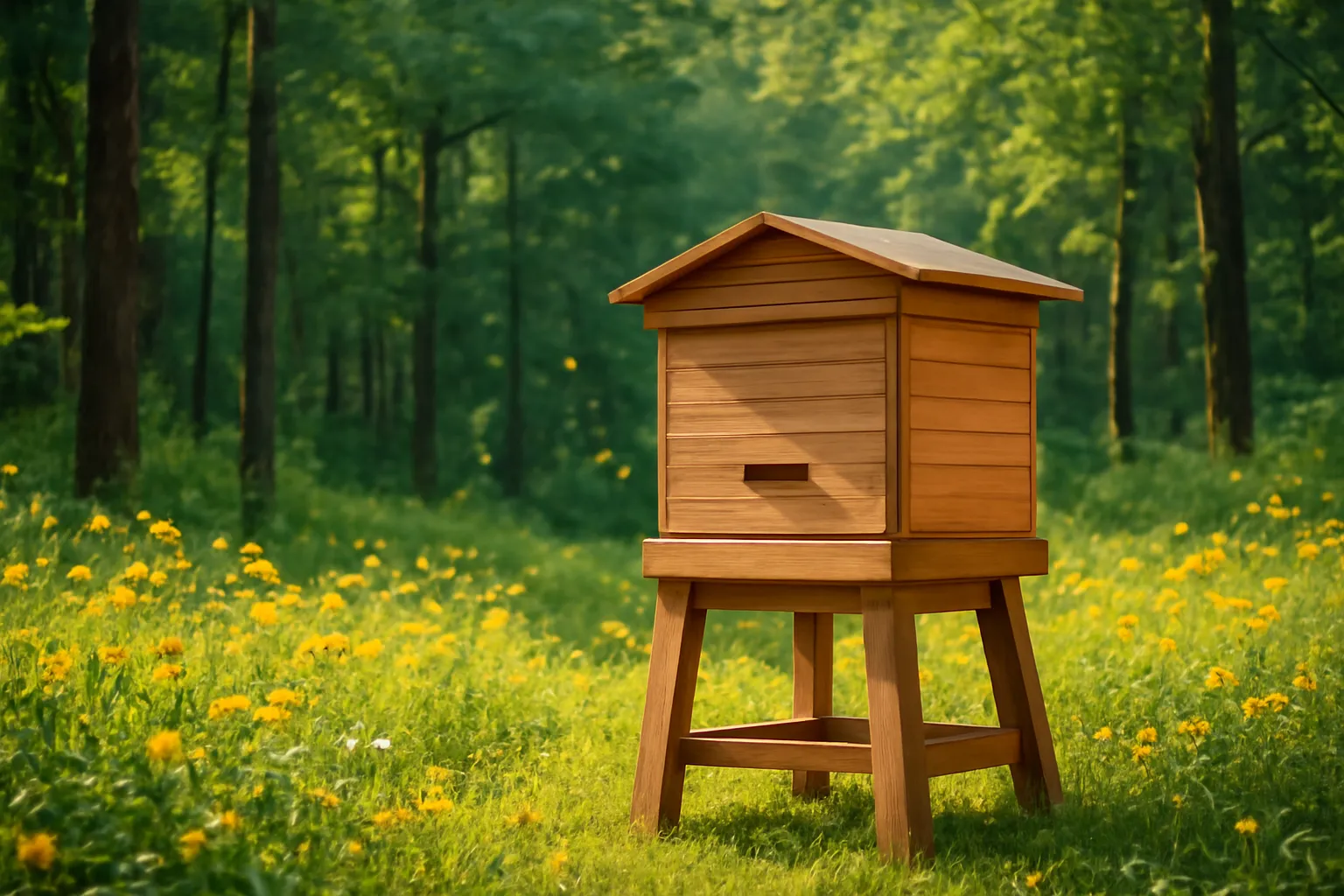
Placing Stingless Bee Hives Near a Forest Edge
The best place for stingless bee hives near forest is the edge, not deep inside: morning sun, mixed flowers and resin trees, shelter from wind, and le
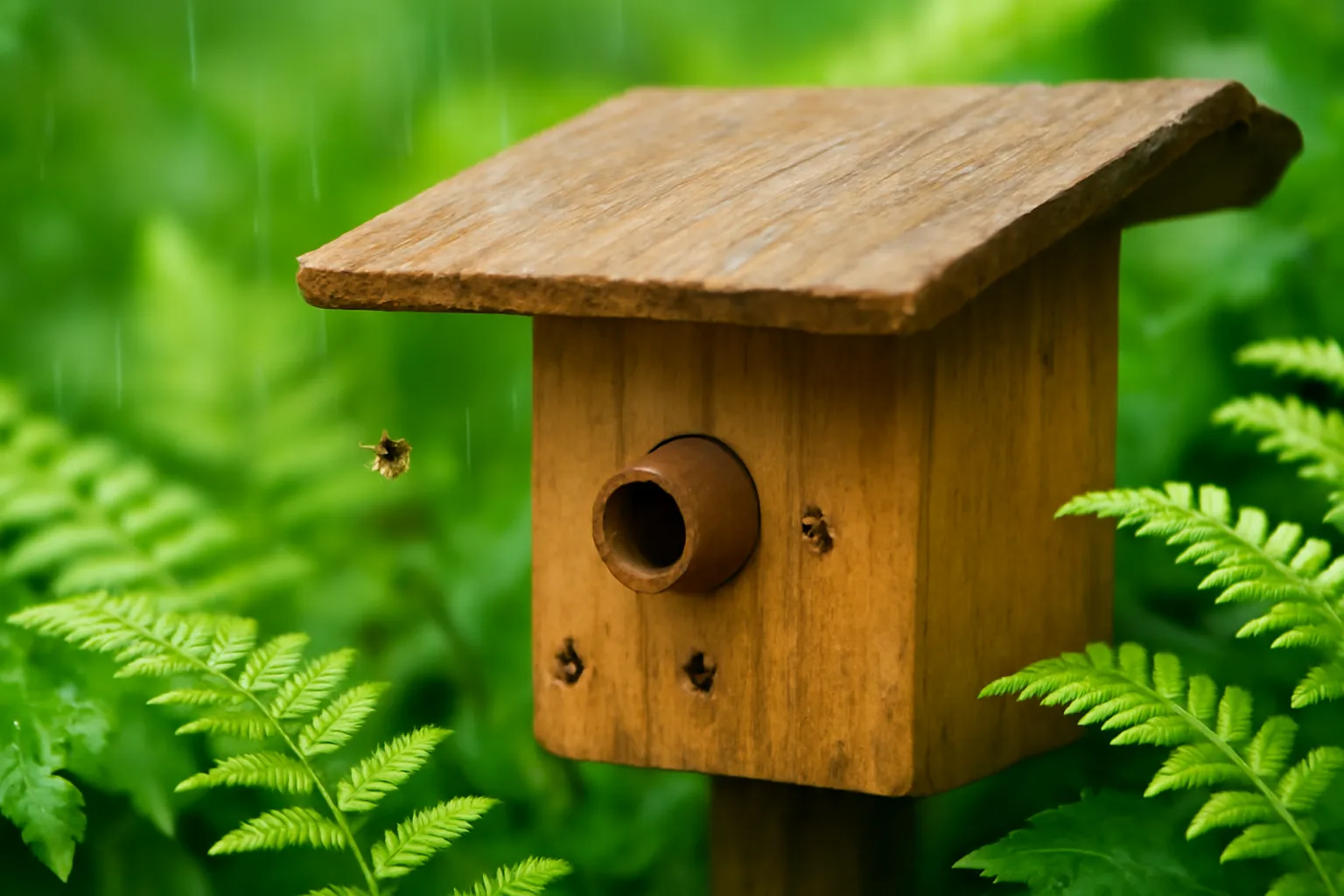
Condensation and Humidity in a Stingless Bee Hive
Condensation forms when warm, moist air from the colony meets a cold lid. In wet highland months, a thicker or insulated lid, a wide roof and a slight
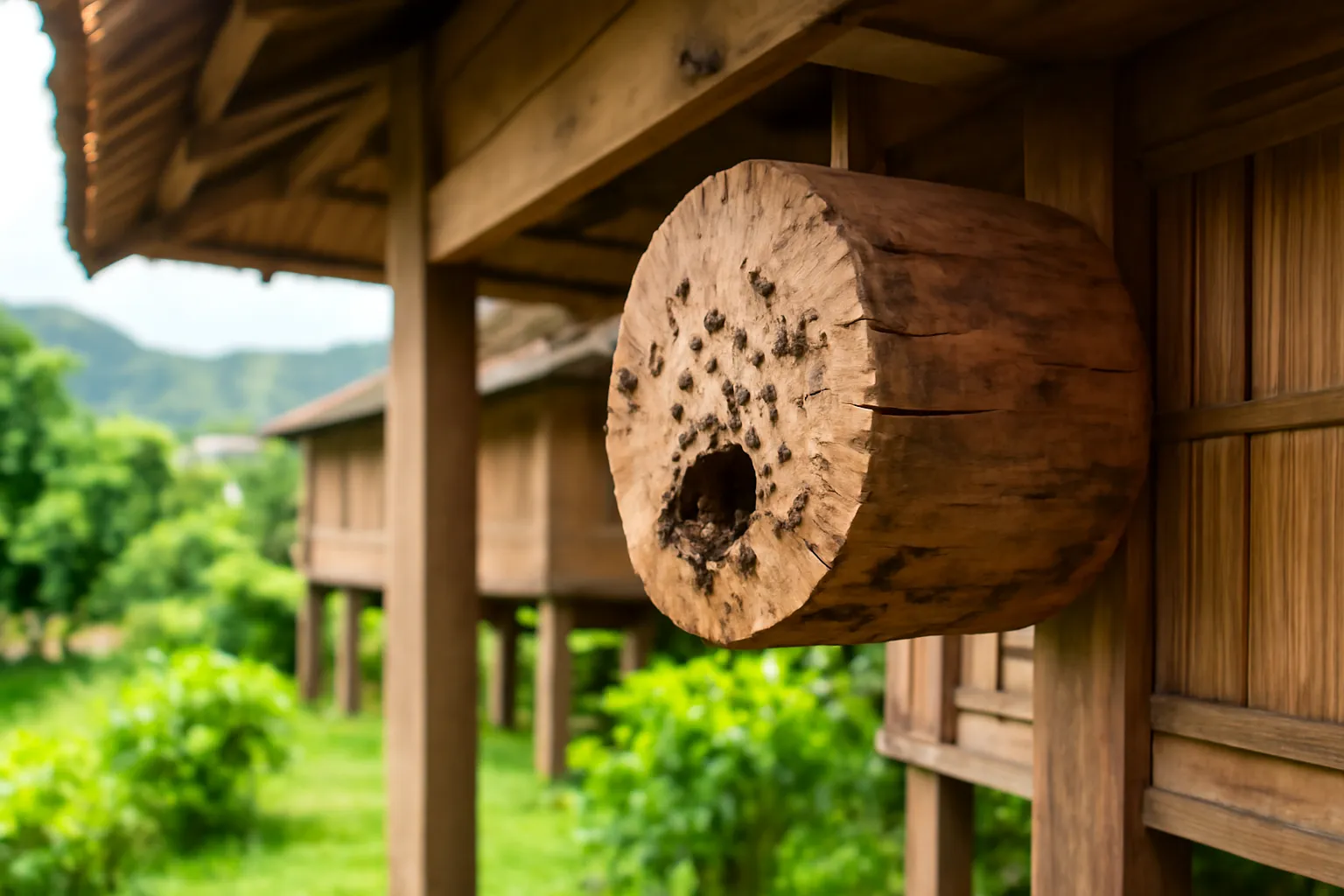
Traditional Stingless Bee Log Hives in Vietnam
Before wooden boxes, rural households in Vietnam kept stingless bees in hollow logs and bamboo tubes hung under the eaves. Those hives taught keepers
 ›
×
›
×

MoraBee is the international name of Ong Moc, a stingless bee farm in Ta Dung, Lam Dong, among forest and coffee gardens: unblended honey in clean jars, starter colonies, and farm visits.
Vietnamese stingless bee honey from the highlands
A brand by Tên Miền Đẳng Cấp
© 2026 MoraBee. All rights reserved. · Copyright · OD-3864-C503