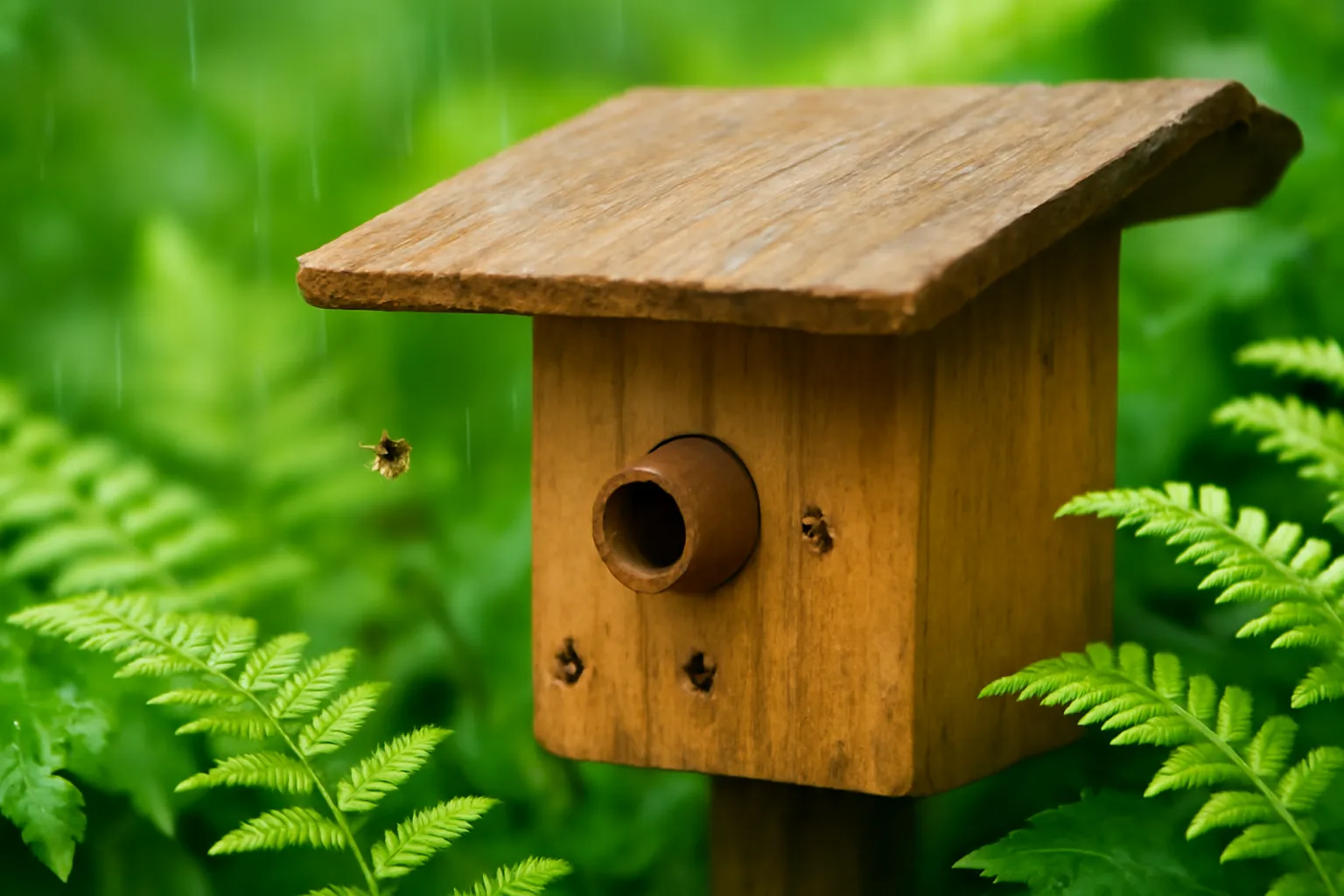
Condensation and Humidity in a Stingless Bee Hive
Condensation inside a stingless bee hive forms when warm, moist air from the colony meets a cold surface, usually the underside of the lid, and turns to droplets. A little moisture is normal and the bees manage it; persistent dripping onto the nest, wet walls and mould are signs the box needs help. In cool, wet places such as the highlands of Lam Dong, the fixes are mostly about keeping the lid warmer and the rain off, not about cutting big ventilation holes.
We have learned this through several rainy seasons at our hives near Ta Dung, where clouds can sit on the hills for days and the drizzle seems to come sideways. What follows explains why condensation happens, how to tell harmless dampness from a real problem, and what to change.
Where the water comes from
A stingless bee colony is a warm, living thing in a box. The bees keep their brood area warmer than the outside air on cool days, and the nest contains nectar being ripened into honey, which gives off moisture as it thickens. All that warm, humid air rises to the top of the box. When it touches a lid that is colder than the air inside, the water vapour condenses, just as it does on a cold glass in a warm room.
In the hot lowlands this is a minor issue, because the lid is usually warm. In the highlands, nights and wet days are cool, the lid sits exposed to the sky, and the difference between inside and outside is larger. Thin wooden or plastic lids cool quickly and are the most common culprits.
There is also water that comes from outside. Rain driven by wind can creep in through gaps between lid and box, run down the walls and soak the bottom. Wood that stays wet for weeks wicks moisture inward. It is worth separating the two causes, because condensation is solved by changing temperatures and air, while leaks are solved by changing the roof and the fit.
Stingless bees are not helpless. They coat the inside of the box with resin and cerumen, build the involucrum (a soft, layered sheath of cerumen around the brood) that helps hold warmth, and seal cracks they do not want. A colony in a well-made, dry box handles a lot of humidity on its own. The keeper's job is to give it a box that does not work against it.
Is the damp harmless or a problem?
A few droplets under the lid. Common in cool, wet weather and usually harmless if the nest below stays dry and the bees are active.
Water dripping onto the brood. This is a problem. Brood that is repeatedly dripped on can chill or spoil. Act soon.
Wet walls running to the floor. Water collecting at the bottom suggests either heavy condensation or a leak. Find out which.
White or green mould on the lid or walls. Mould on the inside of the box shows persistent damp. Strong colonies may contain it; weak ones are more at risk.
Mould on pots or brood. More serious, often linked to a weakened colony. Consider whether the colony needs a smaller, drier space or other help from an experienced keeper.
Soft, darkened wood. Wood that stays wet begins to rot. Plan to replace or protect the box before it fails.
Bees clustering away from one wall. Bees sometimes avoid the wettest part of the box. That wall may be leaking or exposed to driven rain.
Sour or fermented smell. Damp combined with spilt or damaged honey pots can ferment. Look for the source and remove spoiled material carefully.
Small flies around the box. Damp, damaged material attracts pests that exploit weak colonies. Treat it as a reason to check the hive.
Dry inside after a wet week. The best sign of all. Whatever you are doing, keep doing it.
Normal traffic despite drizzle breaks. If foragers head out whenever the rain pauses, the colony is coping well.
Ventilation without chilling the brood
The instinct of many new keepers, especially those who learned with honey bees, is to add ventilation holes. For stingless bees in a cool, wet climate, this deserves caution. The colony works to keep its brood warm, and a draught through the box can carry away heat faster than the bees can make it. Stingless bees also tend to seal openings they did not choose, sometimes spending resin and effort on holes the keeper drilled.
A better first step is to warm the lid rather than ventilate it. A thicker wooden lid, or a lid with an extra layer on top, stays closer to the temperature inside the box, so less water condenses on it. Some keepers place a thin board or a piece of breathable material between the nest and the lid; the moisture forms there, or not at all, instead of dripping directly onto the brood.
If a box truly needs more air, small openings protected by fine mesh, placed high and away from the brood area, are gentler than large holes. Watch how the bees respond. If they quickly seal the openings, the colony is telling you it prefers the box closed.
Above all, avoid opening the hive often in the wet season. Each inspection on a cool, damp day lets in cold air and moisture. Choose warm, dry spells around midday, and keep the visit short.
Practical fixes before and during the rainy season
Fit a roof wider than the box. An overhang on all sides throws rain past the walls. It is the single most effective change for driven rain.
Tilt the hive slightly forward. Any water that gets in can run towards the entrance and out, instead of pooling inside.
Raise the stand. Lifting the hive above splash height keeps the bottom dry and makes ant barriers easier to maintain.
Seal outside gaps, not inside ones. Close cracks between lid and box from the outside. Leave interior sealing to the bees.
Use a thicker lid. A heavier or layered lid stays warmer and collects less condensation.
Check boxes before the rains. At the end of the dry season, look for warped lids, cracks and soft wood, and repair or replace them while the weather is still kind.
Do not wrap hives in plastic. Plastic sheeting traps moisture against the wood and can make things worse. A proper roof is better.
Give up some shade. In the wet season, a hive under heavy shade may never dry. Trim branches so some sun reaches the roof.
Leave enough honey before the rains. A colony with good stores can stay inside through long wet spells without weakening.
Keep visits short and timed well. Inspect on warm, dry middays and close the box quickly.
Record wet-season problems. Note which hives drip and which stay dry. The difference often lies in the box, the roof or the position, and the notes show it.
Ask before major changes. If a colony is weak and damp, talk to an experienced keeper before transferring it or making big modifications.
Why the highlands make this a bigger issue
Readers who keep stingless bees in Saigon or other hot lowlands may never see real condensation. Their problem is heat. In Lam Dong and similar uplands, the balance flips: cool nights, long cloudy spells and rain that can last for days mean the inside of a box can stay humid for weeks at a time.
Wood behaves differently too. In the dry season a box dries out and joints open slightly; in the wet season the same wood swells. A lid that fitted perfectly in March may sit unevenly by the middle of the rains, leaving a gap on one side. That is why a check of every lid at the start of the wet season pays off.
The colony itself also changes through the year. Before the rains, when forage is plentiful, the nest is full and active, and there is more nectar being dried inside. During long wet spells the bees fly less and rely on their stores. A strong, well-stocked colony generates enough warmth to keep its core dry; a weak one struggles, which is another reason to go into the rains with strong colonies and full pots.
None of this means the highlands are a poor place for stingless bees. It means the box matters more here, and that a little carpentry before the rains does more good than any amount of worrying during them.
Frequently asked questions
Do stingless bees need ventilation holes in their hive?
Usually not many. In cool, wet climates they keep the brood warm by keeping the nest fairly closed, and they often seal holes keepers drill. Warming the lid and keeping rain out generally helps more than adding ventilation.
Why is there water inside my stingless bee box?
Either warm, moist air from the colony is condensing on a cold lid, or rain is getting in through gaps. Droplets under the lid point to condensation; water running down walls from one side often points to a leak.
Can humidity kill a stingless bee colony?
High humidity alone rarely does, as stingless bees evolved in humid tropics. Persistent dripping onto the brood, mould and rotting wood can weaken a colony over time, especially one that is already small.
Should I cover my hive with plastic in the rainy season?
It is better not to wrap the hive itself, because plastic traps moisture against the wood. A separate roof with a wide overhang, raised slightly above the lid, keeps rain off while letting the box breathe.
How often should I check a stingless bee hive in the wet season?
Watch the entrance whenever you pass, but open the box only when there is a reason, on a warm, dry part of the day. Frequent openings in cool, damp weather cost the colony heat and let moisture in.
Written by the team behind a working stingless bee farm about 40 km from Ho Chi Minh City, Vietnam. Articles come from day-to-day work at the farm; technical figures are stated as ranges, not promises.
About the team →
Stingless Beekeeping in the Central Highlands of Vietnam
Stingless bees do well in the Central Highlands, but the cool mornings, long wet season and coffee bloom change the work: drier hives, better roofs, a

When Do Stingless Bees Start Flying in the Morning?
Stingless bees start flying once the air has warmed and light reaches the hive; on misty highland mornings that can be well after sunrise. Late, slow
Placing Stingless Bee Hives Near a Forest Edge
The best place for stingless bee hives near forest is the edge, not deep inside: morning sun, mixed flowers and resin trees, shelter from wind, and le
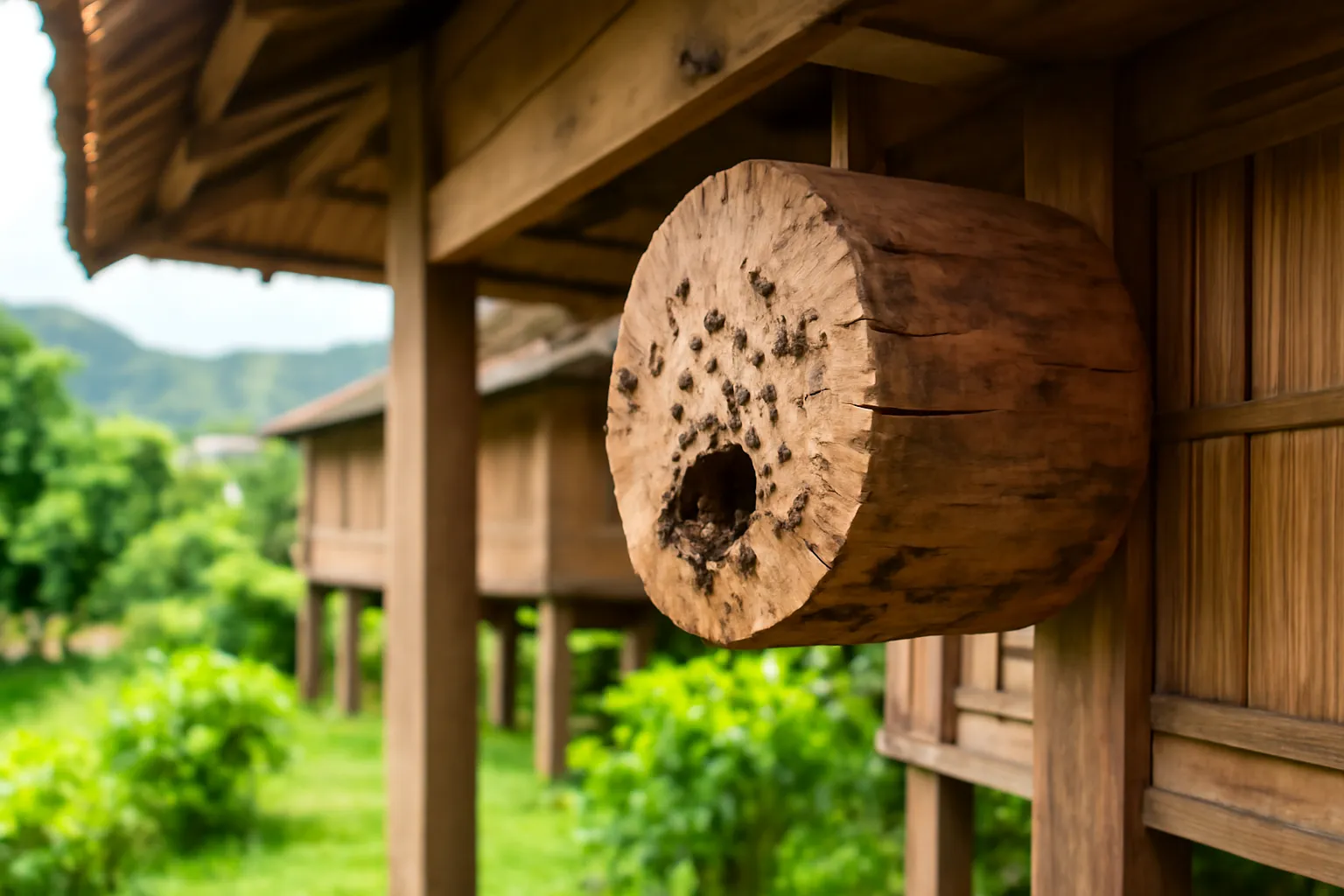
Traditional Stingless Bee Log Hives in Vietnam
Before wooden boxes, rural households in Vietnam kept stingless bees in hollow logs and bamboo tubes hung under the eaves. Those hives taught keepers

Windy Sites and Stingless Bee Hives Near a Lake
Strong lakeside wind makes life hard for tiny stingless bee foragers. Shelter hives behind a hedge, face entrances away from the prevailing wind, stra
 ›
×
›
×

MoraBee is the international name of Ong Moc, a stingless bee farm in Ta Dung, Lam Dong, among forest and coffee gardens: unblended honey in clean jars, starter colonies, and farm visits.
Vietnamese stingless bee honey from the highlands
A brand by Tên Miền Đẳng Cấp
© 2026 MoraBee. All rights reserved. · Copyright · OD-3864-C503