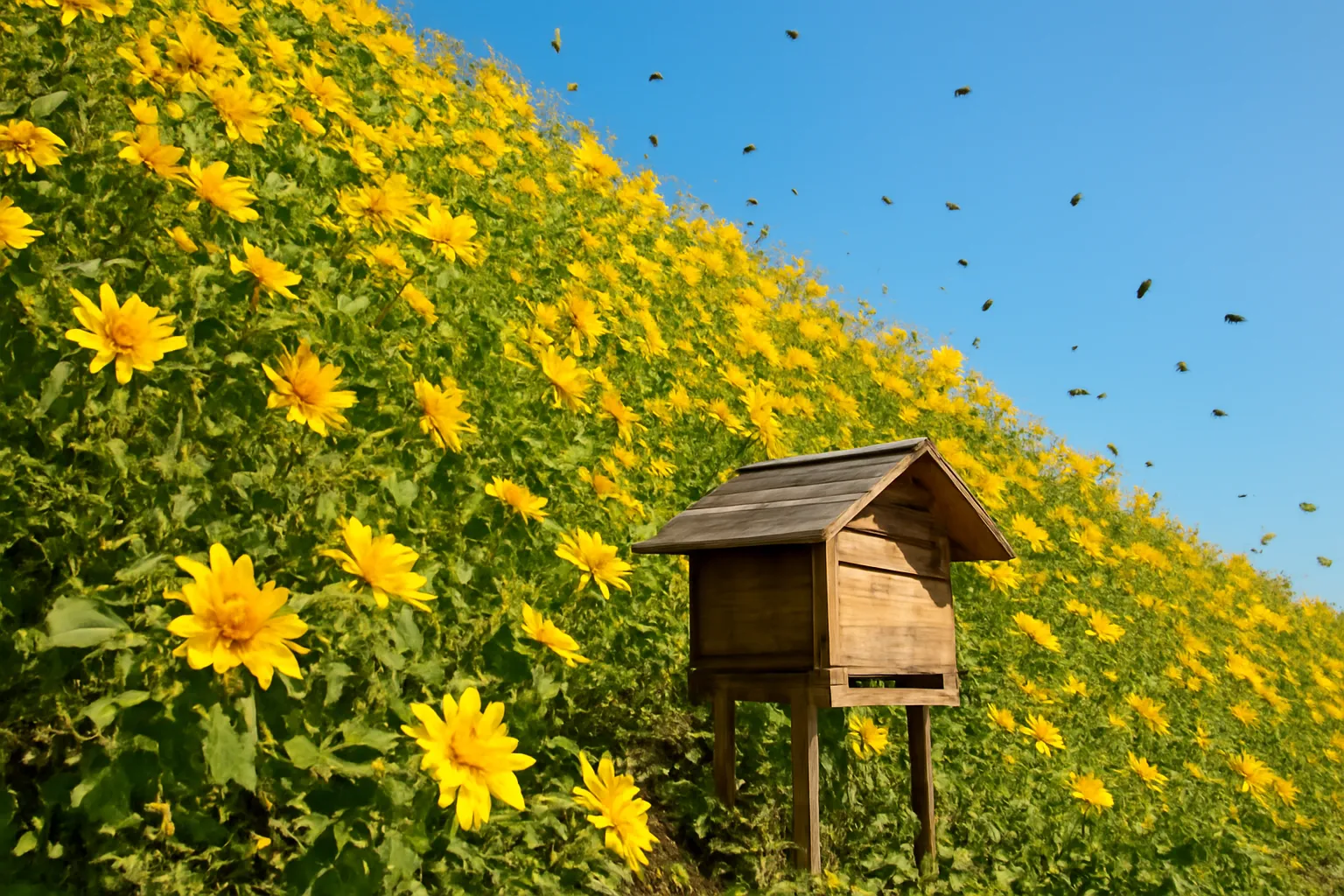
Wild Sunflower Season in the Highlands: Tithonia and Bees
Wild sunflower, known in Vietnam as dã quỳ and to botanists as Tithonia diversifolia, blooms across the highlands as the rainy season winds down, typically from around October into December depending on the year and the place. Stingless bees visit it eagerly, mostly for its abundant pollen. For colonies that have spent weeks indoors waiting out the rain, it arrives at exactly the right time.
Travellers know the season from photos of yellow hillsides around Da Lat. Keepers know it differently: as the moment hives start to fill out again. This article covers where the plant comes from, how bees use it, what to expect in the hive, and a few habits that help colonies get the most from the yellow weeks.
A garden plant that went wild
Tithonia diversifolia is not native to Vietnam. It comes from Mexico and Central America and was brought to many tropical countries as an ornamental and a green manure plant. In the Central Highlands it found the conditions it likes: disturbed ground, roadsides, field edges and slopes with plenty of rain followed by sun. Today it grows in dense stands that can reach well above head height.
Locals have their own relationship with it. Some value it as a marker of the season and of home. Some farmers cut it to mulch coffee or vegetables, because the leaves break down quickly. Others treat it as a weed that takes over fallow land. All of these views are fair, and none of them change the fact that for bees, a hillside of dã quỳ is a large and generous source of food.
The flowers look like small sunflowers, with bright yellow rays around a darker yellow centre. That centre is packed with many tiny florets, each producing pollen and a little nectar. Because the florets open in sequence over several days, a single flower head keeps offering food for a while, and a stand of plants flowers for weeks rather than days.
The exact timing shifts. In a year when rain stops early, blooms may start sooner; when rain lingers, the season may slip later. Higher and lower places differ too. A keeper who notes the first yellow on the road near the hives each year soon has a better calendar than any guidebook.
How bees use wild sunflower
Pollen is the main prize. Tithonia produces plenty of bright yellow pollen, and stingless bee foragers return with loads that are noticeably yellow-orange.
Nectar is a smaller share. Each tiny floret offers only a small amount of nectar, so the plant is more a protein source than a big honey flow for small bees.
Many visitors at once. Honey bees, wild bees, butterflies and beetles all work the same flowers, so a stand of Tithonia is a busy, shared place.
Small bees reach the florets easily. The open, flat flower head lets tiny stingless bees land and walk across it, reaching florets without needing a long tongue.
Morning is busiest. Bees tend to forage most in the warmer morning hours when the flowers are fresh and pollen is freshly released.
Stands near hives matter most. Because stingless bees fly short distances, the plants growing on the nearest slope count for far more than a famous hillside across the valley.
Pollen feeds the brood. Young bees are raised on pollen mixed with nectar; plenty of it allows the queen to lay more and the colony to grow.
Stored pollen pots fill. In a hive with a viewing lid, you may see the colony build and fill more of the cerumen pots it uses for pollen during the season.
It overlaps other forage. Other late-season wild flowers often bloom at the same time, and the bees mix sources rather than working Tithonia alone.
Cut stands lose their value. Roadside crews and farmers often slash Tithonia; a stand cut in full bloom vanishes as a food source overnight.
It fills a gap. In many highland places it bridges the end of the rains and the start of the dry season, before the coffee bloom arrives.
Why keepers look forward to the yellow weeks
The rainy months are hard on stingless bees in the highlands. Long spells of cloud and rain keep foragers inside, stores shrink and some colonies lose strength. By the time the weather clears, many hives are smaller than they were in the dry season. What they need most at that point is protein to raise new bees, and Tithonia supplies exactly that.
Within a few weeks of a good bloom, a keeper often sees the difference: more bees at the entrance, more activity on fine mornings, and a hive that feels fuller. That rebuilding sets the colony up for the dry season and the coffee bloom that follows. A colony that goes into coffee strong gathers far more than one still recovering.
People sometimes ask if the season produces a special yellow honey. For stingless bees, we would not promise that. Because the plant gives more pollen than nectar to small bees, and because nectar from other flowers is coming in at the same time, the honey stored during these weeks is usually a mix. Its taste can be pleasant and mild, but we prefer to describe what is in the jar honestly rather than sell it under a flower name.
There is also a quieter reason keepers like the season. After weeks of worrying about wet hives, it is simply good to stand by a slope of yellow flowers and watch tiny bees going about their work in the sun.
Making the most of the season
Leave stores in the hive. Do not harvest at the end of the rains; colonies need what they have to rebuild, and taking honey now slows recovery.
Keep the stand dry. Rains can still return in bursts; a small roof over each hive keeps the box dry as the colony expands.
Watch pollen colour. Bright yellow loads at the entrance tell you the bees have found Tithonia; it is a simple, no-disturbance way to follow the season.
Avoid opening too often. A rebuilding colony is busy; one careful check is better than several curious ones.
Ask before slashing. If you or your neighbours plan to cut Tithonia for mulch, cutting after the main bloom keeps the bees fed and still gives you the mulch.
Leave a strip uncut. Even a single strip of flowering plants near the hives can feed a small colony through the weeks.
Look out for sprays on roadsides. Some places clear roadside vegetation with herbicides; knowing when helps you anticipate a sudden drop in forage.
Plan splits for later. If you want to divide a colony, wait until it has clearly rebuilt rather than splitting at the very start of the bloom.
Record first and last flowers. Write down when yellow first appears near your hives and when it fades; after a few years you can plan around it.
Do not plant it carelessly. Tithonia spreads easily; if you plant it for bees, keep it where it will not take over land you need for other crops.
Think of what follows. After Tithonia fades there may be a short gap before coffee; protecting other flowering plants helps smooth it.
Where wild sunflower fits in the highland bee year
It helps to see Tithonia as one link in a chain rather than a season on its own. Through the long rainy months, forage is patchy and flying weather is scarce. As the rains thin out, wild sunflower and other late flowers open on roadsides and field edges. Then, as the dry season sets in and the land browns, there is often a quieter gap. After that, depending on when growers water their gardens, the coffee bloom arrives.
Each link prepares the colony for the next. Pollen from Tithonia builds up the young bees that will be foragers when coffee flowers. A colony that misses the yellow weeks, perhaps because every stand nearby was cut, can still recover, but it starts the coffee season on the back foot.
This is why highland keepers think about the whole landscape around a hive, not just the famous blooms. Forest trees, fruit orchards between coffee rows, field-edge weeds and garden flowers each fill a small part of the year. The aim is not a single spectacular flow but a sequence with as few empty weeks as possible.
For a visitor to Ta Dung in the yellow season, it can be worth looking beyond the postcard slopes. Watch a single flower head for a minute and you may see several kinds of insects sharing it, including tiny dark stingless bees that most people never notice. That small scene says more about the highlands than any wide photograph.
Câu hỏi thường gặp
When does wild sunflower bloom in Lam Dong?
Usually from around October to December, as the rainy season ends. The timing shifts with the weather each year and differs between higher and lower places, so the first flowers near your own hives are the best guide.
Do stingless bees make honey from Tithonia?
They take some nectar from it, but for small bees the plant is mainly a pollen source. Honey stored during the season usually mixes nectar from several plants, so it is rarely a pure wild sunflower honey.
Is wild sunflower invasive in Vietnam?
It is not native and it spreads readily on disturbed ground, roadsides and fallow fields, so many people see it as weedy. It also has uses as mulch and green manure. Planting it deliberately is best done where its spread will not cause problems.
Is Tithonia safe for bees?
The plant itself is widely visited by many kinds of bees without obvious harm. The bigger risk in the season is from sprays used nearby, so it is worth knowing when roadsides or fields around your hives are treated.
Should I move my hive closer to wild sunflowers?
Moving a stingless bee colony is stressful and best done in calm periods, not at the start of a bloom. If Tithonia grows within a short walk of the hive, the bees will usually find it without being moved.
Written by the team behind a working stingless bee farm about 40 km from Ho Chi Minh City, Vietnam. Articles come from day-to-day work at the farm; technical figures are stated as ranges, not promises.
About the team →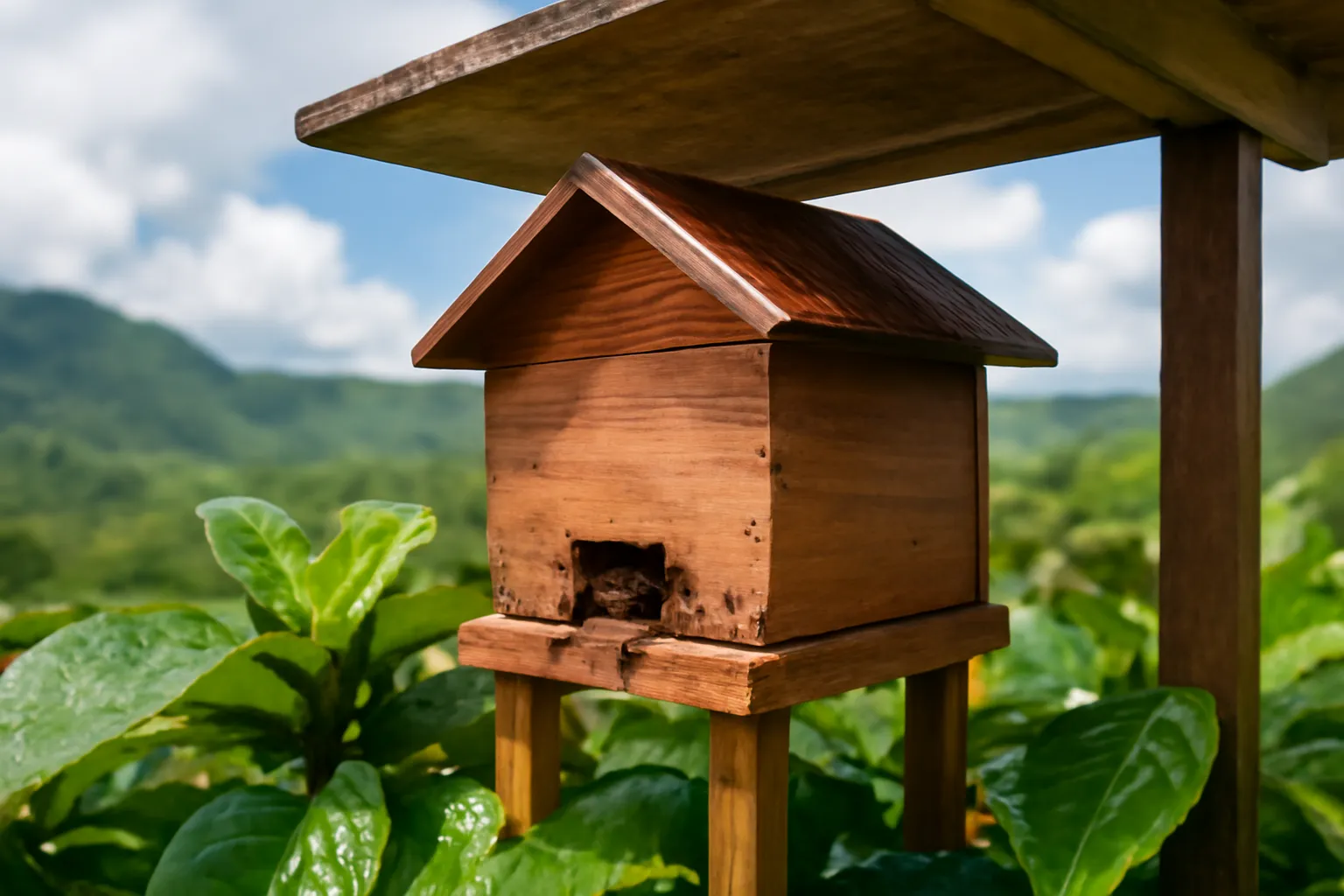
Lean Weeks in the Highland Rainy Season: Stingless Bee Dearth
In the highland rainy season, days of continuous cloud and rain can keep stingless bees inside and leave colonies short of food. Watch for low traffic
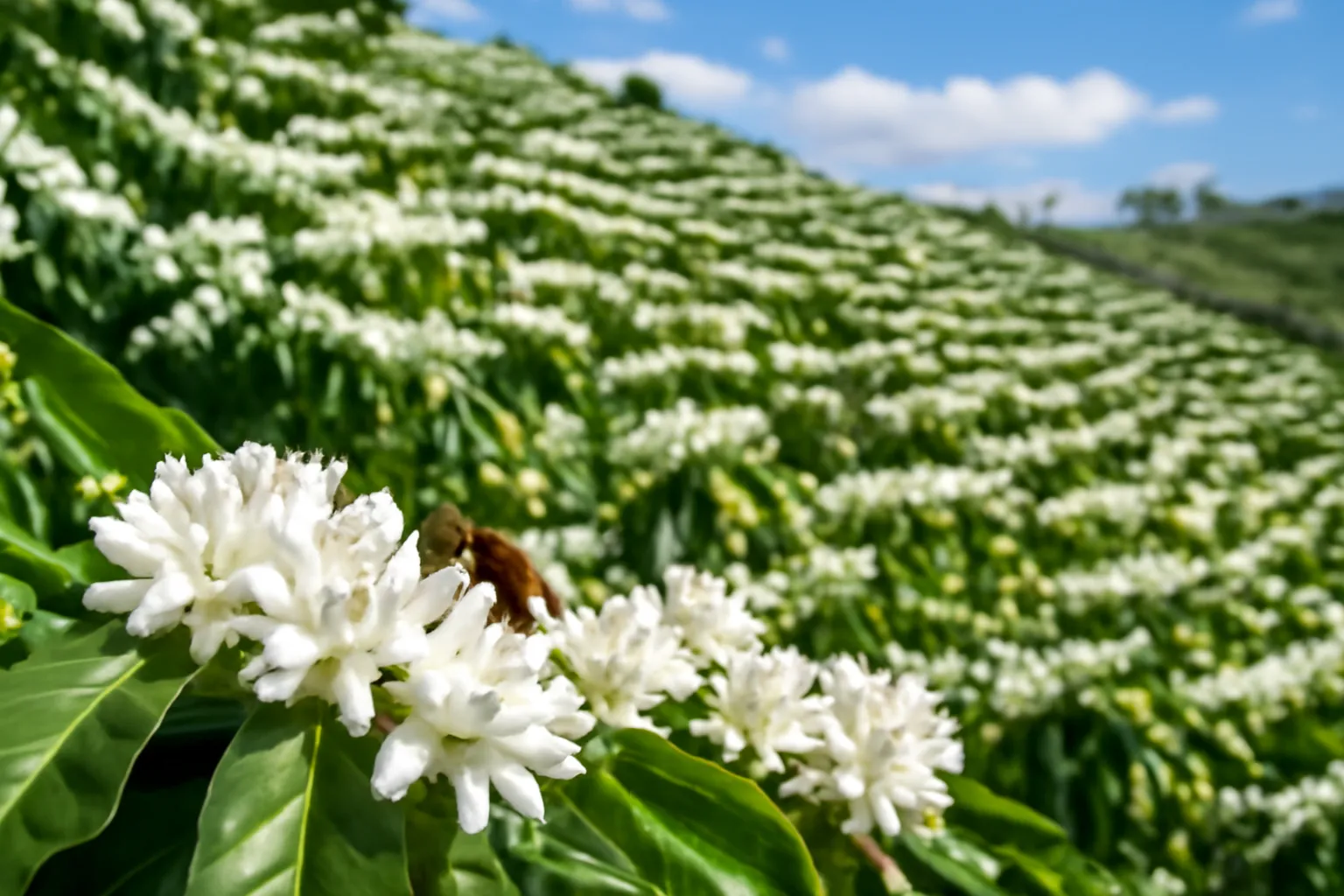
Coffee Flowering Season and Stingless Bees in the Highlands
In the Central Highlands coffee blooms once the dry season breaks, usually early in the year, and each flush lasts only a few days. Stingless bee colo
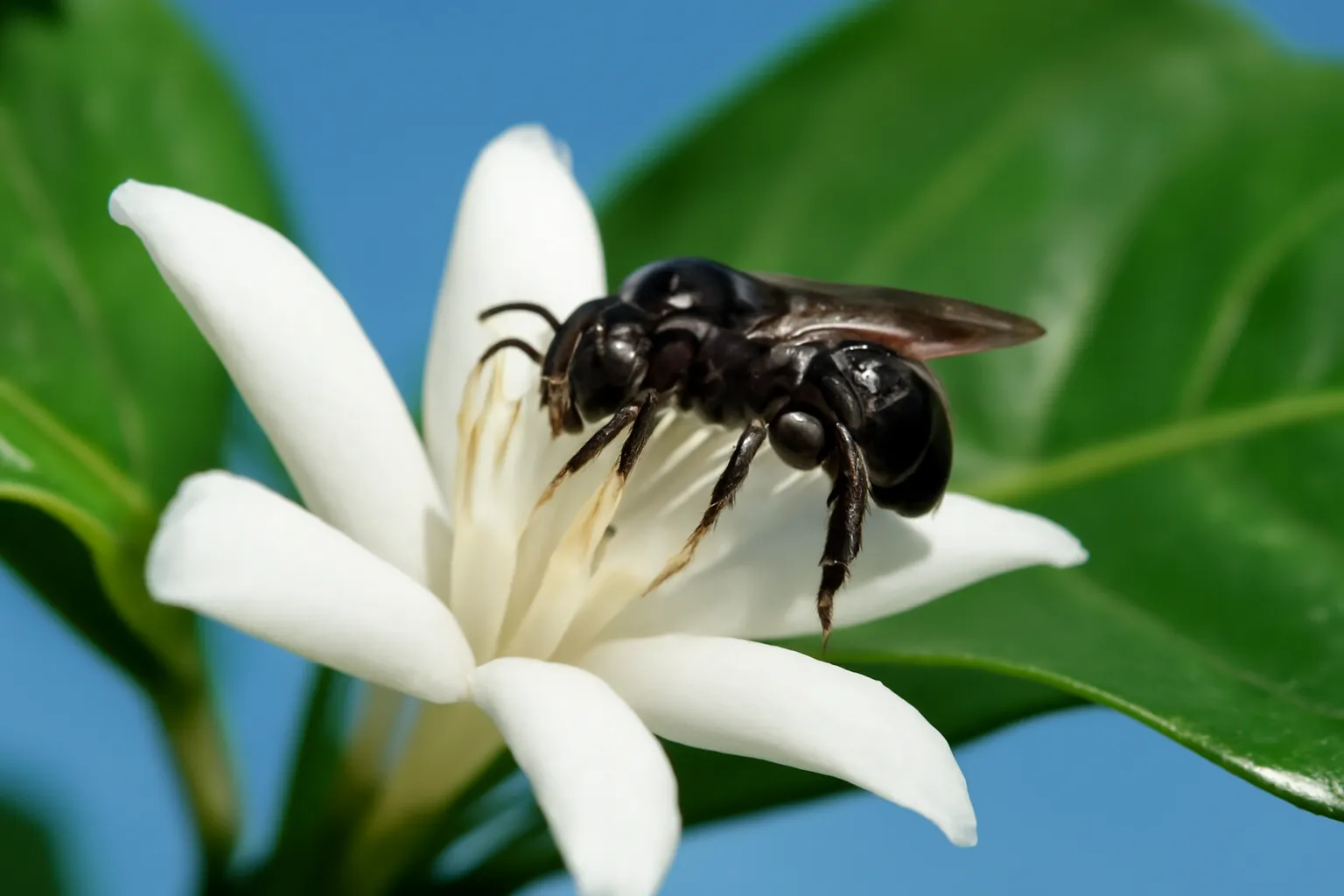
Do Stingless Bees Pollinate Coffee? What We Know
Stingless bees do visit coffee flowers and carry coffee pollen, and studies in several tropical countries suggest bee visits generally help coffee set
Where Do Stingless Bees Collect Resin, and Why So Much?
Stingless bees gather sticky resin from wounded bark, buds and sap of trees, carrying it home in their pollen baskets. They mix it with wax to build t
Avocado, Durian and Macadamia Flowers for Stingless Bees
Highland orchards planted between coffee rows give stingless bees extra flowers in the dry months. Avocado suits tiny bees best because its small, ope
 ›
×
›
×

MoraBee is the international name of Ong Moc, a stingless bee farm in Ta Dung, Lam Dong, among forest and coffee gardens: unblended honey in clean jars, starter colonies, and farm visits.
Vietnamese stingless bee honey from the highlands
A brand by Tên Miền Đẳng Cấp
© 2026 MoraBee. All rights reserved. · Copyright · OD-3864-C503