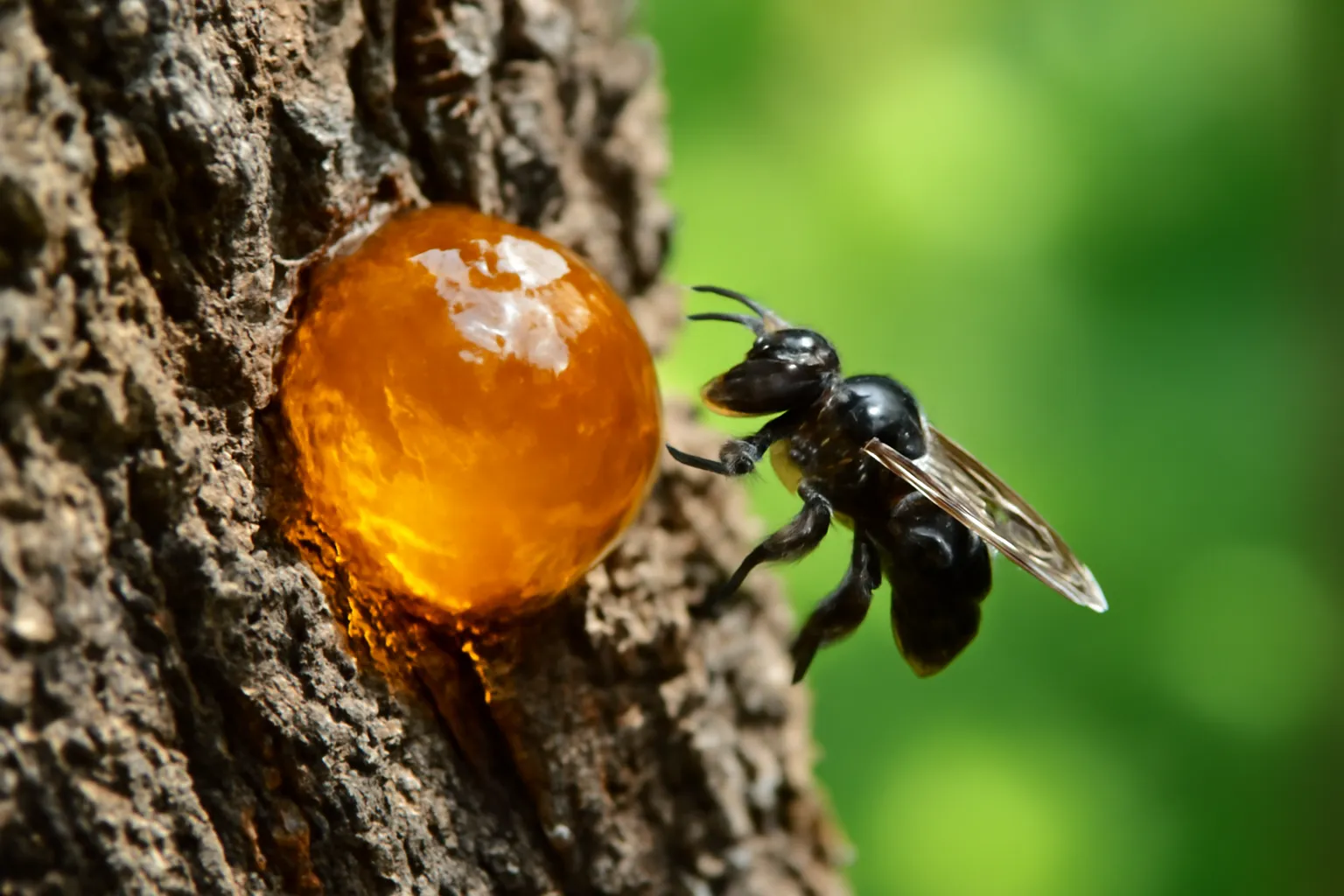
Where Do Stingless Bees Collect Resin, and Why So Much?
Stingless bees collect resin wherever trees and plants leak it: from cuts and cracks in bark, from the sap of fruit trees such as mango and jackfruit, from sticky buds and from resinous forest trees. They carry it home in the pollen baskets on their hind legs and use it in large amounts, mixing it with wax to build their nest and using it pure to seal gaps and fend off ants.
Many people are surprised that a colony seems to gather as much resin as nectar on some days. This article explains where the resin comes from, the strange words keepers use for what bees make with it, why a colony needs so much, and what that means for where and how hives are kept.
Where the resin comes from
Resin is a sticky substance many plants produce to seal wounds. When a branch breaks, an insect bores into bark, or a farmer prunes a tree, the plant releases sap or resin that slowly hardens. Stingless bees seek out these fresh wounds and scrape away small amounts while the material is still soft enough to work.
In the highlands, sources include forest trees at the edge of the woods, pine where it grows, fruit trees in gardens and orchards, and even freshly cut stems of some shrubs. Around villages, mango and jackfruit are common sources because they ooze sap when damaged. We will not list exact species as if we had catalogued them, because what bees use depends on what grows near each hive and changes through the year.
Collecting resin is careful work for a tiny bee. A forager bites off a small piece, works it with its front legs and moves it back to the pollen baskets on its hind legs. Back at the nest, other workers help unload it, because the sticky lump does not come off easily. On warm days when resin is soft, you can sometimes see bees returning with shiny, dark or amber loads that look quite different from pollen.
This is one reason the forest edge suits stingless bees so well. Next to woodland, a colony has many trees with natural wounds, old branches and cracked bark within its short flying range. In a bare, cleared landscape, resin can be harder to find than flowers.
Cerumen, batumen and other words keepers use
Resin. The raw sticky material collected from plants; on its own it is used to seal and defend.
Cerumen. A mix of wax produced by the bees and resin they collect; it is the main building material of the nest.
Honey pots. Small round storage cups made of cerumen, where the colony keeps honey; they look nothing like the hexagonal comb of honey bees.
Pollen pots. Similar cerumen cups used to store pollen, often grouped separately from the honey pots.
Brood cells. Small cerumen cells where eggs are laid and young bees develop; in many species they form a cluster or a spiral.
Involucrum. Thin sheets of cerumen wrapped around the brood area, which help keep it at a steady temperature.
Batumen. A tougher layer, often of resin, cerumen and sometimes plant material or mud, used to seal the cavity walls and close unused gaps.
Entrance tube. Many stingless bee species build a short tube of resin or cerumen at the entrance, which they can narrow or close at night.
Sticky droplets. Some species place small drops of soft resin around the entrance, which trap ants and other small intruders.
Propolis. A general name for bee-collected resin products; people use it loosely for stingless bee resin, though the material differs from honey bee propolis.
Resin dumps. Stores of resin kept inside the nest so the bees can repair or defend it quickly when needed.
Why a colony needs so much resin
A stingless bee nest is built almost entirely from cerumen. Every honey pot, pollen pot, brood cell and the sheets around the brood need wax mixed with resin. The bees also recycle cerumen, breaking down old pots and reusing the material, but a growing colony still needs a steady supply of fresh resin.
Resin is also the colony's main defence. Stingless bees cannot sting, so they rely on other means to protect themselves. They seal every gap they do not use, narrow the entrance at night and keep sticky resin ready at the door. Ants that try to enter can get stuck, and intruders that make it inside may be smothered in resin by a group of workers. Keepers sometimes find small dead insects coated in resin inside a hive, a sign the colony defended itself.
Researchers believe the resin in the nest also helps keep it clean by limiting the growth of fungi and bacteria inside the hive. This is about the health of the colony, not about people, and we are careful not to turn it into a claim about human health. Our honey is food, and we describe it by taste and how to use it in the kitchen.
Resin even affects the honey. Because honey is stored in cerumen pots rather than pure wax comb, it can pick up a slight resinous or woody note from the pots. Combined with its natural tartness and thin texture, this is part of what makes stingless bee honey taste so different from ordinary honey.
What this means for keeping hives
Place hives near trees. A spot at a forest edge, a garden with old fruit trees or a hedge of mixed shrubs gives the colony resin within easy reach.
Do not scrape the entrance clean. Sticky resin around the entrance is part of the defence; removing it leaves the colony more open to ants.
Leave the entrance tube alone. The bees build and adjust it themselves; breaking it off during inspections forces them to spend resin rebuilding.
Expect sealed gaps. If your hive box has cracks or joins, the bees will fill them with resin and batumen, so do not worry when you see dark patches along seams.
Open hives gently. Lids are often glued shut with resin; lift slowly and avoid tearing the inside apart.
Return what you remove. When harvesting, try not to destroy brood or batumen, and avoid wasting cerumen the bees will need to replace.
Do not cut trees for resin. Never wound or fell trees, especially in forest, to give bees resin; a natural landscape supplies plenty.
Never take wild colonies. Wild nests in forest trees belong to the forest; we do not encourage cutting into trees or protected areas to take colonies.
Watch for resin loads. Shiny, dark or amber loads on returning bees tell you the colony is building or defending, a useful sign of activity.
Protect against ants anyway. Resin helps, but a good stand with protected legs is still the first line of defence for a hive on a farm.
Store harvested honey properly. Small bits of cerumen in fresh honey are normal; strain gently and keep jars clean and closed.
Respect seasonal changes. Resin collection can rise when the colony is expanding or under attack, and drop in cold, wet weeks when bees fly less.
Resin, the forest and a nothing-added approach
The more we watch our bees collecting resin, the more we understand why they belong at the edge of forest rather than in a sterile row of boxes. A colony draws on the whole landscape: flowers for food, trees for building and defence, water from leaves and puddles. Clearing the trees takes away part of what the bees need, even if flowers remain.
That is part of what we mean when we say our honey is nothing added and nothing taken away. We do not feed colonies to push production, we do not strip their defences during harvest, and we leave enough stores and structure for them to carry on. The honey that results reflects the place, including the trees whose resin built the pots.
People sometimes ask whether we sell stingless bee resin or propolis. We prefer not to make products from it with claims attached. If someone is interested in it for health reasons, they should talk to a doctor rather than rely on a farm's say-so.
For anyone keeping a few hives at home, the lesson is simple. Keep some trees and shrubs nearby, handle the resin parts of the hive with respect, and let the bees do what they have been doing for a very long time.
Câu hỏi thường gặp
Is stingless bee resin the same as propolis?
People often call it propolis, but it is not identical to honey bee propolis. Stingless bees mix resin with their own wax to make cerumen and use pure resin for sealing and defence. The materials and plant sources vary by species and place.
Why is there black sticky stuff around my hive entrance?
That is almost certainly resin or batumen placed by the bees. It seals gaps and traps ants and small intruders. It is a normal, healthy sign and should be left in place.
Do stingless bees damage trees to get resin?
No. They collect resin that the tree has already released at wounds, cracks or cut surfaces. They do not bore into bark or harm healthy trees.
Can stingless bees live without trees nearby?
They can survive where resin is scarce, but they do better with trees and shrubs within their short flying range. A landscape with mixed vegetation supplies both flowers and building material.
Does resin affect the taste of stingless bee honey?
It can. Honey is stored in pots made of wax and resin, and may pick up a slight woody or resinous note. That is part of the distinctive flavour, alongside its natural tartness.
Is it safe to eat bits of cerumen in honey?
Small fragments sometimes remain after straining and are part of the natural product. Honey, including stingless bee honey, must not be given to children under one year old, and anyone with allergies or health questions should ask a doctor.
Written by the team behind a working stingless bee farm about 40 km from Ho Chi Minh City, Vietnam. Articles come from day-to-day work at the farm; technical figures are stated as ranges, not promises.
About the team →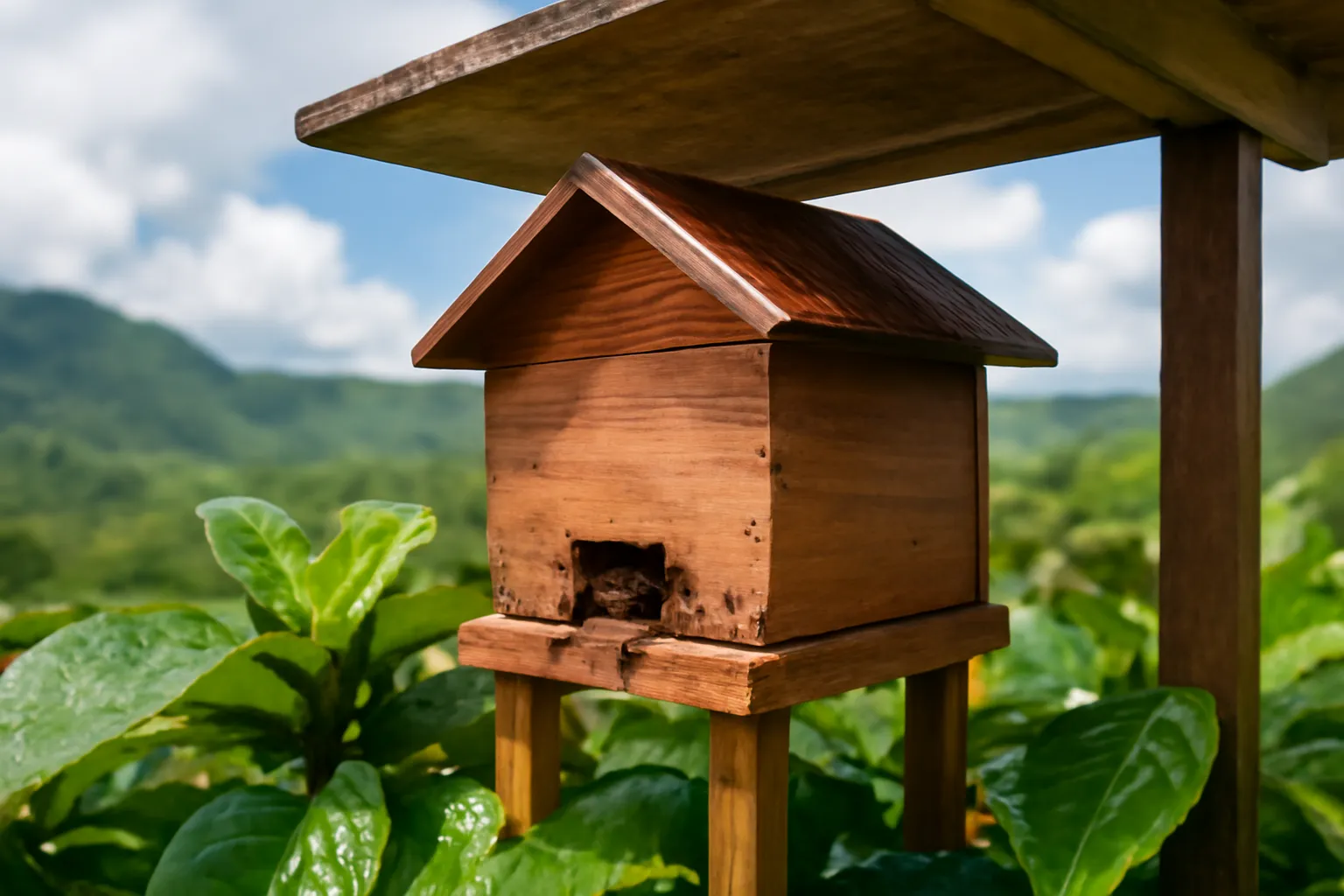
Lean Weeks in the Highland Rainy Season: Stingless Bee Dearth
In the highland rainy season, days of continuous cloud and rain can keep stingless bees inside and leave colonies short of food. Watch for low traffic
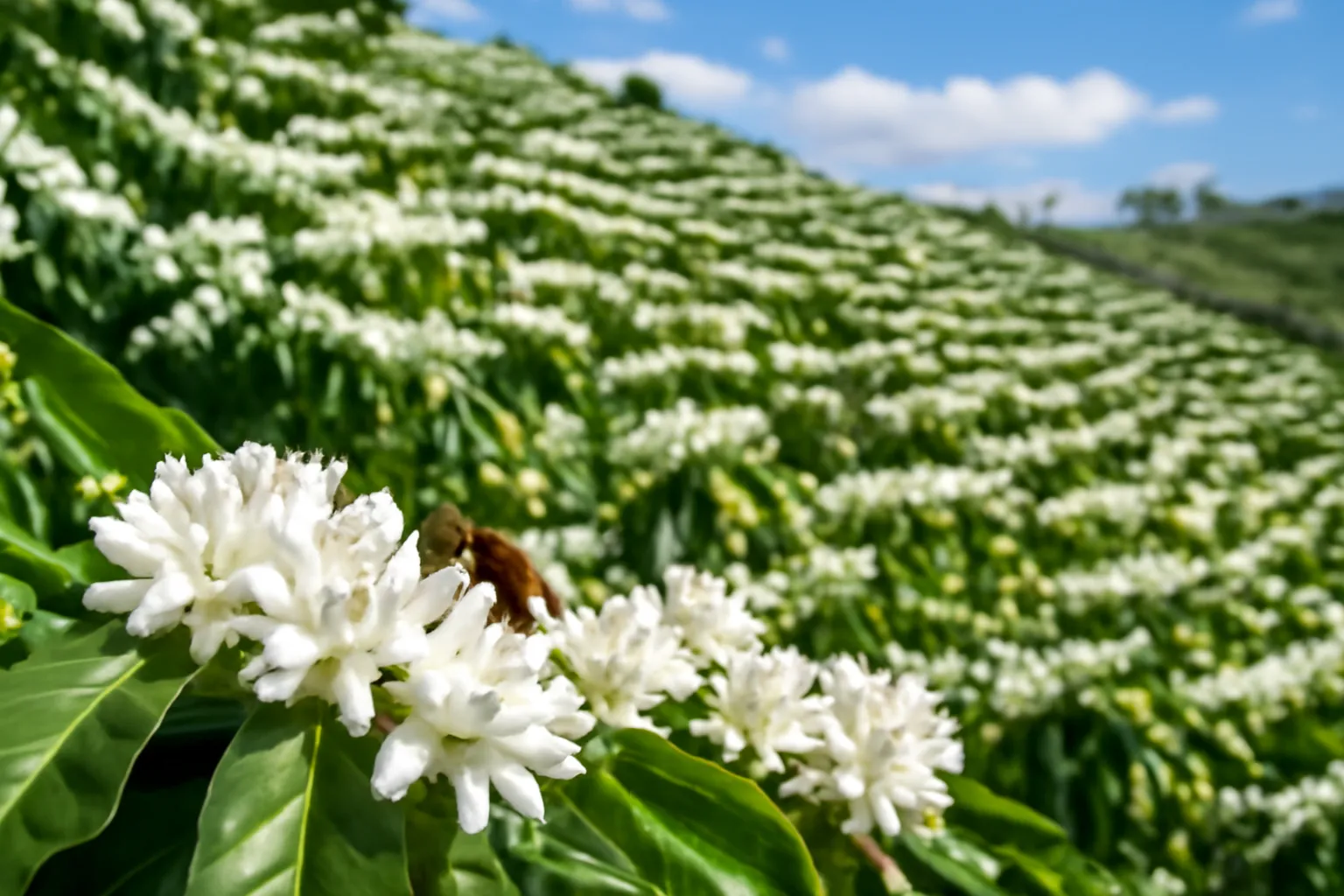
Coffee Flowering Season and Stingless Bees in the Highlands
In the Central Highlands coffee blooms once the dry season breaks, usually early in the year, and each flush lasts only a few days. Stingless bee colo
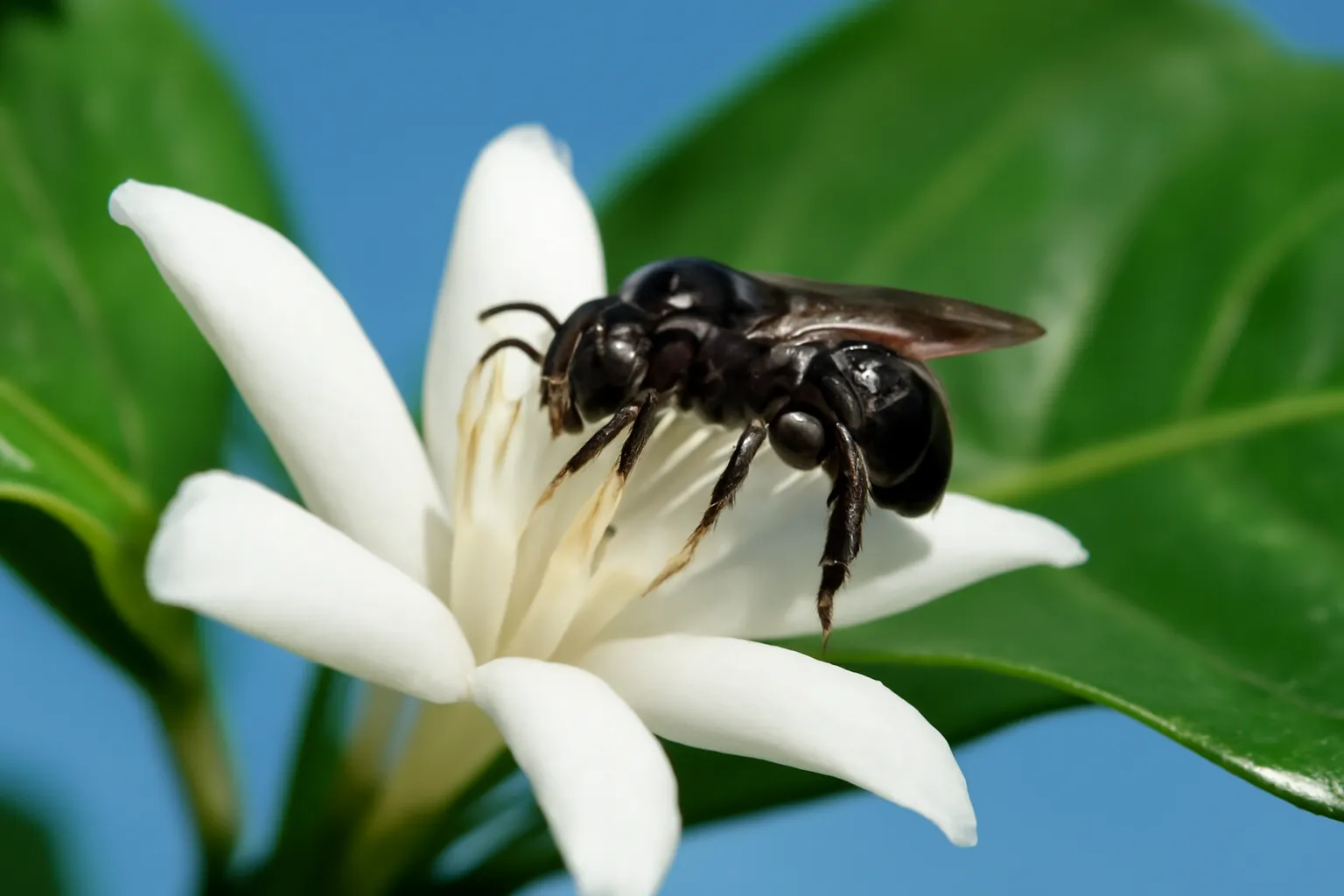
Do Stingless Bees Pollinate Coffee? What We Know
Stingless bees do visit coffee flowers and carry coffee pollen, and studies in several tropical countries suggest bee visits generally help coffee set
Wild Sunflower Season in the Highlands: Tithonia and Bees
Wild sunflower, Tithonia diversifolia, turns highland roadsides yellow around the end of the rainy season, usually late in the year. Stingless bees wo
Avocado, Durian and Macadamia Flowers for Stingless Bees
Highland orchards planted between coffee rows give stingless bees extra flowers in the dry months. Avocado suits tiny bees best because its small, ope
 ›
×
›
×

MoraBee is the international name of Ong Moc, a stingless bee farm in Ta Dung, Lam Dong, among forest and coffee gardens: unblended honey in clean jars, starter colonies, and farm visits.
Vietnamese stingless bee honey from the highlands
A brand by Tên Miền Đẳng Cấp
© 2026 MoraBee. All rights reserved. · Copyright · OD-3864-C503