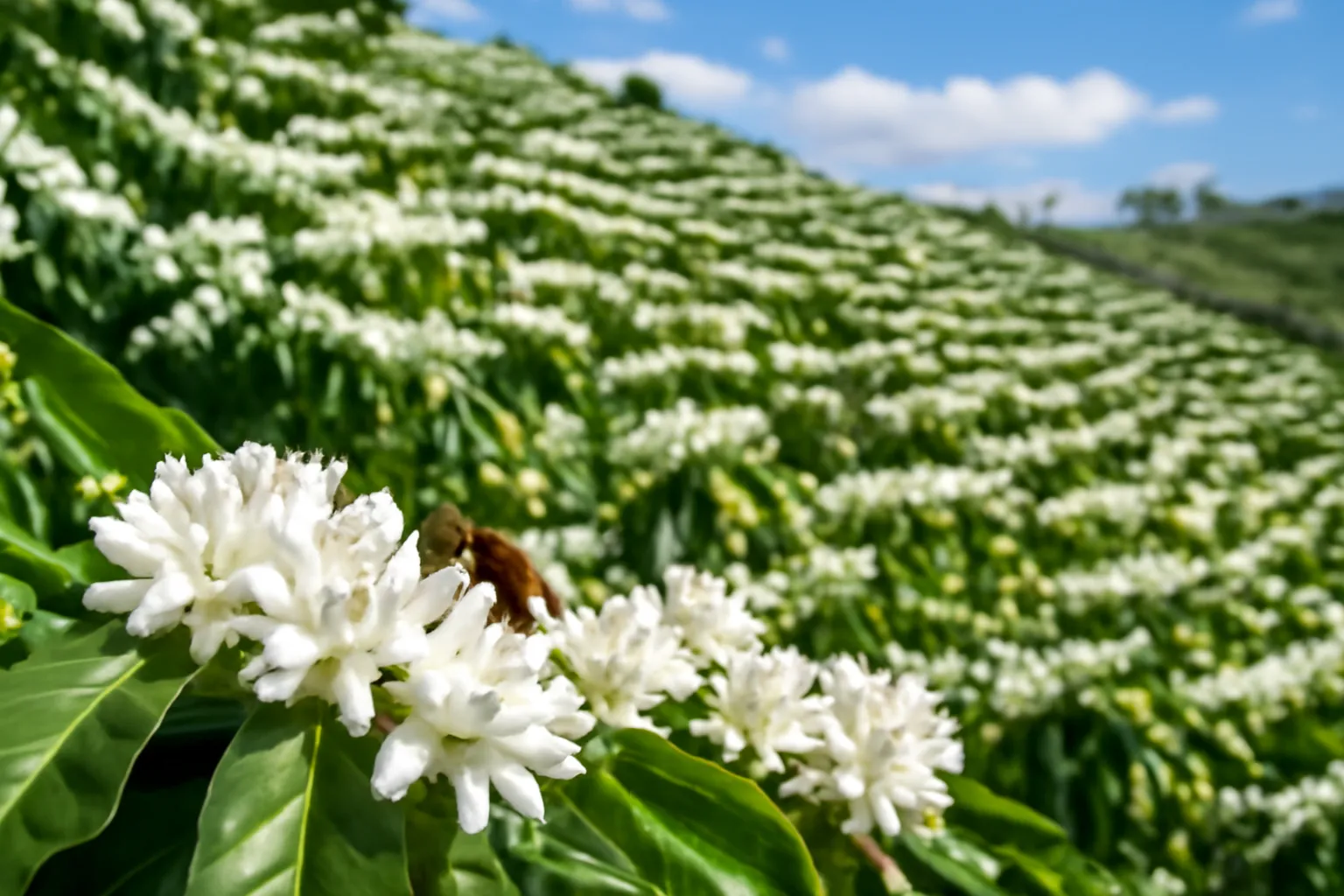
Coffee Flowering Season and Stingless Bees in the Highlands
In the Central Highlands of Vietnam, coffee flowers once the dry season is broken by the first heavy rain or by growers watering their gardens, which usually happens somewhere in the first months of the year. Each flush of blossom lasts only a few days, and a garden may flower two or three times. For stingless bees living within reach, those days are the richest of the year, and the weeks right after them are among the trickiest.
At Ong Moc, the farm MoraBee speaks for in Ta Dung, Lam Dong, the hives sit at the edge of forest and coffee. Coffee is not the whole story of a highland colony, but it is the loudest chapter. This article explains what the bloom looks like from the hive entrance, why its shortness matters so much to tiny bees, and what a keeper can do before and after.
When does coffee bloom in the Central Highlands?
Coffee in Vietnam does not flower by the calendar so much as by water. Through the dry season the bushes form flower buds and then wait. The buds stay closed until the plant receives a good soaking, either a heavy shower or a deliberate irrigation round. Within about a week of that water, the rows turn white almost at once. This is why two gardens on the same hillside can bloom on different days: one farmer pumped water from the lake earlier than the other.
Most coffee around Ta Dung and the lower parts of the Lam Dong plateau is robusta, a hardy species that suits the warmer, lower hills. Arabica is grown mainly at higher, cooler places such as the area around Da Lat. The two behave a little differently, but for a bee keeper the pattern is similar: a burst of flowers, a strong jasmine-like scent across the valley, then petals browning and dropping within days.
Because many growers water in rounds, there are often several flushes in one season rather than a single event. A garden might flower, rest for a couple of weeks, then flower again after the next watering. In a year when early rain comes, flowering can be uneven and spread out. In a long, hard dry season it can be compressed into a few intense mornings.
For anyone used to a European or American spring, the surprise is that this main bloom comes at the end of the dry season, when the land is dusty and many other plants look tired. It is a flood arriving in the middle of a drought, and the bees treat it that way.
What a coffee bloom looks like from the hive entrance
Traffic jumps within a day. A colony that had a calm trickle of foragers can show a steady stream in and out by mid-morning once the nearest rows open.
Foragers leave earlier. On bloom days bees often start flying as soon as the morning is warm enough, because coffee flowers offer most in the first hours.
Pollen loads look pale. Coffee pollen is light coloured, so returning bees carry whitish or cream loads on their hind legs instead of the yellow or orange of other plants.
The scent reaches the hive. On still mornings you can smell the bloom at the hives themselves; the bees are working flowers close by, not far away.
Guards become busier. More traffic means more chances for intruders, so the bees at the entrance tube are more active and alert than usual.
New pots appear quickly. If you have a hive with a viewing lid, fresh soft cerumen pots, the small storage cups made of wax and plant resin, can be built within days.
Nectar is thin at first. Fresh nectar carries a lot of water; the bees spend the following days fanning and ripening it before it becomes honey.
Brood gets a push. Plenty of pollen lets the colony raise more young bees, which shows up weeks later as a stronger, fuller hive.
Distance limits the gain. Stingless bees usually forage over much shorter distances than honey bees, so a hive a little too far from the rows may barely notice the bloom.
Weather can cancel a morning. A cold, misty or rainy morning during the bloom can keep bees indoors, and with flushes so short, losing one morning is a real loss.
Petal fall is quick. Once petals brown, traffic drops back within a few days, often sharply rather than gradually.
Other bees share the flowers. Wild bees and kept honey bees work the same rows, so a coffee bloom is a shared table, not a private one.
Why the bloom is so short, and why that matters for small bees
A coffee flower opens, is ready to be pollinated for a short window, and is finished within a few days. That is good for the coffee grower, who wants an even set of berries, but it gives bees very little time. Honey bee colonies have large foraging forces and can send thousands of workers at once. A stingless bee colony is much smaller, its workers are tiny, and they cannot fly far. They must make the most of what lies close to home in a matter of days.
This is the main reason keepers in the highlands care so much about where a hive sits. A colony placed at the edge of a coffee garden, in shade, facing the morning sun, can bring in a meaningful share of the bloom. The same colony a few hundred metres away, behind a ridge or across a stream, may gather only a little. Moving a stingless bee hive is also more delicate than moving a honey bee box, so the decision is best made long before the flowers come.
Shortness also explains why pure coffee blossom honey from stingless bees is uncommon. A few days of coffee nectar are mixed in the pots with whatever else the colony gathers before and after. When people ask us whether a jar is coffee honey, the honest answer is usually that coffee is one part of the season inside it. We prefer to leave honey as the bees made it, nothing added and nothing taken away, rather than label it by a flower we cannot isolate.
Finally, a short boom can mislead a new keeper. A hive that looked crowded and busy in the bloom can seem to shrink a month later. Often nothing is wrong: the colony raised extra bees on the flush and is now living on a thinner landscape. Understanding the rhythm stops people from opening the hive too often or panicking at normal ups and downs.
Preparing colonies before the bloom and caring for them after
Settle hives early. If a hive needs to move closer to coffee, do it in the quiet months well before buds swell, so the bees have reoriented by bloom time.
Give shade, not darkness. Robusta gardens can be hot in the dry season; a hive under a shade tree or a simple roof stays cooler without blocking the morning light.
Leave stores in place. Do not harvest just before the bloom; a colony with reserves can put its energy into foraging rather than survival.
Check the entrance, not the inside. During the bloom, watch traffic and pollen loads from outside instead of opening the hive and disturbing a busy colony.
Keep water nearby. In the dry season bees also need water; a shallow dish with stones or a damp patch helps, especially on hot afternoons.
Wait before harvesting. Let the nectar ripen; pots filled in the bloom need time to thicken, and harvesting too early gives watery honey that ferments.
Expect a dip afterwards. Once petals fall, plan for a leaner period and avoid taking honey from colonies that look light.
Watch for ants and flies. A strong, busy hive smells of fresh nectar, which can draw ants and small flies; keep stands clean and legs protected.
Note the dates. Write down when each nearby garden flowered and how the hives responded; after a few seasons this local record is worth more than any general guide.
Talk to garden owners. Knowing when your neighbours plan to water helps you predict the bloom and any spraying that follows.
Do not split during the flush. Dividing a colony in the middle of the bloom disrupts foraging at the best moment; plan splits for when the colony has rebuilt and forage is steady.
Think beyond coffee. Plant or protect other flowering plants around the hives so the colony has something to work in the weeks before and after the coffee.
Coffee gardens, sprays and neighbours
The weeks around flowering are also when many coffee gardens are fertilised, weeded and sprayed. Some products used in coffee are harmful to bees, and stingless bees, being so small, can be badly affected. We do not name products here, because labels change and every garden is different. The principle is simple: read the label, never spray open flowers during bee hours, and respect the waiting periods printed on the product.
Most growers are not hostile to bees; they simply have not thought about the hives next door. A friendly conversation does more than any rule. Ask when they plan to spray, explain that early morning and late afternoon are when bees are most active, and suggest evening spraying or waiting until petals have fallen where the label allows. Many will adjust once they know.
Herbicides used to clear weeds under coffee also remove the small flowers bees rely on between blooms. A strip of unmown ground cover along a garden edge, or simply not spraying around the hive area, keeps a little forage alive. It is not dramatic, but in the lean weeks it can make a difference.
If spraying does go wrong, signs include many dead or twitching bees in front of the hive and a sudden drop in traffic on a fine day. There is little a keeper can do in the moment except keep the colony shaded and undisturbed. Afterwards, the best response is a calm talk with the neighbour and a plan for next season.
Câu hỏi thường gặp
How long does coffee blossom last for bees?
Each flush usually lasts only a few days from opening to petal fall. A garden may have two or three flushes in one season if it is watered in rounds, so the total bloom period can stretch over several weeks, but each wave is brief.
Is stingless bee honey from coffee areas coffee-flavoured?
Not in the way people often imagine. Coffee nectar is only part of what a colony gathers through the season, so the honey usually carries a mix of flowers. Taste varies by year and by place, which is one reason we sell it unblended rather than by a single flower name.
Can I place a stingless bee hive inside a coffee garden?
Yes, if the owner agrees and spraying is managed with the bees in mind. Choose a shaded, stable spot near the garden edge, keep the hive off the ground on a stand protected from ants, and agree on spray timing in advance.
Do stingless bees need coffee to do well in the highlands?
No. Coffee is a strong boost but a colony lives on many plants through the year, including forest trees, fruit orchards and wild flowers. A hive near diverse vegetation often does better over a full year than one surrounded only by coffee.
Why did my hive get weaker after the coffee bloom?
Often it is the normal drop after a boom: the colony raised extra bees on plenty, then forage thinned out. If you also see many dead bees at the entrance, consider spraying nearby. Avoid harvesting from a light hive and give it time to settle.
Is coffee blossom season a good time to buy a colony?
It can be a good time to see a colony working at its best, but moving a hive during a bloom interrupts foraging. Many keepers prefer to settle a new colony in a calmer period so it is established before the next flush.
Written by the team behind a working stingless bee farm about 40 km from Ho Chi Minh City, Vietnam. Articles come from day-to-day work at the farm; technical figures are stated as ranges, not promises.
About the team →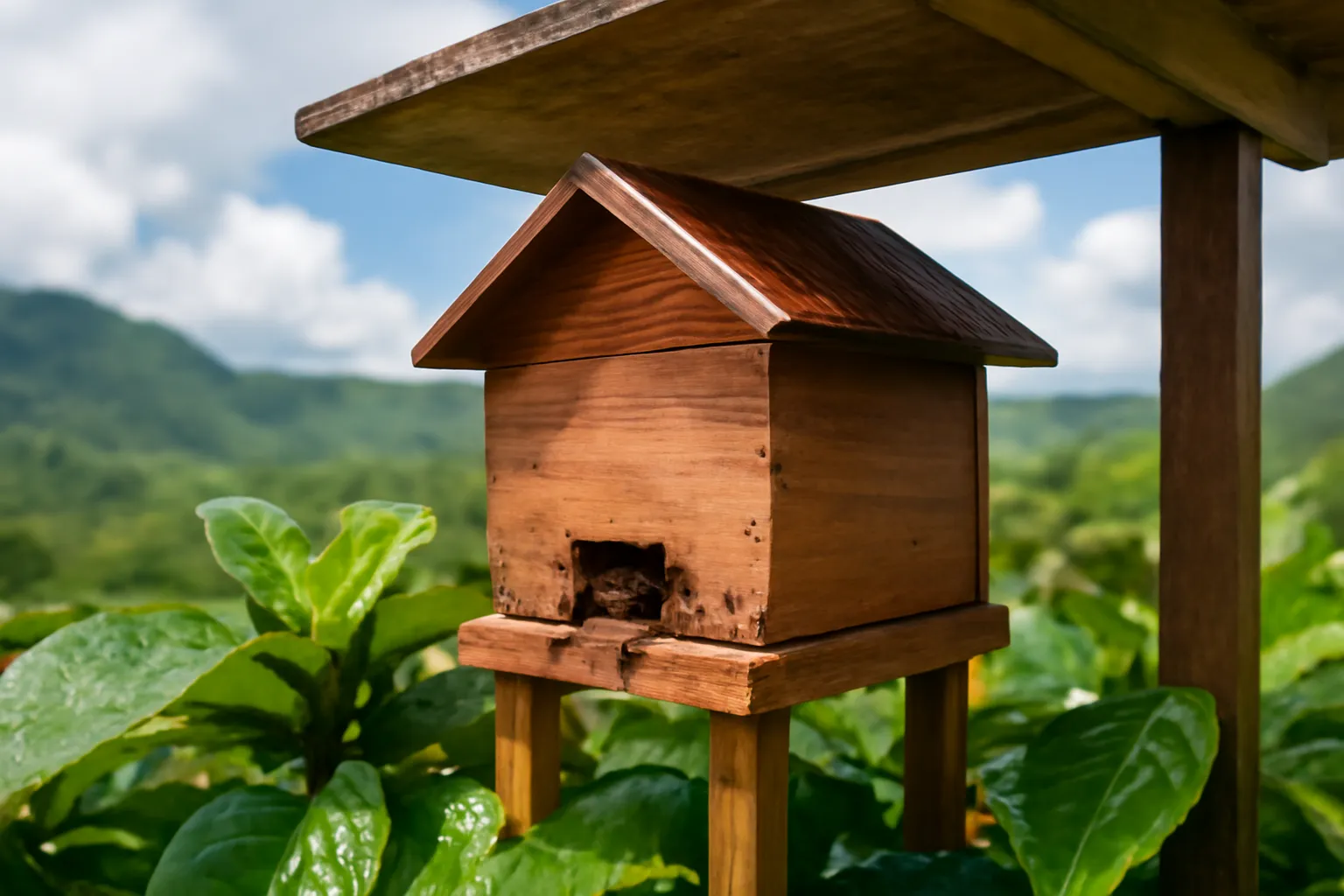
Lean Weeks in the Highland Rainy Season: Stingless Bee Dearth
In the highland rainy season, days of continuous cloud and rain can keep stingless bees inside and leave colonies short of food. Watch for low traffic
Do Stingless Bees Pollinate Coffee? What We Know
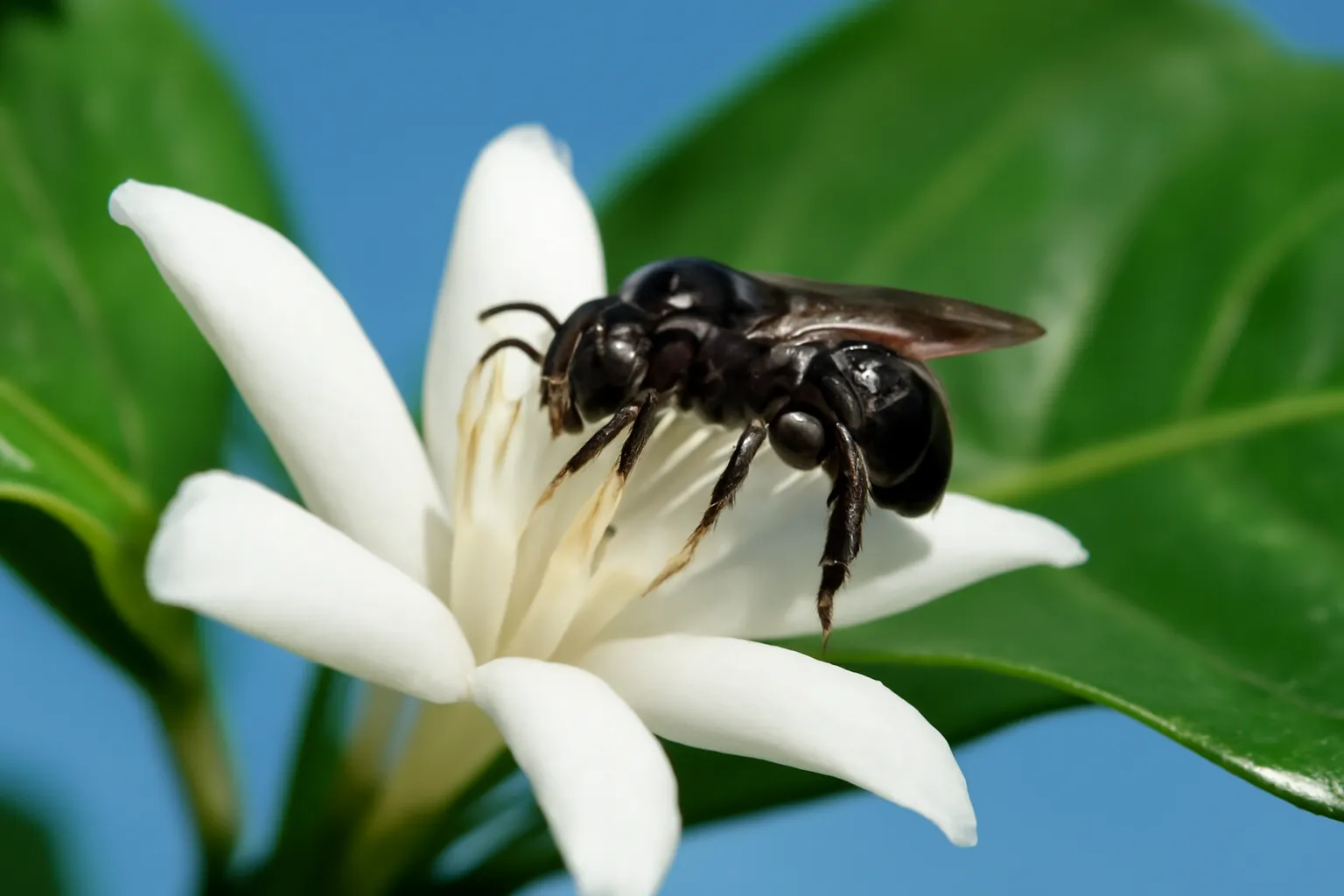
Stingless bees do visit coffee flowers and carry coffee pollen, and studies in several tropical countries suggest bee visits generally help coffee set
Wild Sunflower Season in the Highlands: Tithonia and Bees
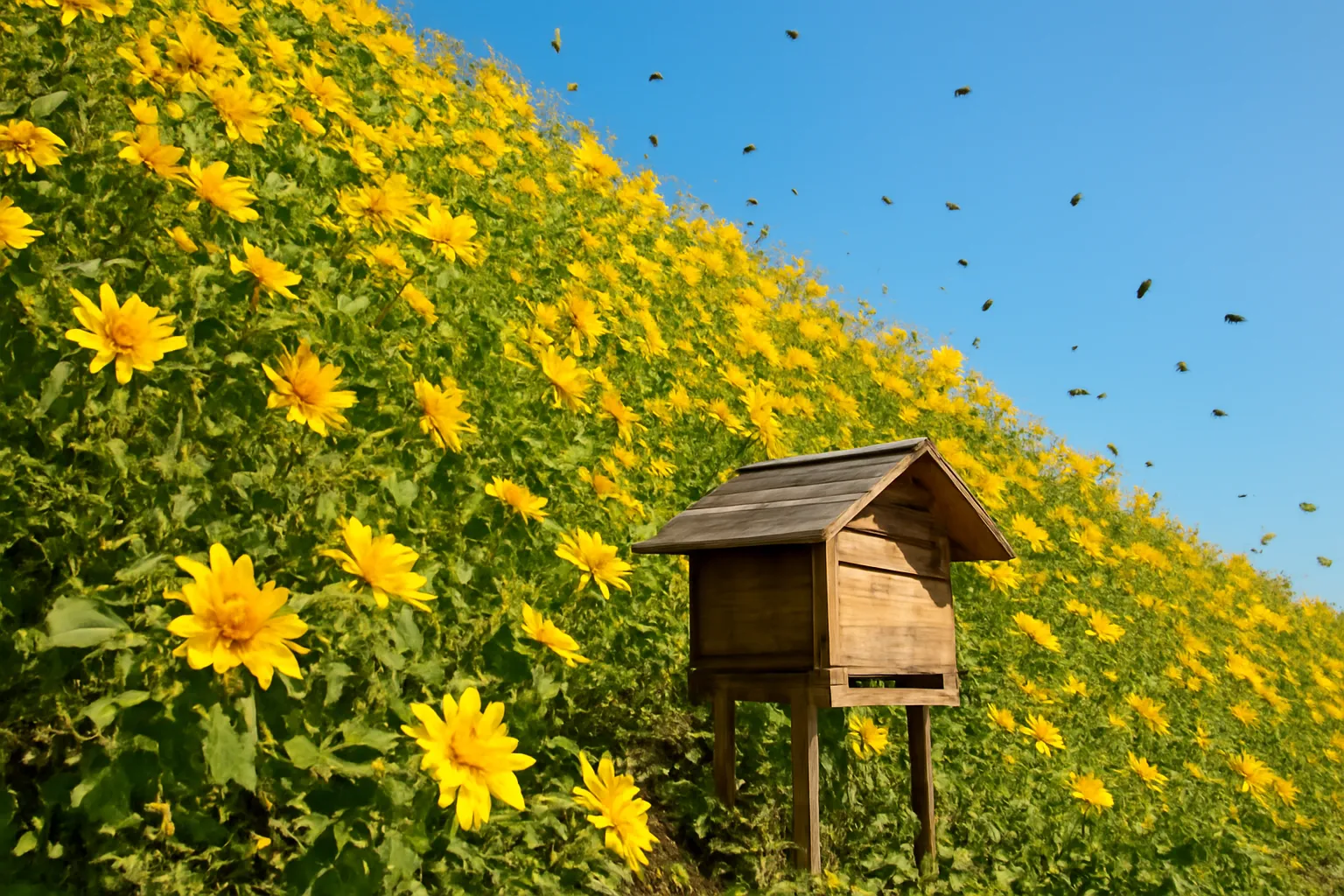
Wild sunflower, Tithonia diversifolia, turns highland roadsides yellow around the end of the rainy season, usually late in the year. Stingless bees wo
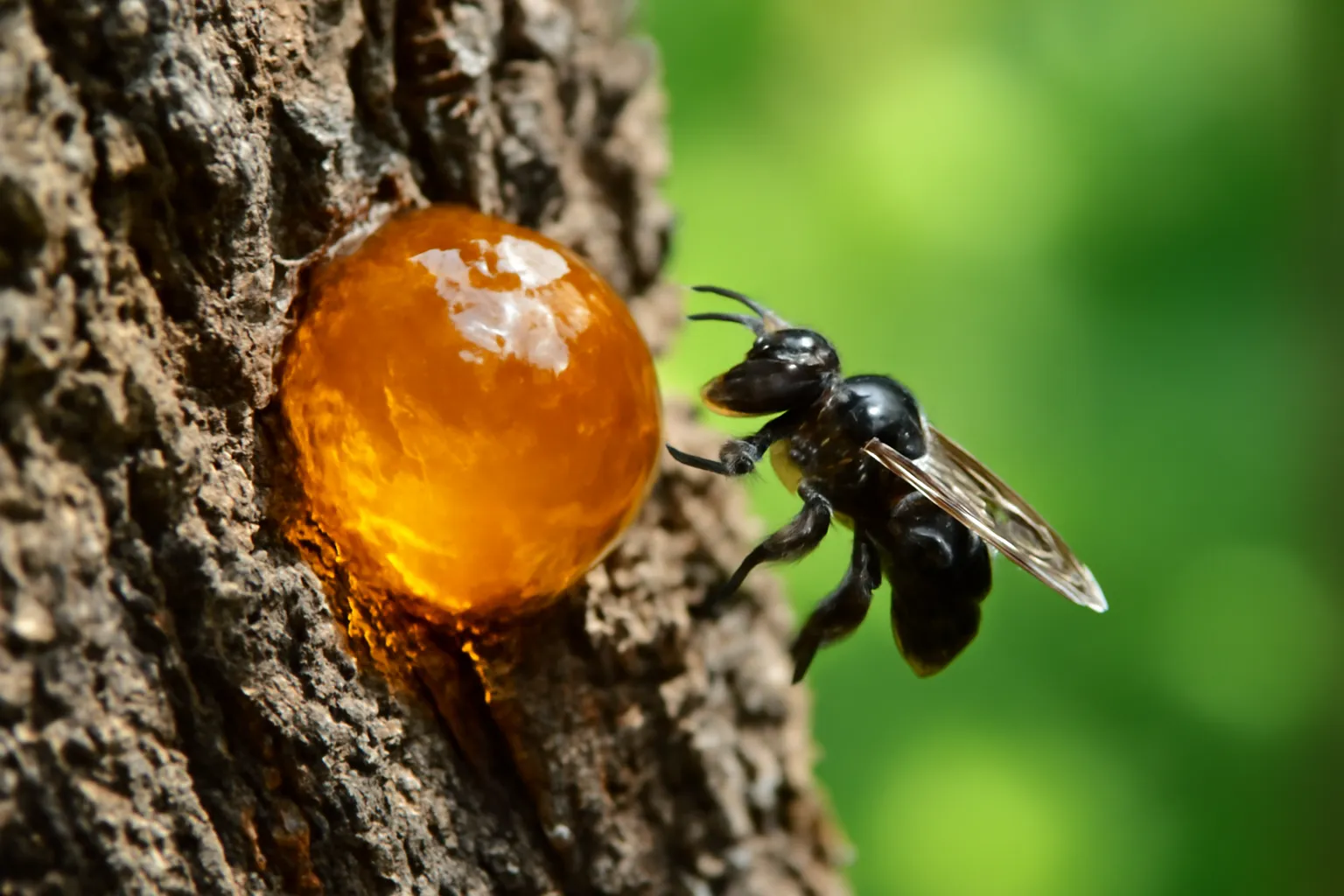
Where Do Stingless Bees Collect Resin, and Why So Much?
Stingless bees gather sticky resin from wounded bark, buds and sap of trees, carrying it home in their pollen baskets. They mix it with wax to build t
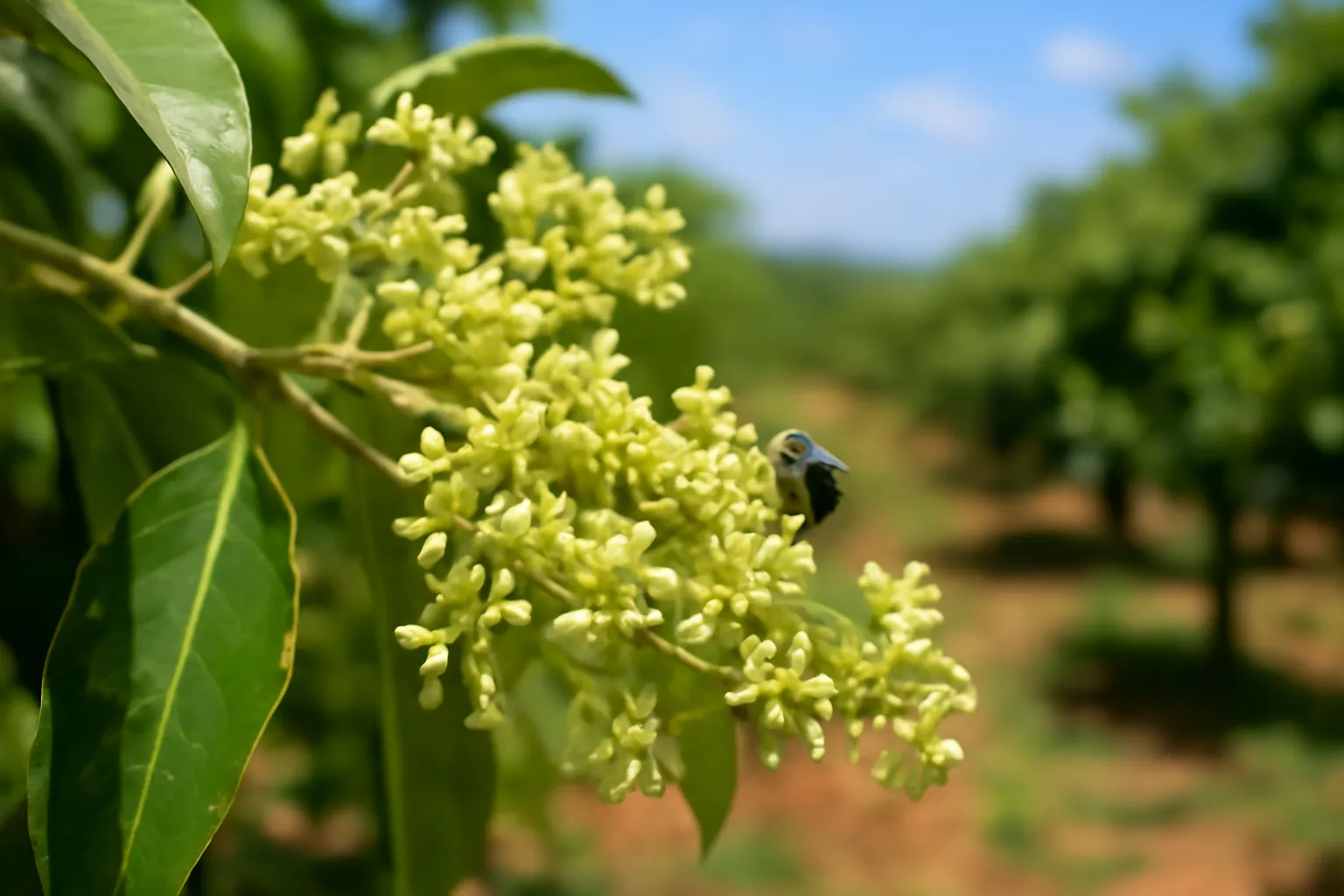
Avocado, Durian and Macadamia Flowers for Stingless Bees
Highland orchards planted between coffee rows give stingless bees extra flowers in the dry months. Avocado suits tiny bees best because its small, ope
 ›
×
›
×

MoraBee is the international name of Ong Moc, a stingless bee farm in Ta Dung, Lam Dong, among forest and coffee gardens: unblended honey in clean jars, starter colonies, and farm visits.
Vietnamese stingless bee honey from the highlands
A brand by Tên Miền Đẳng Cấp
© 2026 MoraBee. All rights reserved. · Copyright · OD-3864-C503