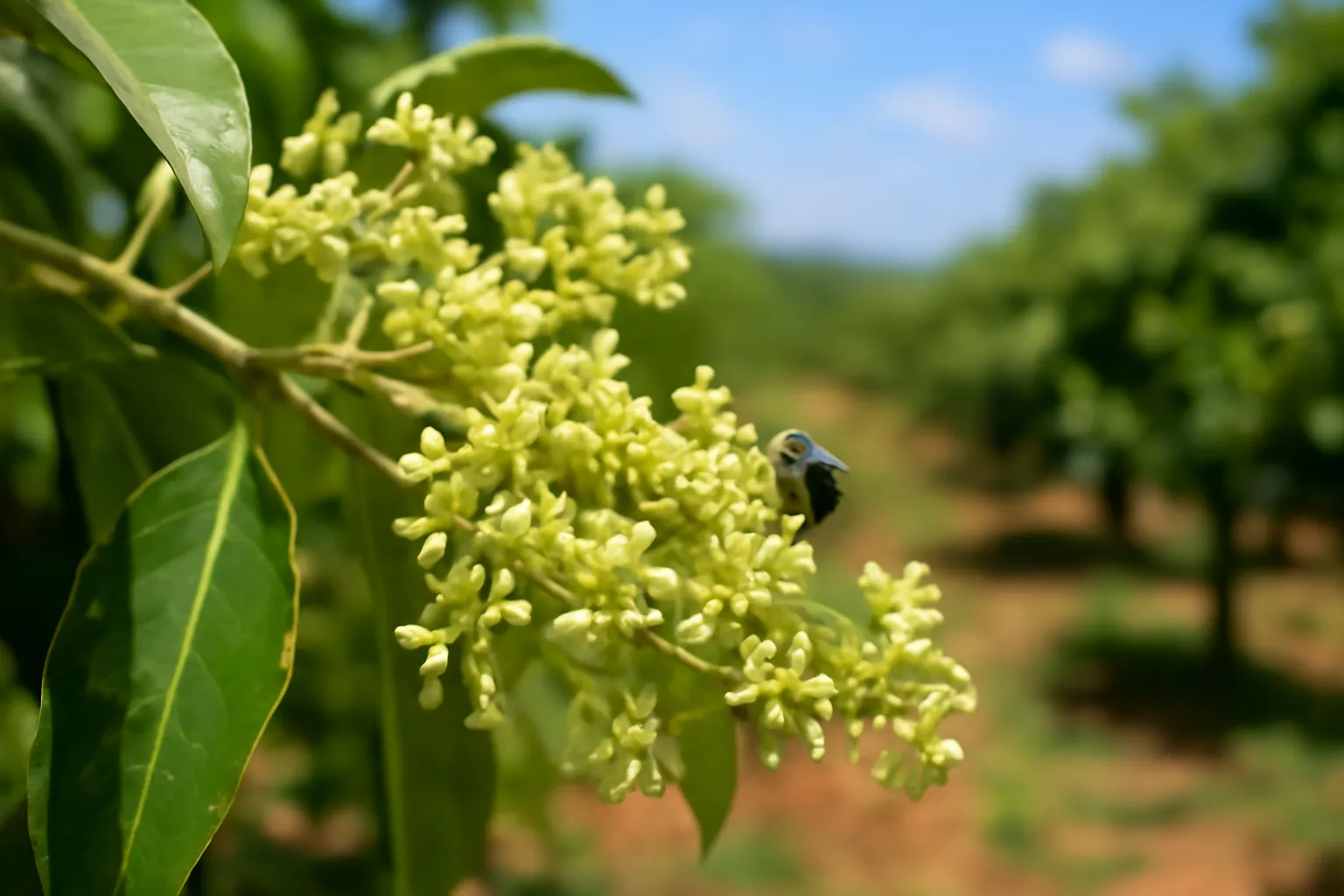
Avocado, Durian and Macadamia Flowers for Stingless Bees
Many highland farms now grow avocado, durian and macadamia among their coffee, and all three flower at times when stingless bees can use them. Avocado is the best match for tiny bees: its small, open flowers carry nectar and pollen within easy reach. Durian flowers mostly at night and is pollinated largely by other animals, but bees still gather from it in the evening and early morning. Macadamia offers long sprays of small flowers that bees work readily.
For a keeper near Ta Dung, these orchard trees can soften the gaps between the big events of the year. This article explains how each one flowers, what a stingless bee gets from it, and why orchard spraying is the part that needs the most care.
Why orchards now sit between the coffee
Across the Central Highlands, many farmers have planted fruit and nut trees among their coffee. Some do it to spread risk when coffee prices swing, some for shade, and some because a tree like durian or avocado can become the main income of a plot. The result is a mixed landscape where rows of coffee alternate with taller trees, and where something is often in flower.
For stingless bees this mix is welcome. A garden with only coffee offers a burst of food for a few days and very little else. A garden with avocado, durian and macadamia offers several separate blooms, often in the dry months, plus shade and resin from the trees themselves. Because stingless bees forage within a short distance, a single mixed plot next to the hives can matter more than a large orchard far away.
Exact flowering dates vary by variety, by place and by how each orchard is managed. Growers of durian, in particular, often use water and other techniques to steer flowering, so two orchards close together may bloom at different times. We do not give a fixed calendar here; the most useful thing a keeper can do is walk the nearby orchards and note when each tree type opens.
There is also a trade-off. Orchard trees, especially durian, are often protected with more spraying than coffee, and that spraying can fall right on flowering time. The rest of this article looks at the benefits first and then at how to manage that risk.
How each orchard tree feeds tiny bees
Avocado flowers are small and open. Each flower is a tiny greenish-yellow star with nectar exposed near the centre, easy for a short-tongued stingless bee.
Avocado blooms in huge numbers. A mature avocado tree can carry a very large number of flowers over several weeks, giving a steady supply rather than one burst.
Avocado flowers open twice. An avocado flower opens first as female, closes, then reopens later as male, shedding pollen; this unusual rhythm is why trees are grouped into type A and type B.
Mixing A and B helps fruit set. Because the two types are in female and male phases at different times of day, orchards with both types and active insects tend to set fruit more reliably.
Small bees do visit avocado. Stingless bees are among the many insects seen on avocado flowers, though larger bees and flies also play a big part.
Durian flowers open at dusk. Durian blossoms usually open in the late afternoon or evening and are pollinated in their native range mainly by nectar-feeding bats.
Bees take the leftovers. Stingless bees often visit durian flowers late in the day and early the next morning, collecting pollen and remaining nectar.
Durian flowers drop fast. Many durian flowers fall by the following morning, so the bees work a short window each day across a flowering period.
Macadamia offers long sprays. Macadamia produces hanging racemes, long clusters of small cream flowers, which bees work for both pollen and nectar.
Macadamia benefits from insects. Macadamia is generally thought to set nuts better with insect visits, and bees are common visitors.
Shade trees help too. Beyond flowers, the trees shade hives in the dry heat and supply resin from pruning cuts and natural wounds.
Flowers are only part of the year. Each orchard tree flowers for a limited time; together they fill gaps, but none of them feeds a colony year-round.
What a colony gains, and what it does not
In a good orchard bloom, a stingless bee colony near the trees brings in a steady flow of pollen and nectar. That can help it build up in the dry season, recover after a harvest or enter the coffee bloom in better shape. Where avocado, durian and macadamia flower in sequence, the dry months can become noticeably less hungry.
What these trees do not do is turn a stingless bee colony into a large honey producer. Stingless bees store small amounts of honey compared with honey bees, and orchard nectar is shared with many other insects. A keeper who places hives in an orchard expecting a big crop will likely be disappointed. A keeper who sees the orchard as a way to keep colonies strong will be much happier.
People sometimes ask whether we sell avocado or durian honey from stingless bees. We do not label honey that way. A colony works whatever is in flower within reach, and the honey in its pots is a mix. We would rather describe a jar as highland honey from a particular season than claim a single flower we cannot separate.
For the orchard owner, the potential gain is better fruit set, particularly in avocado and macadamia, where insect visits are generally considered helpful. As with coffee, the exact effect in any one orchard is uncertain, and we do not promise yields.
Orchard sprays, timing and keeping hives safe
Durian is often sprayed heavily. Durian orchards commonly receive several protective treatments, some of them around flowering; this is the main risk to nearby hives.
Read every label. Product labels state bee hazards and waiting periods; they are the most reliable guide and should be followed exactly.
Never spray open flowers in bee hours. Where spraying during bloom is unavoidable and the label allows it, evening application after bees return is far safer than morning or midday.
Tell the orchard manager where hives are. Many problems come from simply not knowing; a short conversation can prevent a lot of losses.
Keep hives at the orchard edge. Placing hives at the margin rather than under the sprayed canopy reduces exposure to drift.
Have a covering plan. Some keepers close hive entrances overnight before a planned morning spray and reopen them later; this is stressful and should be short.
Watch for drift on windy days. Spray carried by wind can reach hives well beyond the target trees.
Remember water sources. Bees drink from puddles and leaves; spray residues on water near hives can harm them even after flowering ends.
Herbicides remove ground flowers. Clearing all weeds under orchard trees removes small flowers bees rely on between blooms; leaving strips helps.
Look for signs of poisoning. Many dead or twitching bees at the entrance on a fine day, or a sudden collapse in traffic, may point to spraying nearby.
Record what happened. Note dates and products if spraying affected hives; it makes next year's conversation with the neighbour more concrete.
Value orchards with care. Orchards that already avoid unnecessary sprays are the best homes for hives; seek those out when choosing a site.
Planning a mixed farm with bees in mind
If you are planting trees between coffee and you also keep bees, a little planning goes a long way. Choosing a mix of tree types that flower at different times gives the colonies a longer season. Planting both avocado flower types, where suitable, may help the avocados themselves. Leaving room for some flowering ground cover keeps food available between tree blooms.
Keep hives where they are easy to reach for checks but away from the paths sprayers and machines use. A shaded spot at the edge of the orchard, with protection from driving rain, suits most stingless bee colonies well. Stands with ant barriers matter just as much in an orchard as anywhere else.
Most of all, think of bees as part of the farm rather than an add-on. Stingless bees do not sting, so workers can prune, harvest and weed near them without trouble. When spraying is planned around them, they can live alongside a working orchard for many years.
At Ong Moc we keep our approach simple: let the bees use what the land offers, add nothing to push them, and take only what the colony can spare. Orchards fit that approach well when they are managed with the bees in mind.
Câu hỏi thường gặp
Do stingless bees pollinate avocado?
Stingless bees are among the insects that visit avocado flowers and can carry pollen between them. Larger bees and flies also contribute. How much stingless bees add in a particular orchard depends on how many other pollinators are present.
Why do durian flowers open at night?
Durian evolved to be pollinated mainly by nectar-feeding bats, which are active after dark. Flowers open in the late afternoon or evening and many fall by morning. Bees still visit at dusk and early morning for remaining pollen and nectar.
Is macadamia good forage for stingless bees?
Macadamia produces long clusters of small flowers that bees visit for pollen and nectar, so it can be a useful source in its flowering season. Like other orchard trees, it flowers for a limited time and is only one part of the year.
Can I keep stingless bees in a durian orchard?
It is possible, but spraying is the main concern because durian orchards are often treated heavily. Agree on spraying practices with the orchard manager first, keep hives at the edge, and follow product labels carefully.
Will bees increase my avocado yield?
Insect visits generally help avocado fruit set, especially where both flower types are planted. The effect on yield in any one orchard varies with weather, tree health and many other factors, so no fixed gain can be promised.
Written by the team behind a working stingless bee farm about 40 km from Ho Chi Minh City, Vietnam. Articles come from day-to-day work at the farm; technical figures are stated as ranges, not promises.
About the team →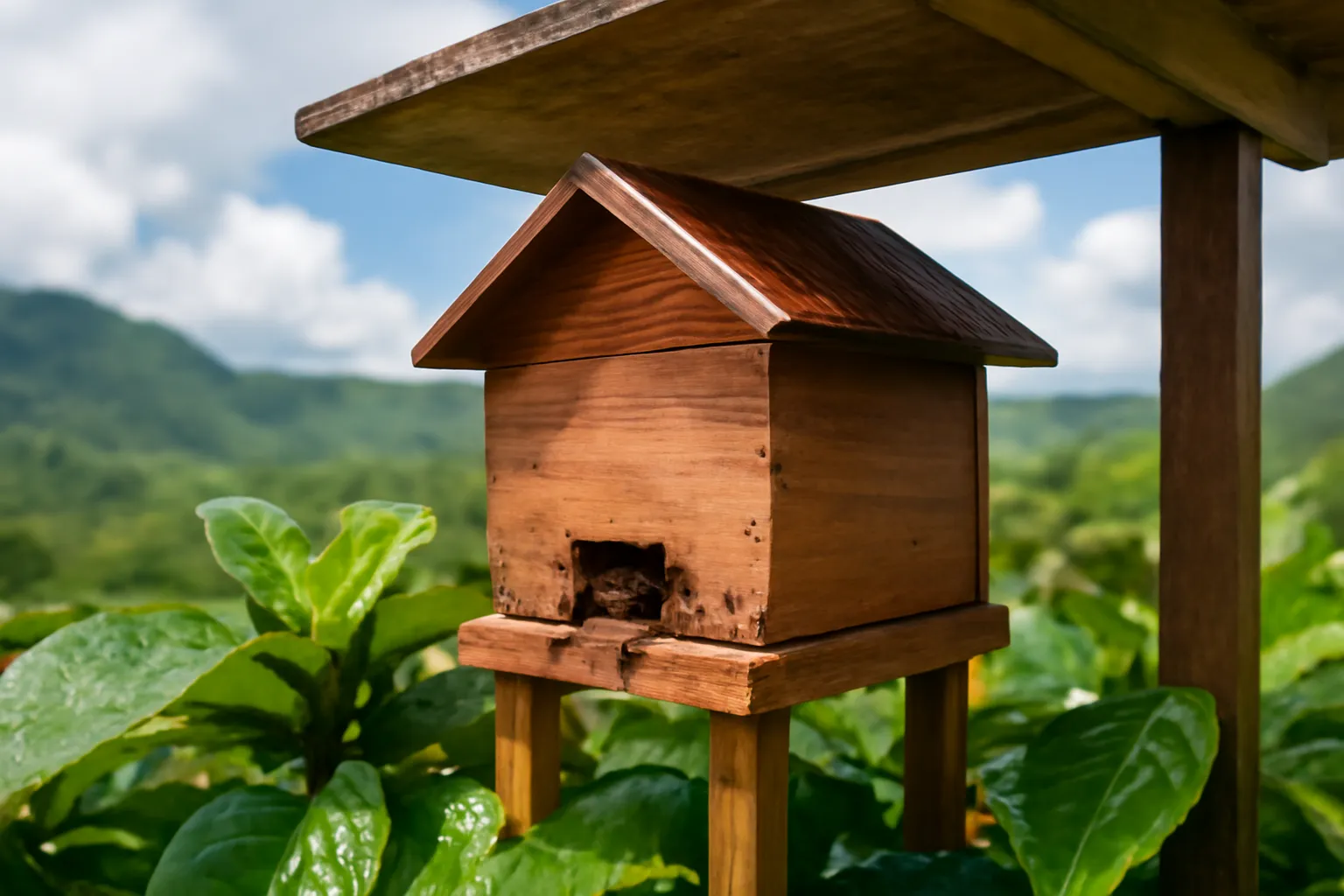
Lean Weeks in the Highland Rainy Season: Stingless Bee Dearth
In the highland rainy season, days of continuous cloud and rain can keep stingless bees inside and leave colonies short of food. Watch for low traffic
Coffee Flowering Season and Stingless Bees in the Highlands
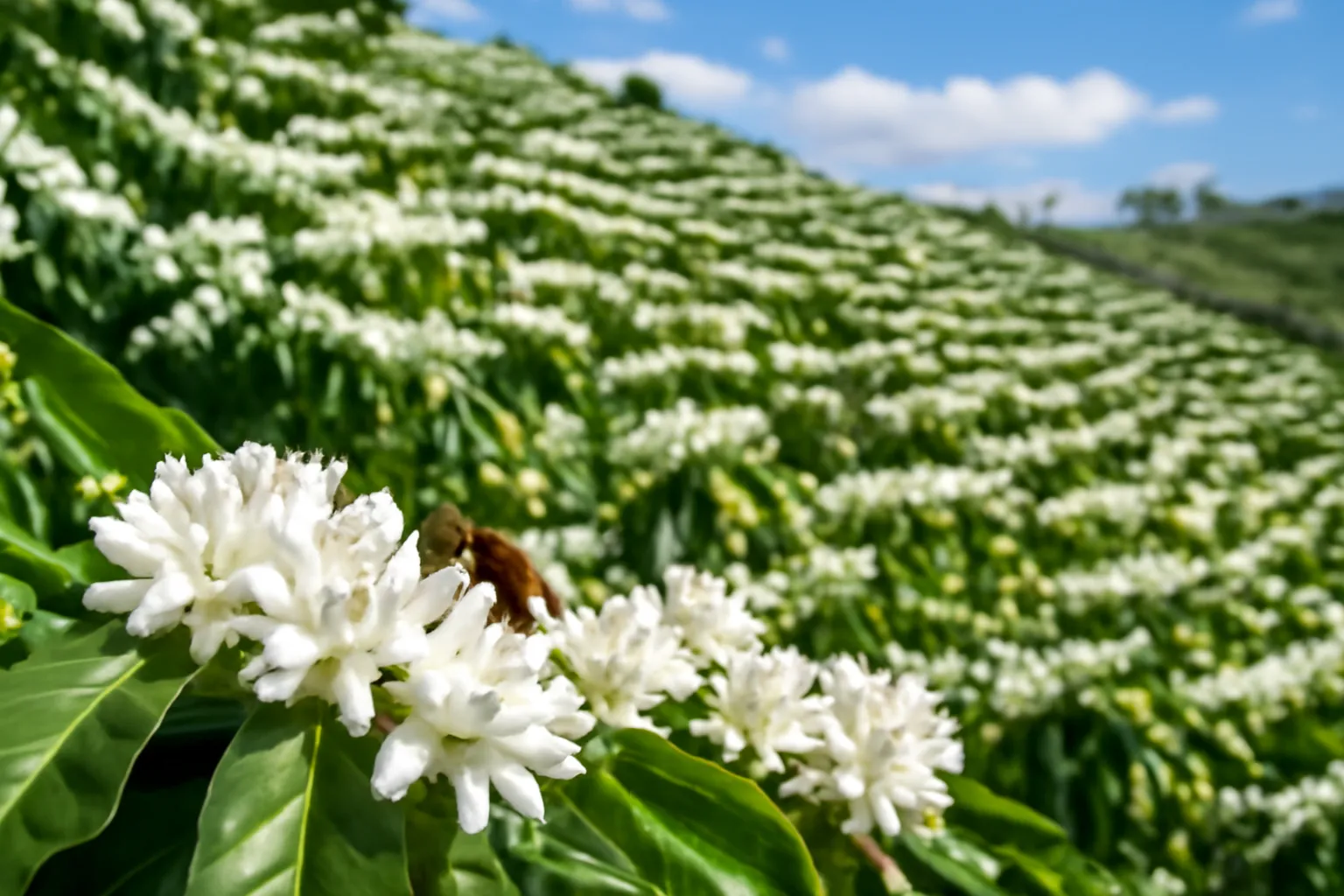
In the Central Highlands coffee blooms once the dry season breaks, usually early in the year, and each flush lasts only a few days. Stingless bee colo
Do Stingless Bees Pollinate Coffee? What We Know
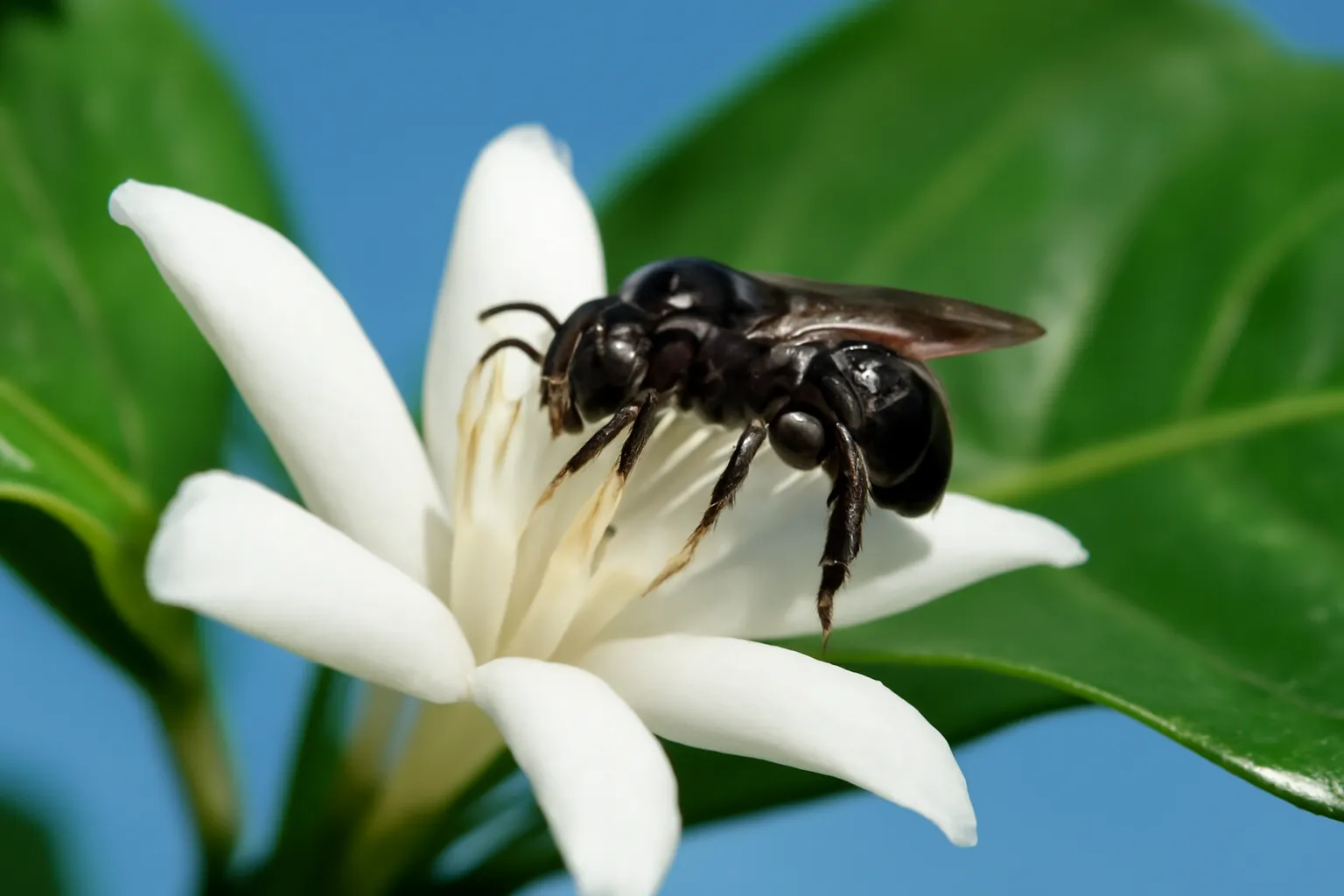
Stingless bees do visit coffee flowers and carry coffee pollen, and studies in several tropical countries suggest bee visits generally help coffee set
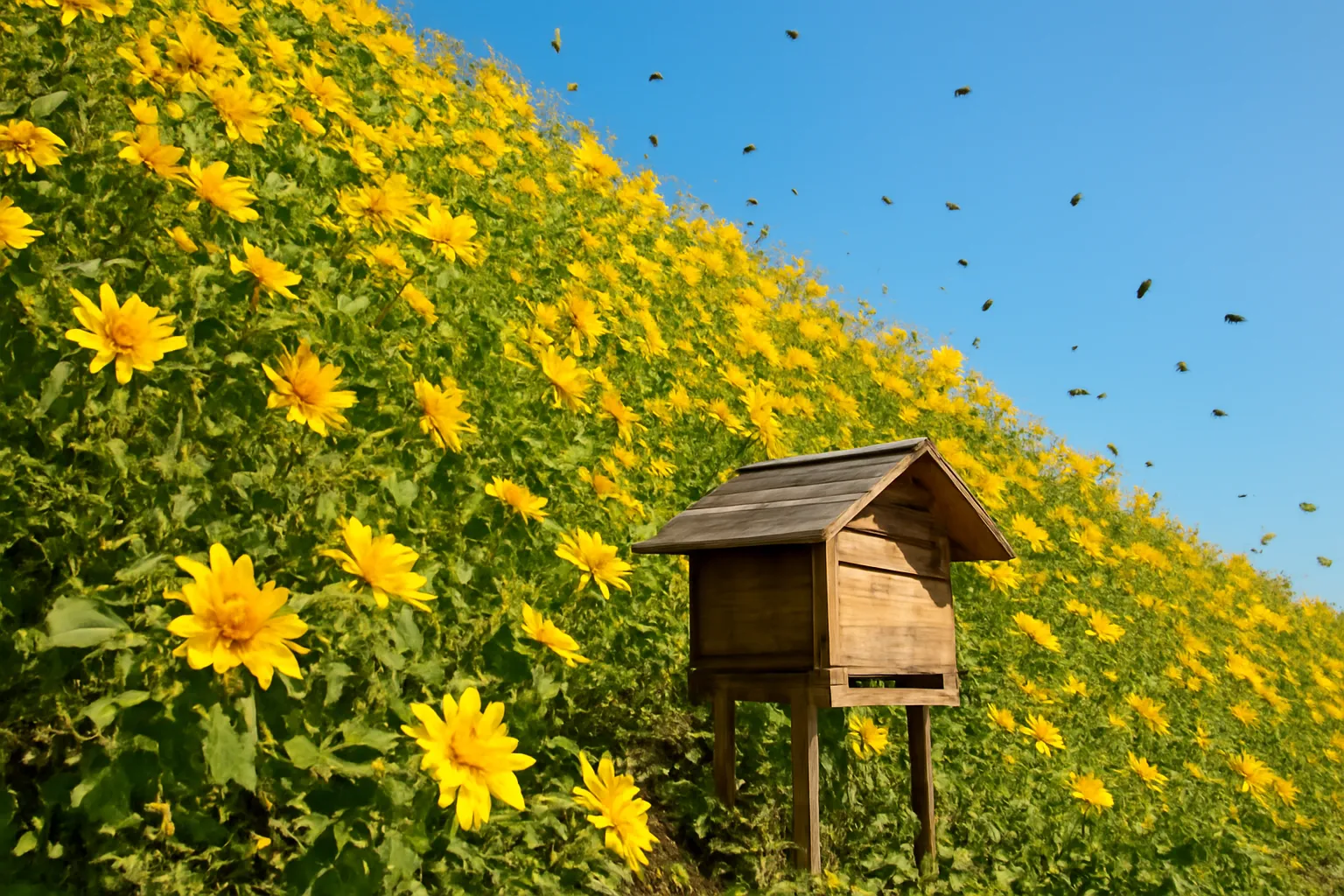
Wild Sunflower Season in the Highlands: Tithonia and Bees
Wild sunflower, Tithonia diversifolia, turns highland roadsides yellow around the end of the rainy season, usually late in the year. Stingless bees wo
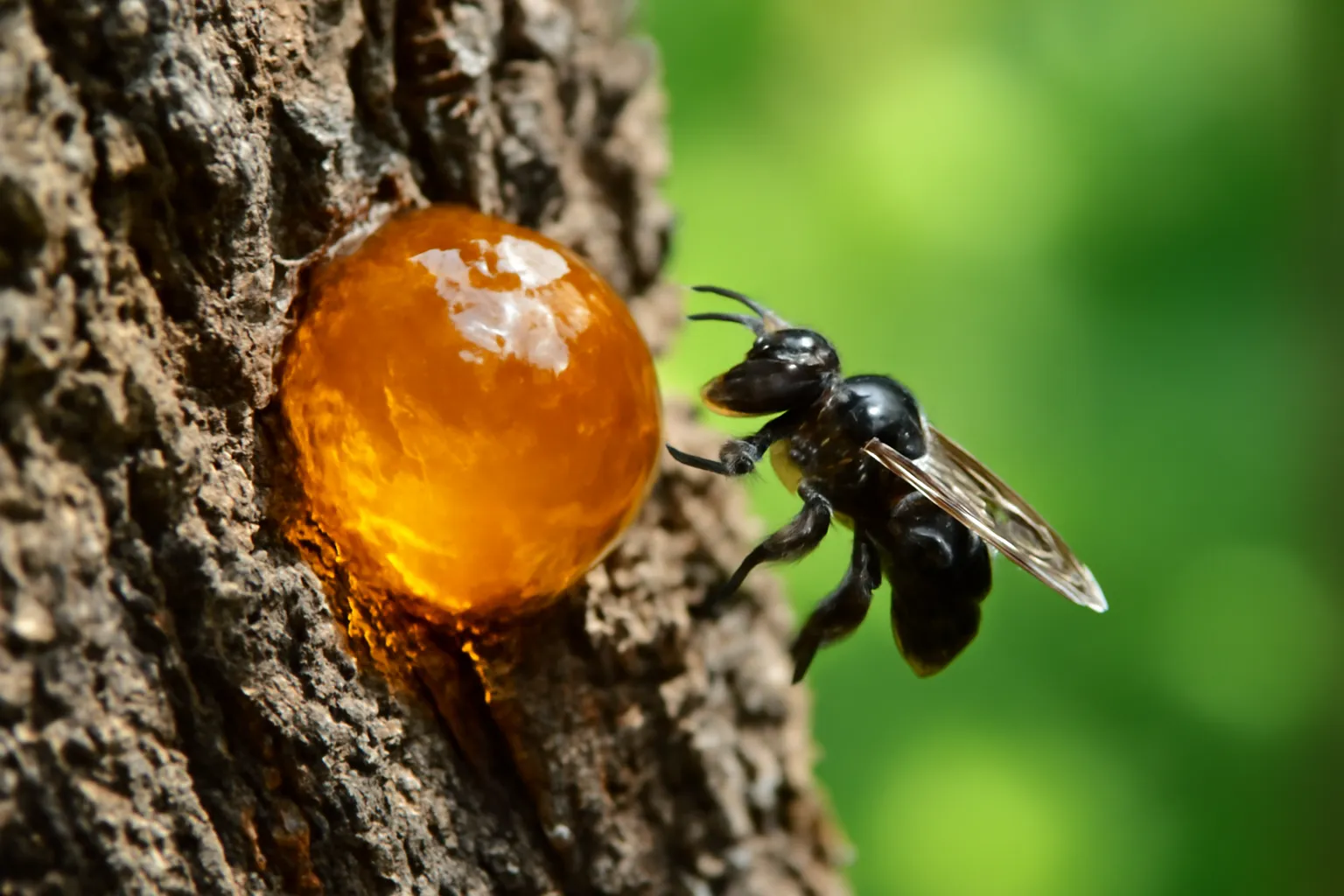
Where Do Stingless Bees Collect Resin, and Why So Much?
Stingless bees gather sticky resin from wounded bark, buds and sap of trees, carrying it home in their pollen baskets. They mix it with wax to build t
 ›
×
›
×

MoraBee is the international name of Ong Moc, a stingless bee farm in Ta Dung, Lam Dong, among forest and coffee gardens: unblended honey in clean jars, starter colonies, and farm visits.
Vietnamese stingless bee honey from the highlands
A brand by Tên Miền Đẳng Cấp
© 2026 MoraBee. All rights reserved. · Copyright · OD-3864-C503