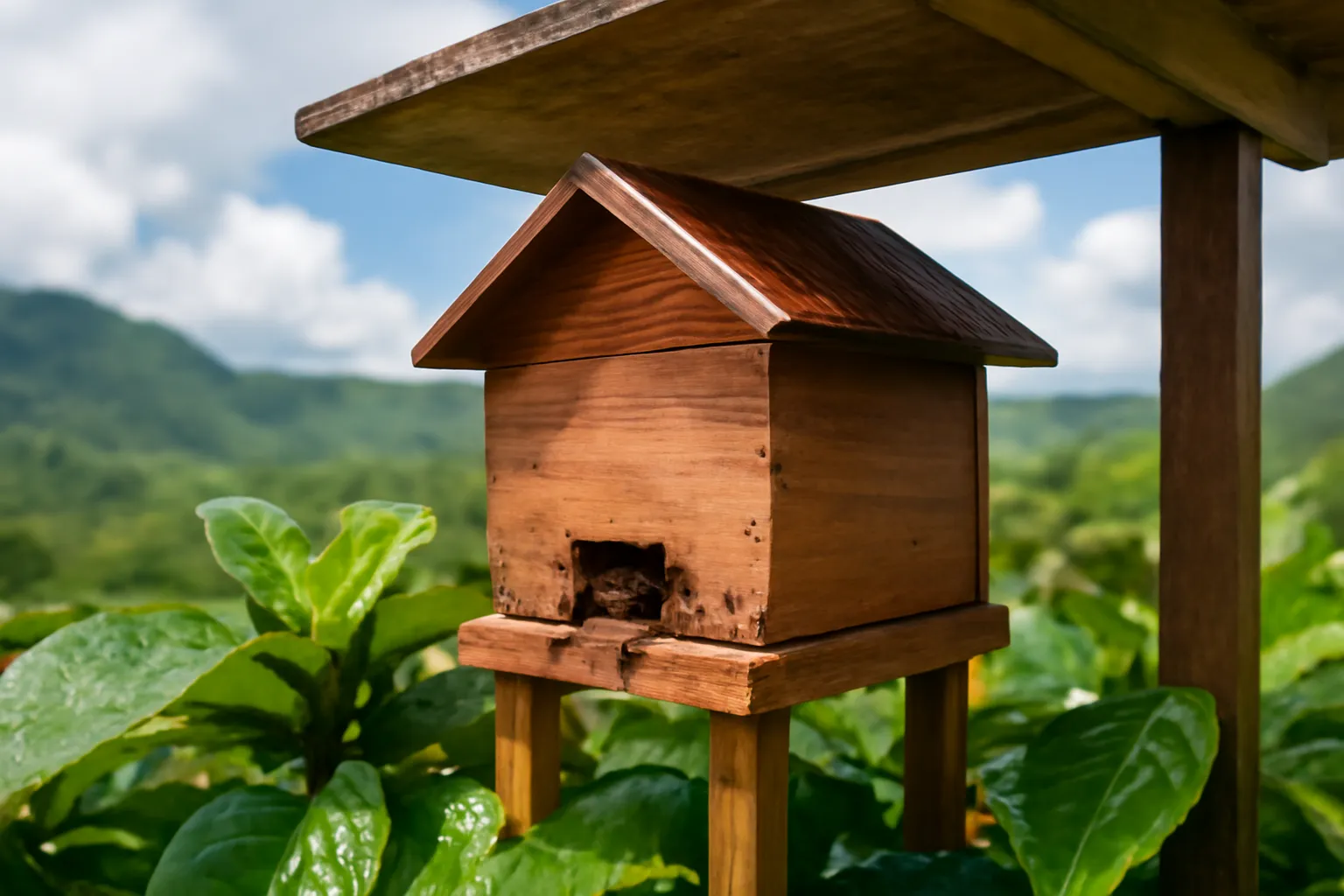
Lean Weeks in the Highland Rainy Season: Stingless Bee Dearth
A dearth, or hungry gap, is a stretch when bees cannot find enough food. In the Lam Dong highlands it often comes in the heart of the rainy season, when days of continuous cloud and rain keep stingless bees inside and what little is in flower goes unvisited. Most strong colonies ride it out on their stores; weaker ones can slip into real trouble.
The keeper's job in those weeks is less about doing and more about watching. This article explains how to recognise a colony that is struggling, how to keep it dry, when a small amount of feeding makes sense, and why giving too much often causes more harm than the hunger itself.
What the rainy season does to a highland colony
The rainy season in the Central Highlands usually runs from around May to October or November, though the edges vary each year. It is not rain every hour; many days start clear and cloud over in the afternoon. The hard weeks are the ones with several days of low cloud, drizzle and cool air, when the sun hardly breaks through. In those spells, stingless bees, which need warmth to fly, may barely leave the hive.
At the same time, fewer plants are in strong flower than in the dry season, and rain washes nectar out of the flowers that are open. Even when bees do fly, the return is small. A colony keeps eating, keeps raising some brood and keeps heating its nest, all while bringing in little. Its honey and pollen pots slowly empty.
A strong colony that went into the rains with plenty of stores usually manages. A colony that was harvested hard late in the dry season, that was recently split, or that was already small, can run low. When stores fall, the queen lays less, the population shrinks and the colony becomes more vulnerable to pests that take advantage of weak hives.
Damp is the second threat. Water leaking into a hive box, or a box sitting in constant humidity without airflow, encourages mould on stores and brood. Stingless bees seal their nests carefully, but they cannot fix a roof that lets in water.
Signs that a colony is going hungry
Little traffic on fine hours. If the sun comes out for an hour and neighbouring hives start flying but one stays quiet, it may be weak or short of bees.
Only guards at the entrance. A few bees standing in the tube with almost no foragers coming and going for days is worth noting.
The hive feels light. Gently lifting the back of a hive and comparing its weight over weeks is one of the simplest ways to sense falling stores.
Empty pots under the lid. In a hive with a viewing panel, honey pots that look open, dry or collapsing suggest stores are being used up.
Shrinking brood area. If you can see the brood, a smaller cluster than before suggests the queen is laying less.
Bees pulling out larvae. Workers removing brood can be a sign the colony is cutting back because it cannot feed everyone.
Phorid flies hovering. Small flies, often phorid flies, hanging around the entrance are drawn to weak or damaged colonies and can lay eggs inside.
Mould on surfaces. Grey or white fuzz on the lid or pots signals damp; it often goes together with a colony too weak to clean its nest.
Ants testing the hive. A weakened colony defends less well; ant trails reaching the box are a warning to act on stand protection.
Compare with neighbours. One hive behaving very differently from others in the same spot is more telling than any general rule.
Do not judge by one day. A single quiet morning in cold mist is normal; look for a pattern over several days.
Keep it dry first, feed second
Before thinking about food, make sure the hive is dry. In highland keeping, many rainy season problems come from water and damp rather than hunger alone. A simple roof that overhangs the box on all sides, a slight tilt so water runs off, and a stand that keeps the hive well above splashing ground solve most problems.
Check that water is not pooling on the lid or seeping through joints. Wrapping a hive tightly in plastic can trap condensation inside, so a roof with air space beneath it is better than a sealed covering. Placing hives under a sheltering ledge, the eaves of a building, or dense trees helps, as long as there is still some morning light.
Avoid opening hives in the rain. Each time you lift the lid in wet, cold weather, you let in moisture and cool the nest, and the bees spend energy repairing and reheating it. If you must check, choose a brief dry spell in the warmest part of the day and close up quickly.
Only after a hive is dry and protected does it make sense to ask whether it needs food.
Light feeding without causing new problems
Feed only when signs point to it. A colony with clear signs of empty stores over several days may benefit; a merely quiet one usually does not.
Their own honey is the first choice. If you kept back honey from the same colony earlier, returning a little of it is the most natural option.
Do not use honey from unknown hives. Honey from other colonies or unknown sources can carry problems you cannot see, so avoid it.
Sugar syrup is a fallback. A thick syrup of plain white sugar and clean water can carry a weak colony through a short gap; never use brown sugar, flavoured products or syrup that has started to ferment.
Give tiny amounts. Offer a small quantity inside the hive, in a shallow dish or a small cup with something for bees to stand on, so they do not drown.
Place food inside, not outside. Food left outside attracts ants, wasps, flies and other bees, and can set off robbing.
Remove what is not taken. Leftover syrup ferments and draws pests within a day or two; take it out if the bees ignore it.
Stop when the weather turns. As soon as bees can forage again, stop feeding and let the colony return to natural food.
Never harvest from fed colonies in that season. Bees store syrup in their pots; harvesting soon after feeding would mix sugar into the honey, which we never accept.
Mark which hives you fed. A note on the hive or in your diary prevents mistakes at harvest time.
Feeding cannot replace forage. If a site is hungry every year, the real answer is planting, moving the hive in a calm season or harvesting less, not ongoing feeding.
Why overfeeding does more harm than good
It is natural to want to help a struggling colony, and many new keepers overdo it. Large amounts of syrup put inside a stingless bee hive often spill, ferment and spread across pots and brood. The smell draws ants and phorid flies, the very pests a weak colony cannot fight off. Generous feeding often causes more trouble than careful restraint.
Overfeeding also hides the real problem. A colony that only survives because it is fed every rainy season is sitting in the wrong place or being harvested too hard. The fix is to change those things: leave more stores at the last harvest before the rains, protect or plant forage near the hives, and move colonies only in a calm season if a site is truly poor.
There is a further reason we keep feeding to a minimum. Our honey is meant to be nothing added and nothing taken away, a record of what the bees gathered from the forest and gardens around them. Feeding sugar and then harvesting would break that promise. So when we do feed in an emergency, those pots stay with the bees.
The best rainy season management happens months earlier. Harvest lightly toward the end of the dry season, make sure every hive has a good roof before the first heavy rains, and accept that colonies will be quieter until the sun returns. When the yellow wild sunflowers come out on the roadsides, they will start to rebuild.
Câu hỏi thường gặp
Should I feed stingless bees in the rainy season?
Only if a colony shows clear signs of empty stores over several days and the weather keeps it from foraging. Keep feeding small, put it inside the hive, and stop as soon as the bees can fly again. Most strong colonies need no feeding at all.
What sugar syrup do stingless bees accept?
Keepers who feed generally use plain white sugar dissolved in clean water to make a thick syrup. Avoid brown sugar, flavoured syrups and anything fermented. Honey from the same colony is a better option if you kept some back.
Can stingless bees drown in syrup?
Yes. Tiny bees can easily drown in an open dish. Use a very shallow container with pebbles, a twig or a piece of mesh for them to stand on, and give only small amounts at a time.
How long can a stingless bee colony go without foraging?
It depends on the colony's size and how much honey and pollen it stored beforehand. A strong colony can often ride out a long rainy spell, while a small or recently harvested one may run low much sooner. Watching for signs is more reliable than counting days.
Why do phorid flies appear after rainy weeks?
Phorid flies are drawn to the smell of weakened colonies, damaged pots and fermenting food. Keeping hives dry, avoiding spilled syrup and opening hives as little as possible reduces the risk.
Is it safe to harvest honey after the rainy season?
Wait until the colony has rebuilt and is foraging well, and never harvest pots that may contain syrup you fed. Harvesting from a colony that has just come through a hungry gap slows its recovery.
Written by the team behind a working stingless bee farm about 40 km from Ho Chi Minh City, Vietnam. Articles come from day-to-day work at the farm; technical figures are stated as ranges, not promises.
About the team →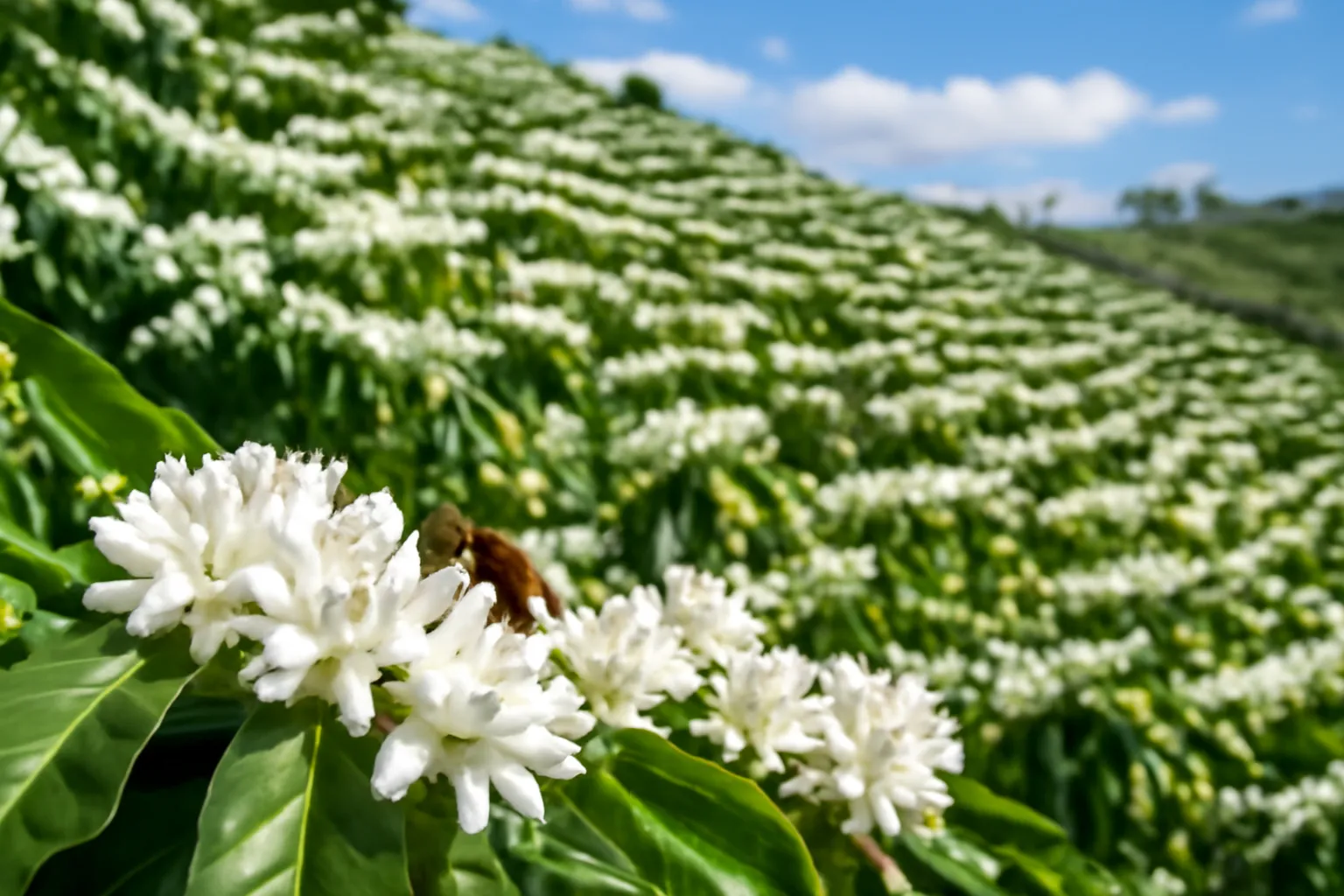
Coffee Flowering Season and Stingless Bees in the Highlands
In the Central Highlands coffee blooms once the dry season breaks, usually early in the year, and each flush lasts only a few days. Stingless bee colo
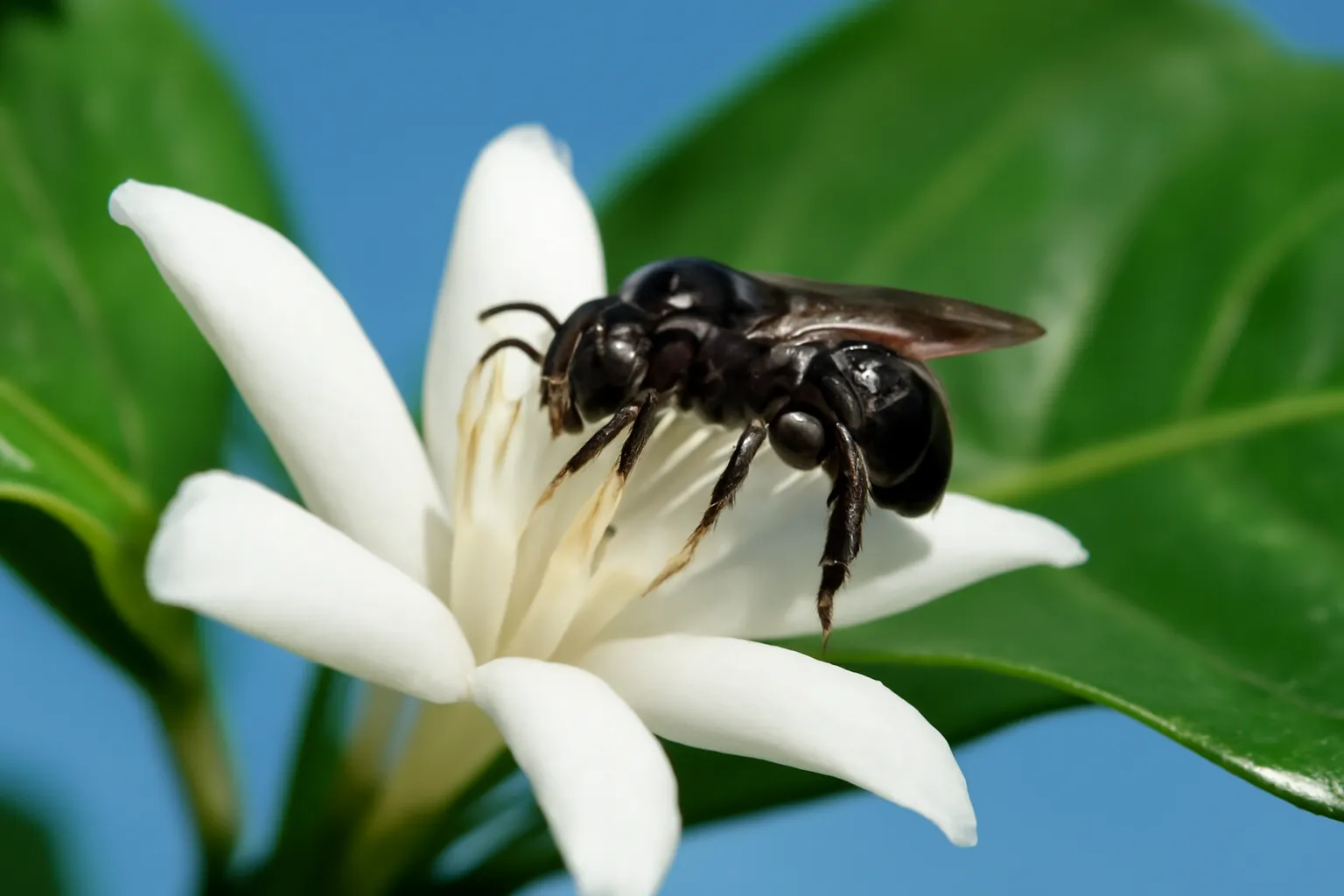
Do Stingless Bees Pollinate Coffee? What We Know
Stingless bees do visit coffee flowers and carry coffee pollen, and studies in several tropical countries suggest bee visits generally help coffee set
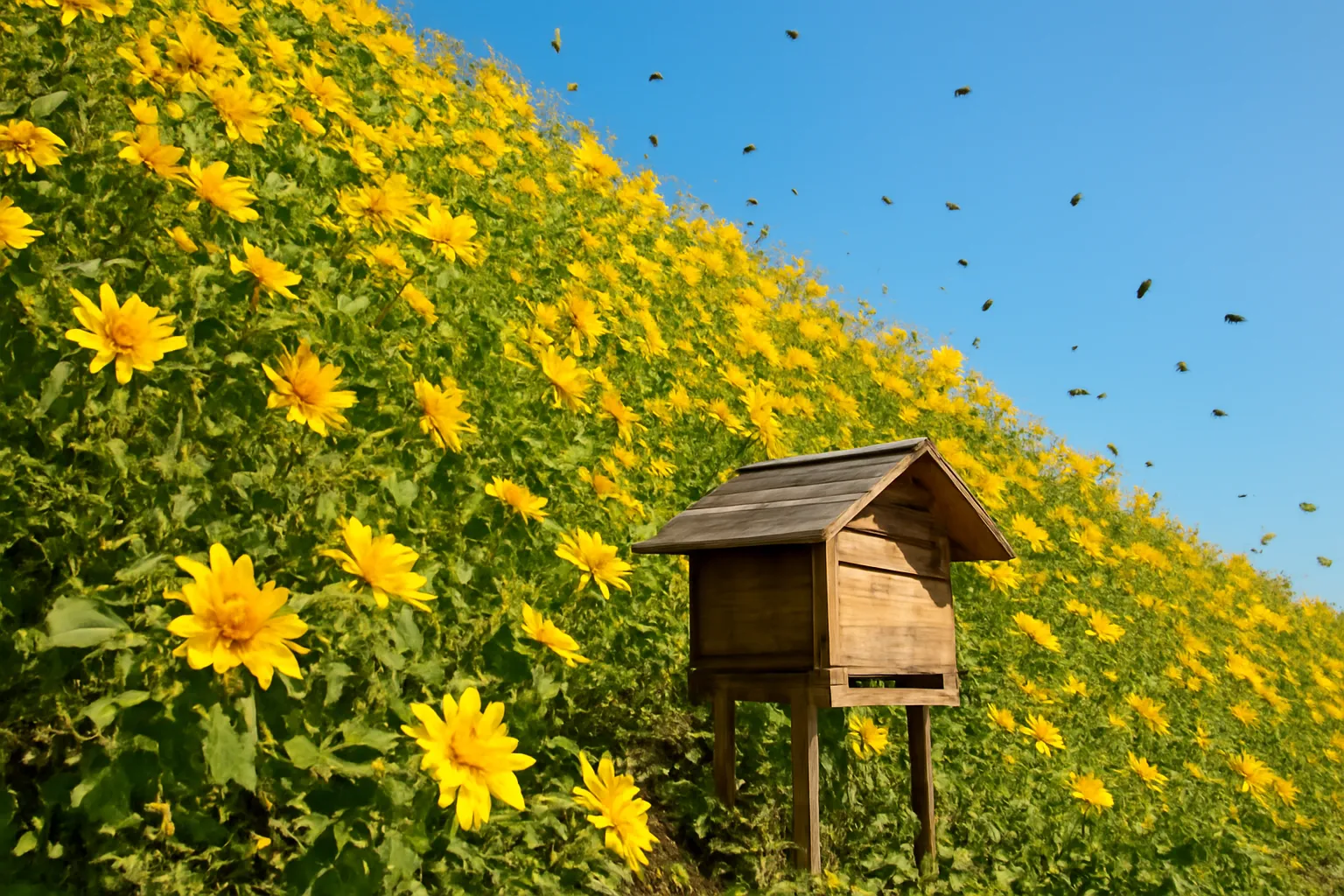
Wild Sunflower Season in the Highlands: Tithonia and Bees
Wild sunflower, Tithonia diversifolia, turns highland roadsides yellow around the end of the rainy season, usually late in the year. Stingless bees wo
Where Do Stingless Bees Collect Resin, and Why So Much?
Stingless bees gather sticky resin from wounded bark, buds and sap of trees, carrying it home in their pollen baskets. They mix it with wax to build t
Avocado, Durian and Macadamia Flowers for Stingless Bees
Highland orchards planted between coffee rows give stingless bees extra flowers in the dry months. Avocado suits tiny bees best because its small, ope
 ›
×
›
×

MoraBee is the international name of Ong Moc, a stingless bee farm in Ta Dung, Lam Dong, among forest and coffee gardens: unblended honey in clean jars, starter colonies, and farm visits.
Vietnamese stingless bee honey from the highlands
A brand by Tên Miền Đẳng Cấp
© 2026 MoraBee. All rights reserved. · Copyright · OD-3864-C503