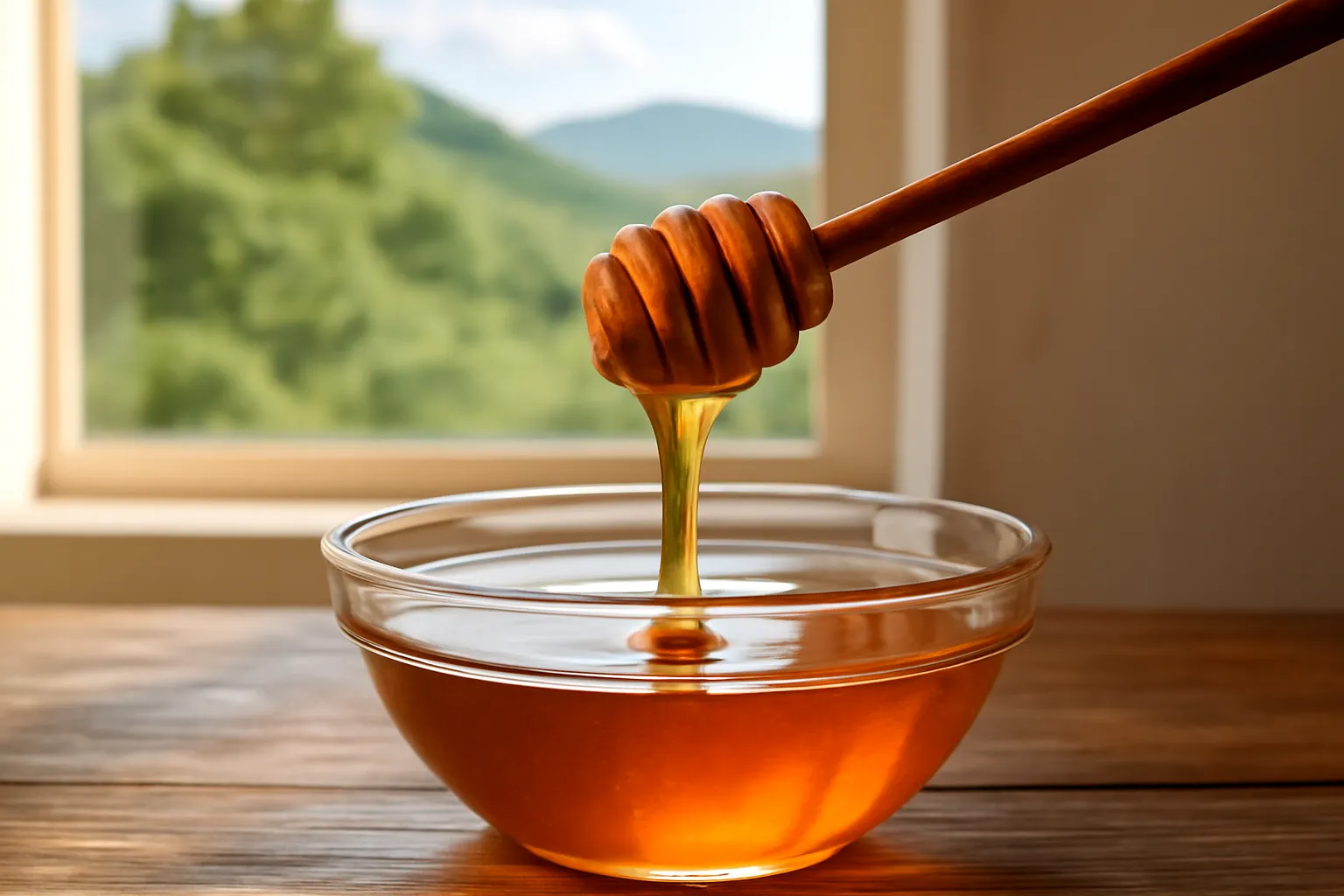
Raw unprocessed stingless bee honey: what "raw" really means
Raw, unprocessed stingless bee honey is honey that has been drained from the bees' wax pots, strained through a fine cloth and put in a jar, with nothing else done to it: no heating, no drying to thicken it, no blending with other honey or syrup. It stays runny, a little tart, and it keeps changing slowly in the jar, which is exactly what raw food does.
The word "raw" is printed on so many labels now that it has almost stopped meaning anything. For stingless bee honey it is worth being precise, because this honey is unusually watery and many sellers are tempted to "fix" that. Below we explain what each step from hive to jar involves, which shortcuts take honey out of the raw category, and why the Vietnamese word moc describes our approach better than any English label.
What makes stingless bee honey different before anyone touches it
Stingless bees, the small dark bees of the tribe Meliponini (in our area mostly Tetragonula), do not build the flat hexagonal comb of the ordinary honey bee. They store honey in round pots made of cerumen, a soft mix of bee wax and plant resin, clustered at the edges of the nest. Each pot is about the size of a grape or a small marble, and a colony fills them slowly, a little at a time.
The honey inside is thinner than the honey most people know. It has more water in it, and it carries the taste of the resin pots it was stored in, so it is tart, sometimes almost lemony, and often a little herbal. None of this is a defect. It is the honey the bees make, in the containers they choose.
Because of that extra water, stingless bee honey behaves differently once it leaves the hive. Left warm and open, it can start to ferment: you see fine bubbles, a fizzy edge to the taste, sometimes a slight sourness that grows. Ordinary honey is thick enough that this rarely happens. This one fact explains almost every processing decision you will read about.
So the honest question is not "is this honey raw?" but "what did someone do about the water and the fermentation?" There are only a few possible answers, and each one either keeps the honey raw or quietly changes it into something else.
In the cool, wet highlands around Ta Dung the question is sharper still. Long rainy weeks mean the air is damp, and honey left uncovered even for a short time picks up moisture. Raw handling here is less about a slogan and more about clean, fast, careful work.
Which processing steps take honey out of the "raw" category?
Heating, even gently. Warming honey makes it easier to filter and pour, and kills the yeasts that cause fermentation. It also flattens the fresh, sharp taste. Heated honey is still honey, but it is no longer raw.
Pasteurisation. This is controlled heating to a set temperature for a set time. It is a legitimate food process and some producers use it to make the honey shelf-stable. It is the opposite of raw.
Dehydrating. Some sellers draw water out of stingless bee honey in a warm room or a machine so it thickens and stops fermenting. The result looks more like familiar honey, but the texture and taste are no longer what the bees made.
Blending with other honey. Mixing stingless bee honey with cheaper, thicker honey from ordinary honey bees changes its taste and its nature. The jar should then say so, but not every jar does.
Adding syrup or sugar. This is adulteration, not processing. A jar that is unusually thick, very sweet and has no tartness at all is worth asking questions about.
Fine pressure filtering. Pushing honey through very fine filters under pressure removes pollen and tiny wax particles and gives a perfectly clear liquid. Simple straining through cloth is what raw handling means.
Squeezing the whole nest. Crushing brood, pollen pots and honey pots together gives a muddy, mixed product. Careful harvesting opens only honey pots and leaves the rest of the nest alone.
Long storage in warm metal tanks. Honey that sits for weeks in a warm container changes even without deliberate heating. Small batches bottled quickly stay closer to fresh.
Adding flavourings. Ginger, lemon or herbs mixed in might taste nice, but that is a flavoured product. Raw honey is just honey.
Colour correction. Mixing light and dark batches so every jar looks the same is a kind of blending. Raw honey varies from batch to batch, and that is normal.
Re-bottling bought-in honey. Honey bought in bulk from unknown hives and put in a farm label loses its story. Raw also means you can say where it came from.
What raw handling does allow. Opening the honey pots by hand, draining, straining through clean cloth or mesh, and bottling into clean, dry jars. That is the whole list.
From wax pot to jar: how raw honey is handled at a highland farm
Harvesting starts with choosing the right day. A dry, bright morning is best, after the bees have had a good stretch of forage and before the long rains settle in. Damp air and wet hands are the enemies of honey that is already watery.
The keeper opens the hive and finds the honey pots, which sit apart from the brood, the cluster of cells where young bees develop. Only sealed, full honey pots are opened. Pollen pots and brood stay untouched, because the colony needs them to keep going after we have gone.
The pots are pierced with a clean tool and the honey drains out, either by tilting the section over a bowl or by gentle suction with a clean tube. It then passes through a fine cloth to catch bits of wax and the odd bee. Nothing is heated, nothing is pressed hard.
Bottling happens quickly, into clean jars that are completely dry inside, because a drop of water in the jar is a drop of extra moisture in the honey. The jars are closed and kept cool. That is the moment the honey stops being the bees' and becomes food, and from there the job is simply not to spoil it.
What we do not do is equally important: we do not leave pots open to the air for an afternoon, we do not warm the honey to make it pour faster, and we do not top up a short batch with honey from somewhere else.
What "moc" means, and why we use the word
A plain, everyday word. In Vietnamese, moc describes something in its natural state: unpainted wood, a plain face without makeup, a simple meal without fuss.
Nothing added. No syrup, no other honey, no flavouring, no preservative. Applied to honey, this is the first half of the meaning.
Nothing taken away. No water drawn out, no pollen filtered away under pressure, no taste cooked off by heat. This second half is where many "raw" labels quietly fail.
It carries a little humility. Calling honey moc does not claim it is better than all other honey. It only promises that you are tasting what the bees and the forest produced.
It accepts variation. One harvest after coffee blossom tastes different from one after a forest bloom. A moc honey does not hide that.
It is about handling, not origin alone. Honey from a beautiful forest can still be heated and blended. The word is about what people did, not just where the bees flew.
It is easy to check by taste. Raw stingless bee honey is runny and tart. If a jar is thick and flat-sweet, it has likely been changed.
It explains the fridge advice. Because nothing was done to stop fermentation, the honey needs cool storage. That is the trade for keeping it unprocessed.
It explains small batches. Untreated honey is best bottled and eaten fresh, so a farm working this way rarely sits on large stocks.
It is not a certification. Moc is a description of practice. It is not an official grade, and we do not claim any certificate for it.
It sets expectations honestly. A few bubbles, a slight change in colour over months, a little sediment: all normal for honey that was left as it was.
How to look after a jar of raw stingless bee honey
Keep it in the fridge once opened. Cold slows the natural yeasts and keeps the taste fresh. Many people keep it chilled from the day it arrives.
Use a dry spoon, every time. A wet spoon adds water and crumbs, both of which speed up fermentation.
Close the lid straight away. Honey pulls moisture from the air, especially in a humid kitchen in the rainy season.
Do not decant into a warm container. A jar left on a sunny shelf or above the stove will change faster than one in a cool cupboard or fridge.
Expect it to stay runny. It will not set like the honey you may know, because of its water content and sugar profile.
A few bubbles are not a disaster. Light fizz at the top usually means mild fermentation. Many people still use it, but if it smells strongly alcoholic or off, trust your nose and stop.
Sediment can appear. Tiny particles of wax or pollen may settle. Stir gently or leave them, they come from the nest.
Colour can darken over months. This is a slow natural change, not spoilage on its own.
Keep it out of reach of babies. Children under one year old must not be given honey of any kind, raw or not.
Health questions go to a doctor. Honey is food. If you are managing diabetes, pregnancy or any condition, ask your doctor before adding it to your diet.
Buy small and often. Raw honey is at its best within a reasonable time after harvest, so a smaller jar used up steadily is easier than a large one that sits.
Frequently asked questions
Is raw stingless bee honey safe to eat?
For most adults raw honey is an ordinary food when it is harvested and stored cleanly. Children under one year old must not be given any honey. If you have a medical condition or are pregnant, ask your doctor.
Why is my raw stingless bee honey so runny?
Stingless bees store honey with more water in it than honey bees do. Raw honey keeps that water, so it pours almost like syrup. Thick stingless bee honey has usually been dried or blended.
Does raw stingless bee honey need to be refrigerated?
It is the safest way to keep it fresh, because nothing was done to stop natural fermentation. A cool, dark place works for a short time, but in warm or humid weather the fridge is best.
Is dehydrated stingless bee honey still raw?
Not in the strict sense. Drawing out water changes the texture and taste, even if no high heat was used. It may be a good product, but it is no longer the honey as it came from the pots.
What does "moc" mean on Vietnamese honey?
It is an everyday Vietnamese word for something in its natural state. On honey it means nothing was added and nothing was taken away. It is a description of practice, not an official grade.
How can I tell if stingless bee honey has been heated?
Taste is the easiest clue: heated honey loses some of its bright, tart edge and tastes flatter. It is hard to be sure at home, so ask the seller directly how the honey was handled.
Written by the team behind a working stingless bee farm about 40 km from Ho Chi Minh City, Vietnam. Articles come from day-to-day work at the farm; technical figures are stated as ranges, not promises.
About the team →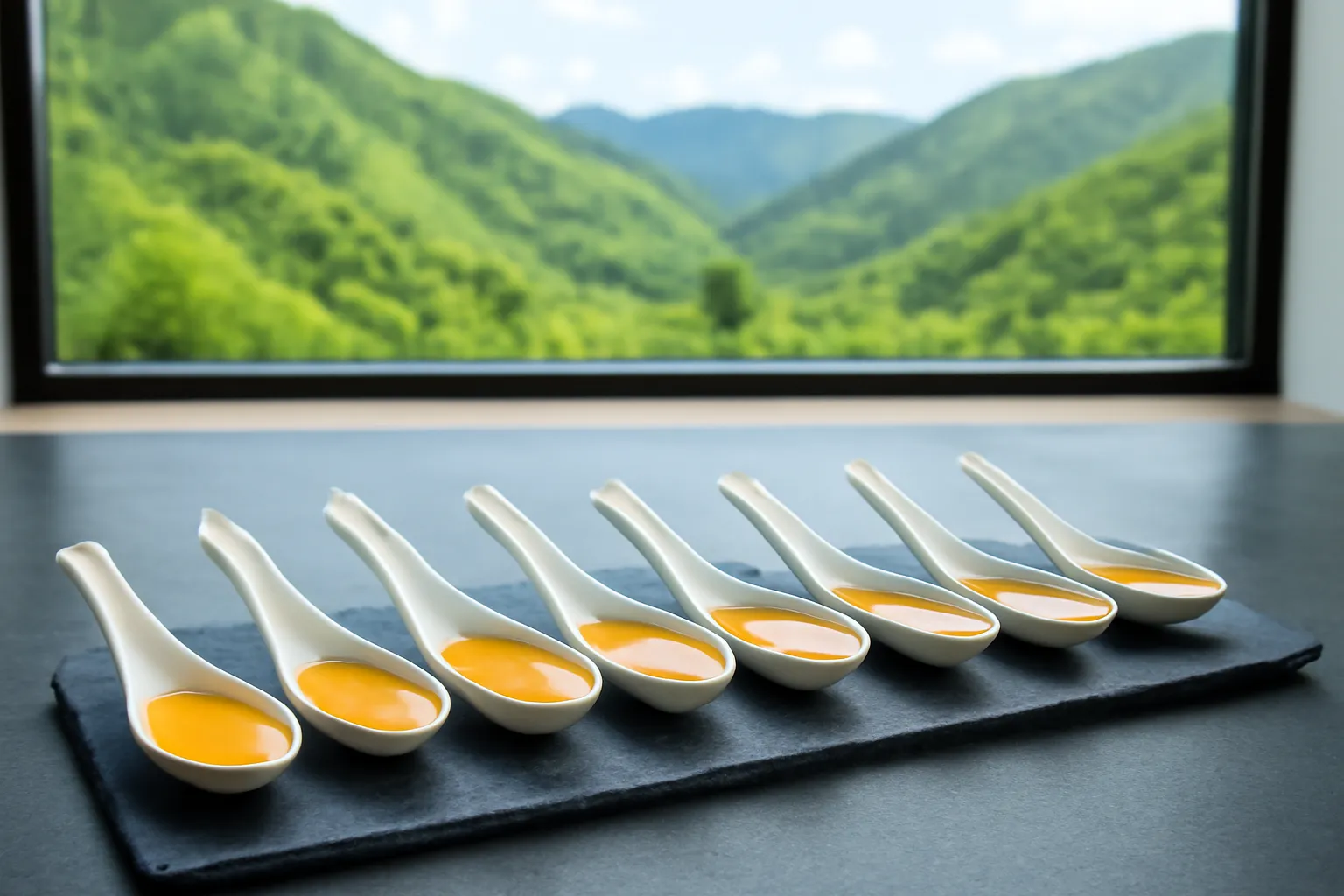
Forest stingless bee honey taste: highland flavour notes
Highland stingless bee honey tastes tart first, then sweet, with herbal, woody or resin notes from forest and coffee garden forage. It is usually shar
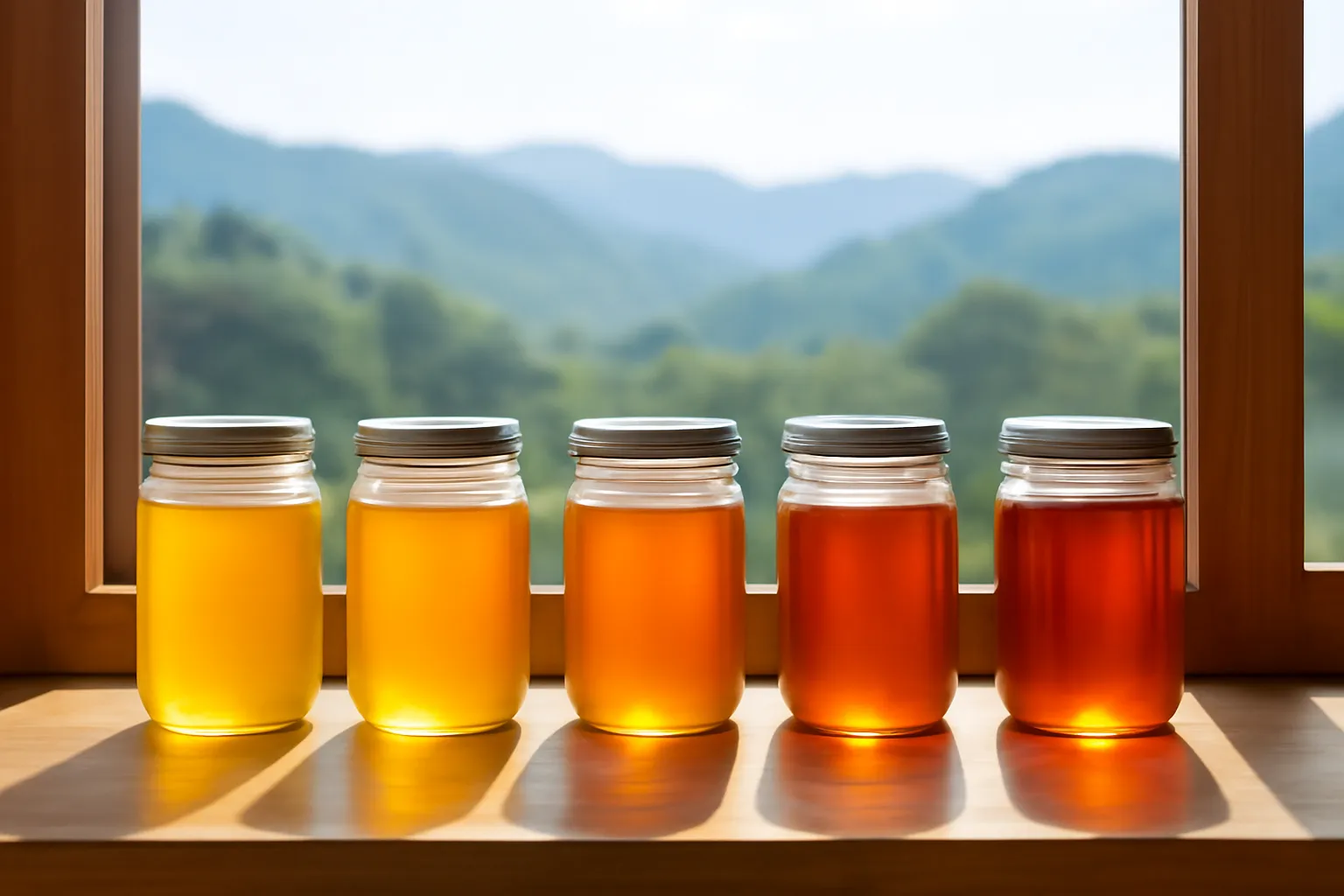
Stingless bee honey colour: why one jar is pale, the next dark
Stingless bee honey changes colour because of the flowers the bees fed on, the season, the resin of the pots and how long the honey was stored. Colour
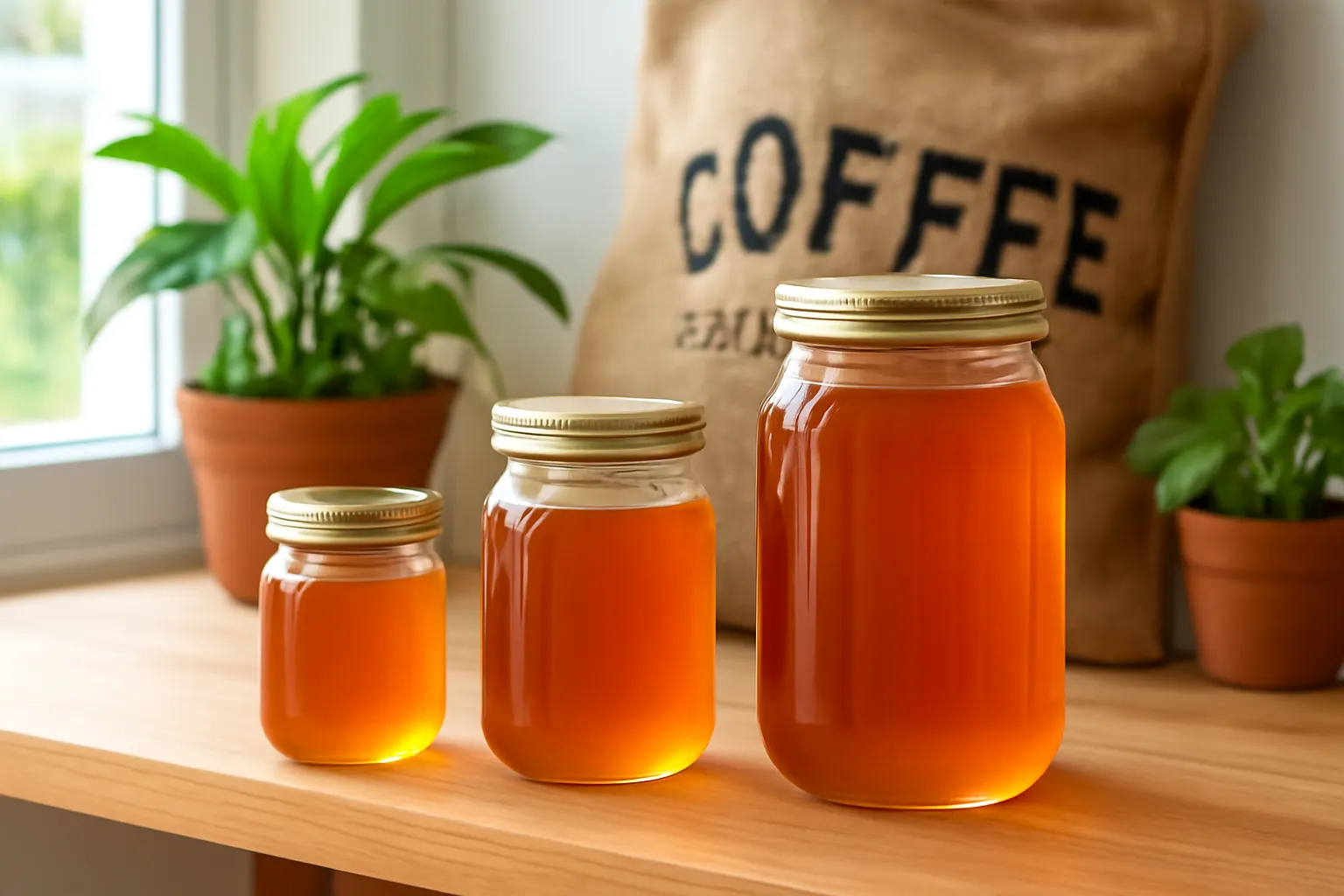
Buy stingless bee honey in Vietnam: unblended highland jars
You can buy unblended highland stingless bee honey from Ong Moc (MoraBee) in Ta Dung, Lam Dong, in 100 ml, 200 ml and 500 ml jars at 290.000₫, 580.000

Stingless bee honey in coffee: pairing it with Vietnamese coffee
Stingless bee honey works well in iced black Vietnamese coffee and in light tea, where its tartness brightens the drink. Add it after brewing and go e
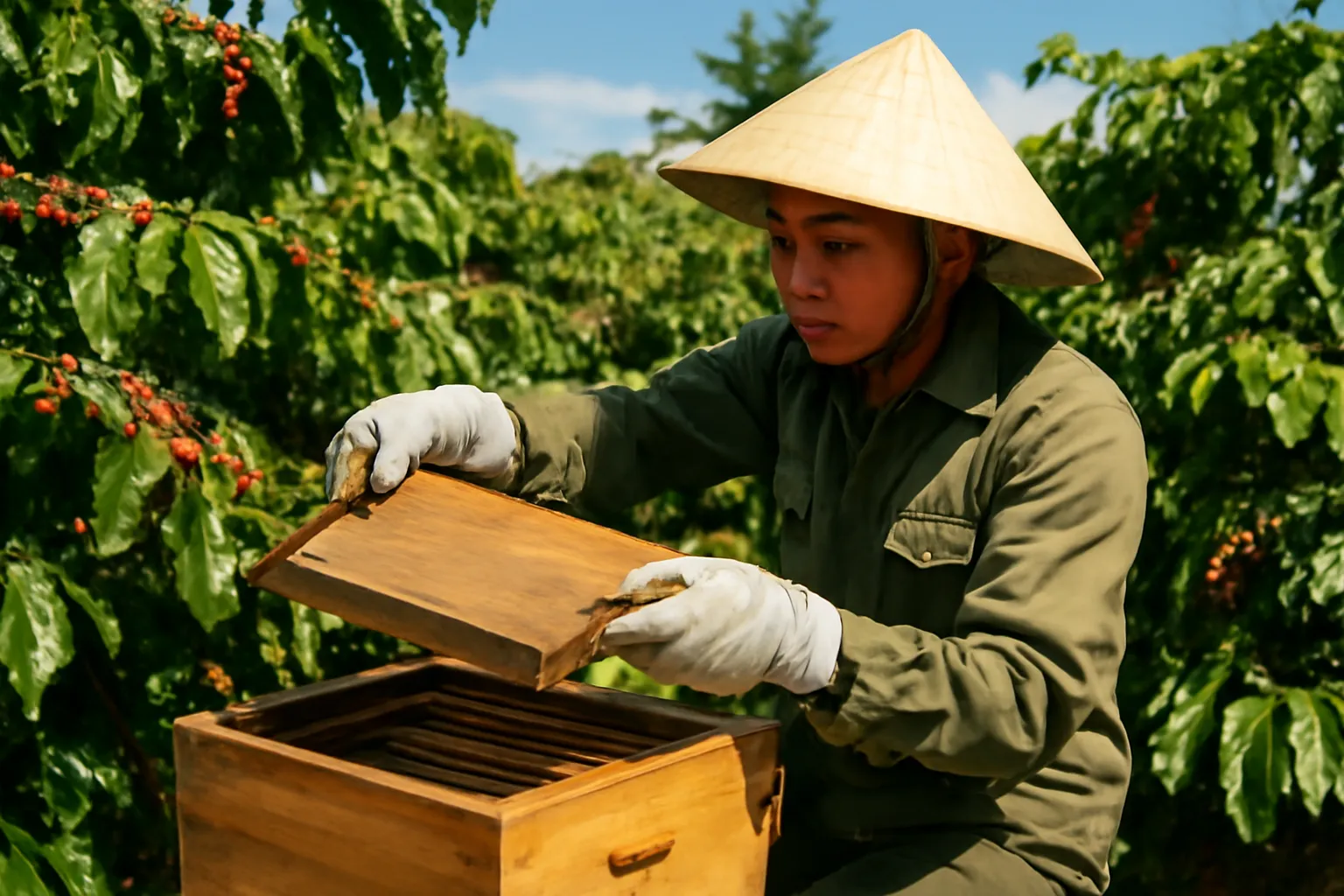
Best time to harvest stingless bee honey in the highlands
In the highlands the best time to harvest stingless bee honey is on dry, bright days after a strong bloom and before the long rains, taking only seale
 ›
×
›
×

MoraBee is the international name of Ong Moc, a stingless bee farm in Ta Dung, Lam Dong, among forest and coffee gardens: unblended honey in clean jars, starter colonies, and farm visits.
Vietnamese stingless bee honey from the highlands
A brand by Tên Miền Đẳng Cấp
© 2026 MoraBee. All rights reserved. · Copyright · OD-3864-C503