Buy a Stingless Bee Colony in Lam Dong: Price and Pickup
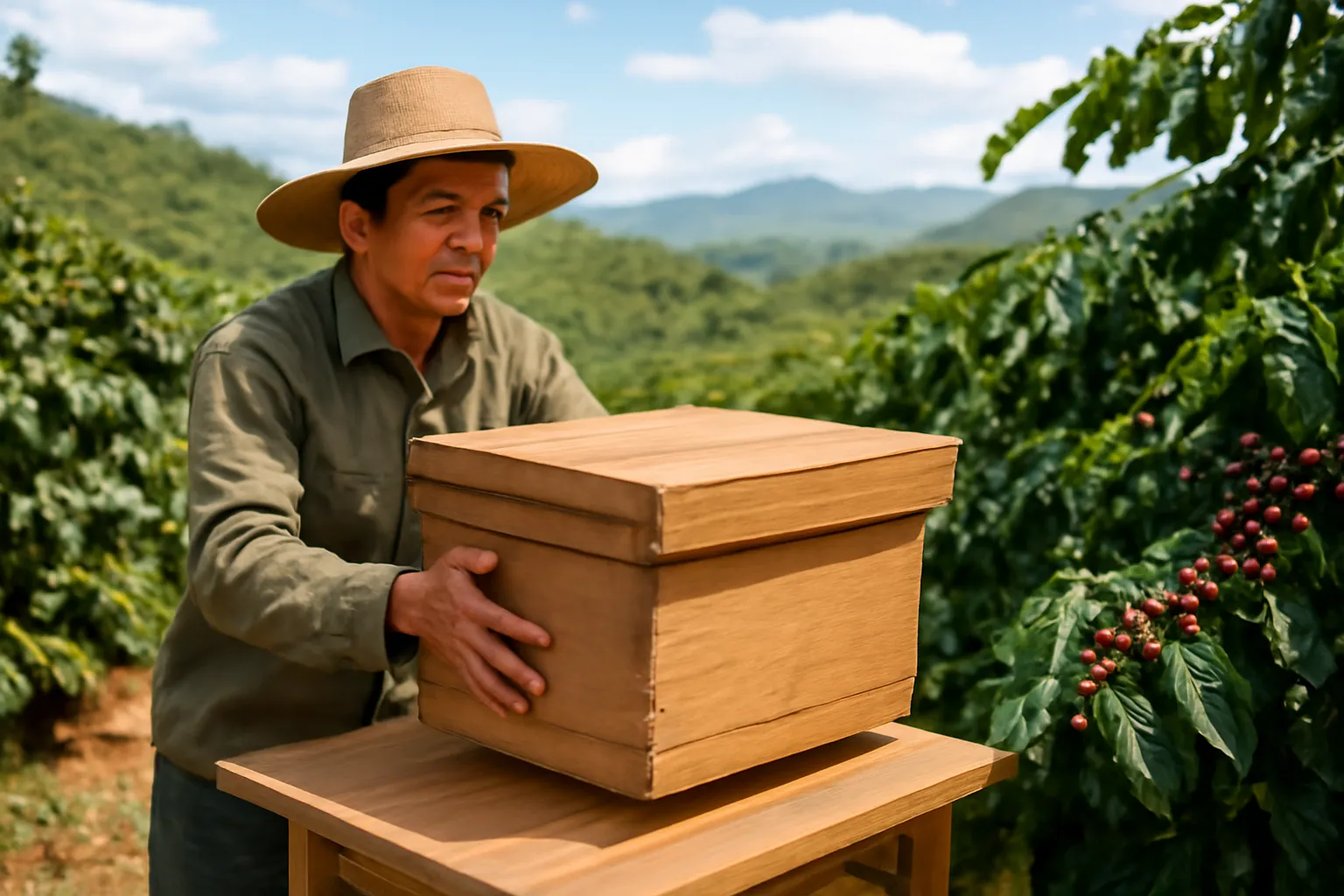
A starter stingless bee colony from Ong Moc, the farm behind MoraBee in Ta Dung, Lam Dong, costs 2.900.000₫. It is a living, propagated colony of small stingless bees in its own wooden box, and you collect it at the farm on a day agreed by phone or Zalo on +84 818 83 22 83.
Before you pay for anything, it helps to know what a colony actually is, what a fair question to ask the keeper sounds like, and what the first hours after pickup demand from you. This page covers all three, in the order you will need them.
What you are actually buying
In Vietnam these bees are called ong dú, a folk name for stingless bees of the tribe Meliponini (the group of bees that have a reduced, useless sting). On our hills the common kind belongs to the genus Tetragonula: small, dark, quick bees that build their nest from cerumen, a soft mixture of beeswax and plant resin. They store honey and pollen in round pots, not in the hexagonal comb you may picture from honey bee farms.
A starter colony is not a box of loose bees. It is a working household: a laying queen, brood (the developing young, held in a cluster of cells near the centre), workers of every age, some food pots and the resin structures that hold everything together. That is why it travels in a closed box and why it cannot simply be poured into a new home like a package of honey bees.
Our colonies are propagated, which means they were raised by splitting strong colonies that already live in boxes at the farm, not cut out of trees in the forest. This matters to us for reasons we explain in a separate article, and it also matters to you: a colony that has always lived in a box is used to being lifted, moved and opened by people.
What a colony does not come with is a promise. We do not tell anyone how much honey a box will make or how fast it will grow, because that depends on where it ends up living, what flowers are around it and how it is treated. A healthy colony settled in a sensible spot will usually get on with its life quietly; the rest is weather and forage.
Price and what to ask before you pay
The list price is 2.900.000₫ per starter colony. That is the farm’s current price for one colony. We do not run bundles or discounts, and we would rather you buy one and come back than buy three on impulse.
Ask what the box is made of and how it opens. Some boxes have a separate honey super (a top section for food pots), others are a single chamber. Knowing which you have tells you how you will check it later.
Ask when the colony was last split. A colony that was split very recently is still rebuilding. A keeper who knows the answer is a keeper who keeps records, which is a good sign in itself.
Ask to see the entrance before it is closed. Bees coming and going with pollen on their back legs, and guards standing at the resin tube, are the simplest signs of a working colony.
Ask about the species. Most of our boxes are Tetragonula. If you are curious about the tiny Lisotrigona, ask separately; they are kept differently and are rarely sold as starters.
Ask where the colony should live. Tell the keeper honestly whether you have a garden, a coffee plot, a balcony or a city rooftop. The advice changes with the place, and a good keeper will say so.
Ask what to do if something looks wrong in the first weeks. Save the farm’s number in your phone before you leave. A photo of the entrance sent by Zalo often answers more than a long description.
Do not ask for a guaranteed honey harvest. Nobody honest can give one. Stingless bees make small amounts of runny, tart honey, and a new colony uses most of what it gathers to grow.
Check that you have shade waiting at home. The first decision you make is where the box sits. If you have not chosen a shaded, dry, ant-free spot yet, wait a week and choose it first.
Think about who else lives with you. Stingless bees do not sting, but they may bite or tangle in hair if the nest is disturbed. Tell the household before the box arrives.
Ask about honey jars if you want a taste first. If you would like to know what highland honey from the farm tastes like before committing to a colony, a 100 ml jar is 290.000₫ and a 200 ml jar is 580.000₫.
Buying from abroad is a different question. Live colonies cannot simply be posted to another country. Biosecurity rules differ everywhere, so check with your own national authority before you even ask us.
When to collect the colony
The best pickup is a dry morning. In Ta Dung the long rains usually run from around May into the later months of the year, and a box carried through a downpour gets damp, cold and shaken. If the forecast shows heavy rain on the day you planned, it is better to move the date than to fight the weather.
Early in the day the air is cool and most foragers have not left yet. Many keepers close the entrance in the evening, once the bees are home, and hand over the box the next morning. Ask us how we will do it on your day, and arrive at the agreed time so the box is not left sitting in a closed state longer than necessary.
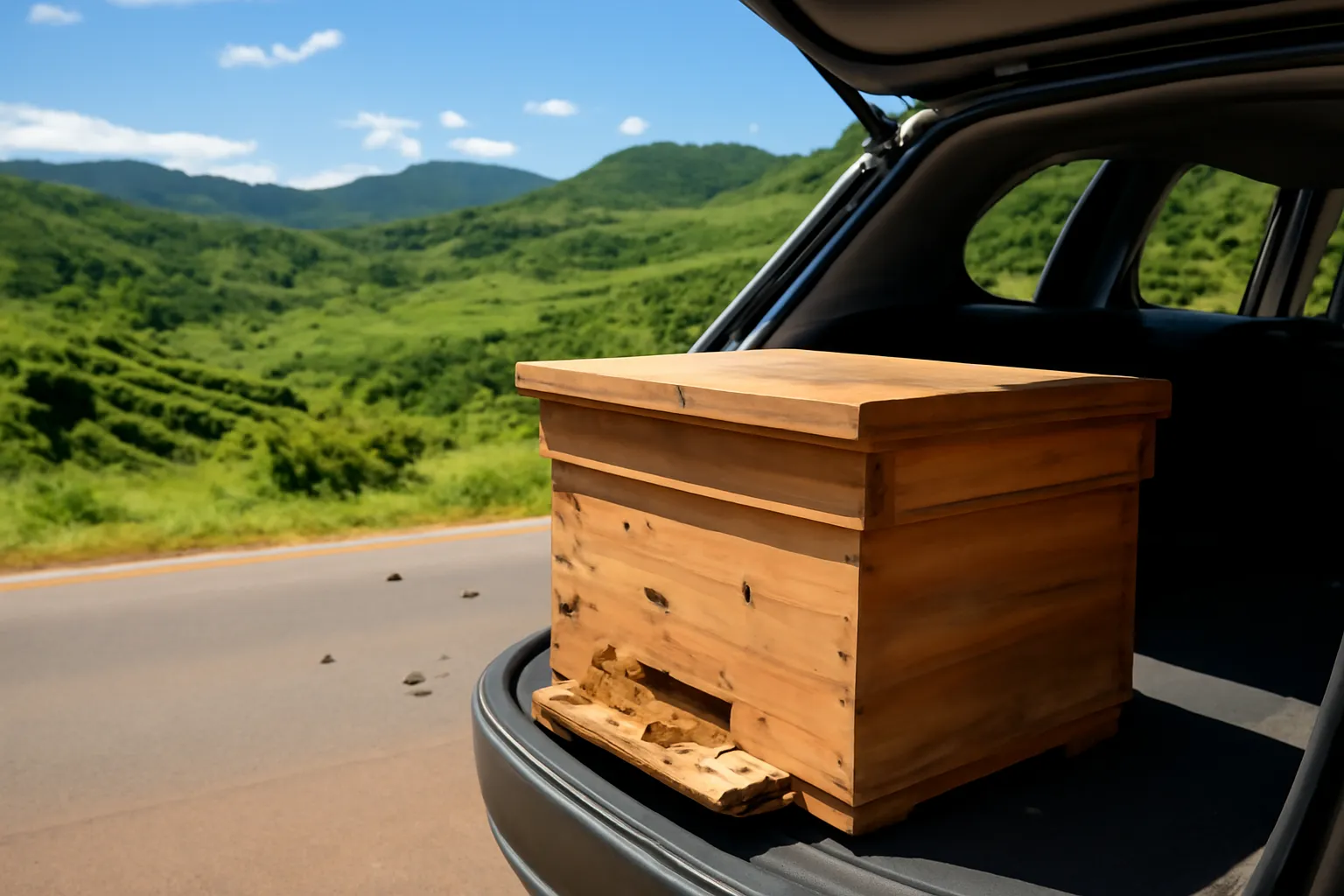
Plan the journey before you come. The farm is at 68 Thac Ba Tang road, Ta Dung commune, Lam Dong, and the roads around the lake have long climbs and bends. A colony rides best on the floor of a car, wedged so it cannot slide, with the windows partly open or the air conditioning on. The boot of a car parked in full sun is the worst place for it.
If you are travelling on to Saigon or the coast, read our article on whether a highland colony can live in the lowlands before you buy. The short version is that it can, but the first weeks in the heat need more care than people expect.
The first hours at home
Put the box on its stand before you open anything. Choose the final spot first. Moving a colony a short distance after it has started flying confuses returning foragers, who fly back to the old position.
Level the box. Honey pots are soft. A tilted box can let a pot lean and leak, and spilled honey draws ants and flies.
Fit ant protection on the legs of the stand. A small cup of water or a band of sticky barrier around each leg stops the ants that otherwise find a new colony within a day.
Let the bees calm down for a short while. After a journey the colony is agitated. Wait until the box has stopped humming loudly before you open the entrance.
Open the entrance and step back. The first bees out will hover in front of the box in widening loops. They are learning the new location, and you should stay out of that flight path.
Do not open the lid on the first day. Curiosity is the most common mistake. The colony needs to reseal any cracks with resin, and lifting the lid undoes that work.
Watch for honey at the entrance. A little shine of honey on the entrance tube after travel is not unusual. A steady drip, or many dead bees on the floor, is worth a call to the farm.
Keep the box out of the afternoon sun. Cerumen softens in heat. A box that sits in direct sun in the hottest part of the day can suffer even on a pleasant highland afternoon.
Tell your neighbours, briefly. A sentence or two is enough: small bees, no sting, they keep to themselves. People who know what they are seeing are rarely bothered.
Write down the date. Note the day you brought the colony home. In a few weeks that date will help you judge whether activity at the entrance is growing.
Resist feeding unless there is a clear reason. A colony with stores and flowers nearby does not need sugar. If you think it is short of food, ask the farm before you give it anything.
After the first month
Most people find that a stingless bee colony asks for very little once it is settled. A short look at the entrance every few days, a check that the ant barriers are still working, and a lid that stays closed most of the time are enough for the first season.
If you are keeping bees for the first time, you will learn more from watching the entrance than from opening the box. Count how many bees come back with yellow or orange pollen, notice the hours when traffic is busiest and the days when it is quiet, and you will soon know your colony better than any guide can tell you.
We are happy to answer questions from people who bought a colony from us, and photos sent by Zalo make that much easier. Visitors who come to collect a colony are also welcome to look at the hives at the farm edge, where the boxes sit among forest and coffee, and see what a settled colony looks like in its own place.
One last request: if your circumstances change and you can no longer look after the colony, do not release it or leave it to fail. Pass it to another keeper nearby, or contact us and we will help you find someone.
Frequently asked questions
How much does a stingless bee colony cost at the Ta Dung farm?
A starter colony from Ong Moc in Ta Dung, Lam Dong, is listed at 2.900.000₫. The price covers one propagated colony in its wooden box, collected at the farm.
Can you send a colony by courier?
We prefer you collect it in person, because a closed colony is sensitive to heat and rough handling. Call or message the farm on +84 818 83 22 83 to talk through your situation before planning anything else.
Is one colony enough for a beginner?
Yes. One colony is the easiest way to learn how stingless bees behave through a full year of seasons. Many keepers add a second box only after they have watched the first one through a rainy season.
Will the colony make honey in the first year?
Possibly a little, but a new colony spends most of its effort on growing. Treat the first year as a year of watching and learning rather than harvesting.
Can I take a colony from Vietnam to another country?
Not without checking the rules of the country you are taking it to, and in many places it will not be allowed at all. Biosecurity rules differ by country, so ask your own national authority first.
Do I need any special equipment to start?
You need a sturdy stand, a way to keep ants off its legs, and a shaded, dry place to put it. Protective clothing is not usually needed for stingless bees, though a hat helps if bees get into your hair.
Written by the team behind a working stingless bee farm about 40 km from Ho Chi Minh City, Vietnam. Articles come from day-to-day work at the farm; technical figures are stated as ranges, not promises.
About the team →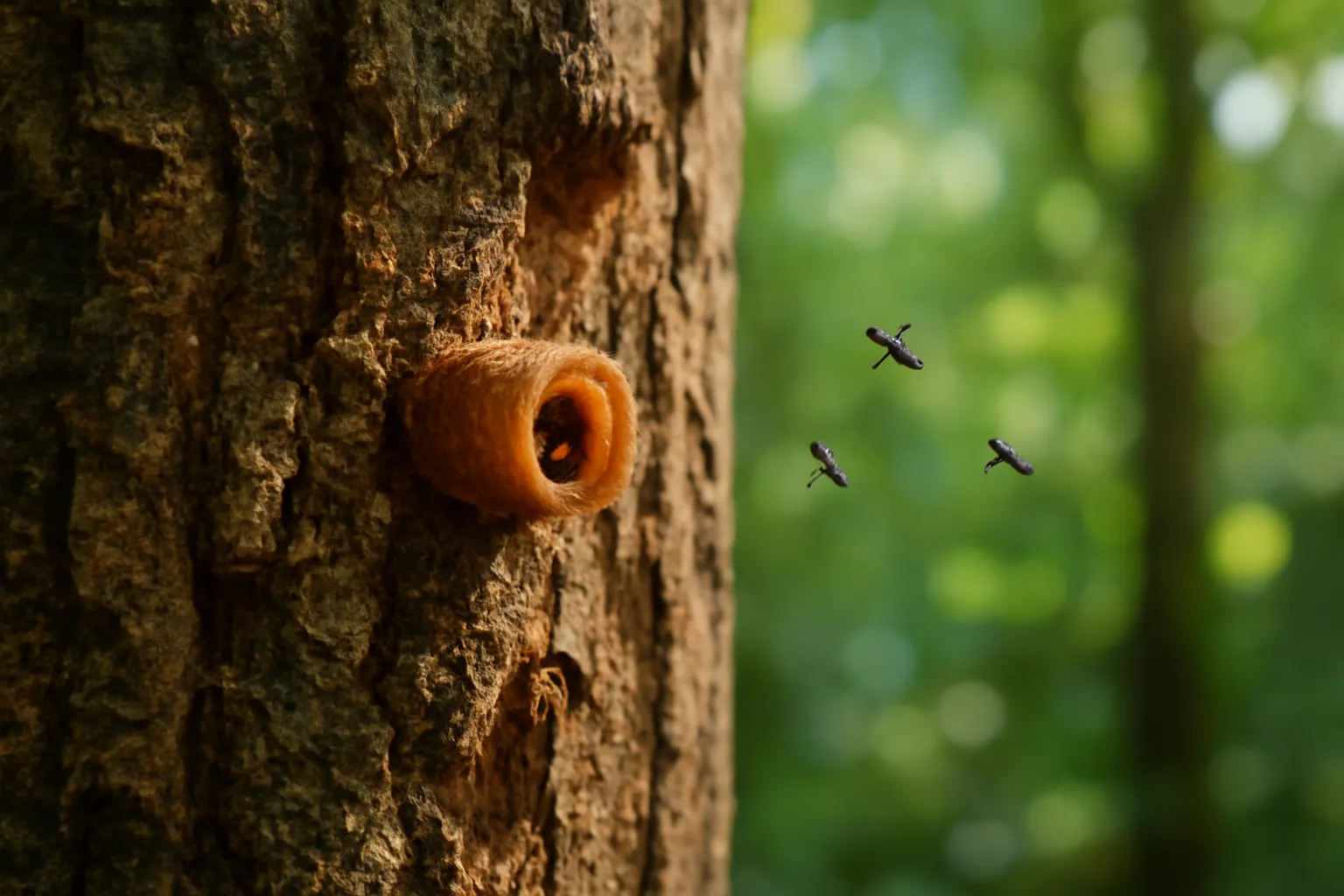
Why Not Take a Wild Stingless Bee Colony From the Forest
Cutting a wild stingless bee nest out of a forest tree usually kills the tree section, often kills the colony, and removes one of the forest’s own pol
Can a Highland Stingless Bee Colony Live in the Lowlands?
Yes, a stingless bee colony from the cool Lam Dong highlands can live in Saigon or on the coast, because the same kinds of bees also live in the lowla
Stingless Bees for a Coffee Farm: Is It Worth It?
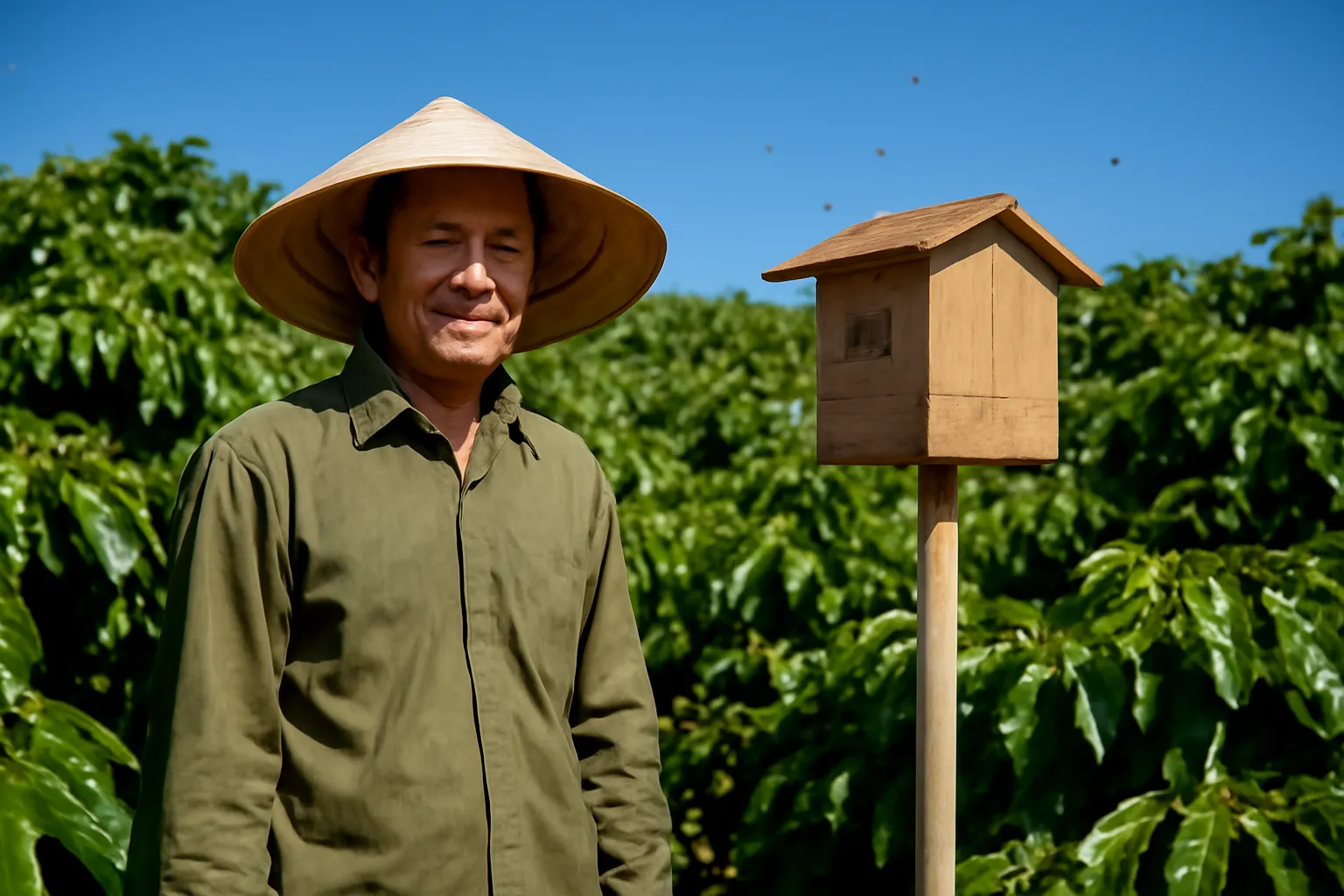
A few stingless bee colonies can sit happily on a coffee farm and work the blossom, but only if the farm’s spraying habits change to protect them. Whe
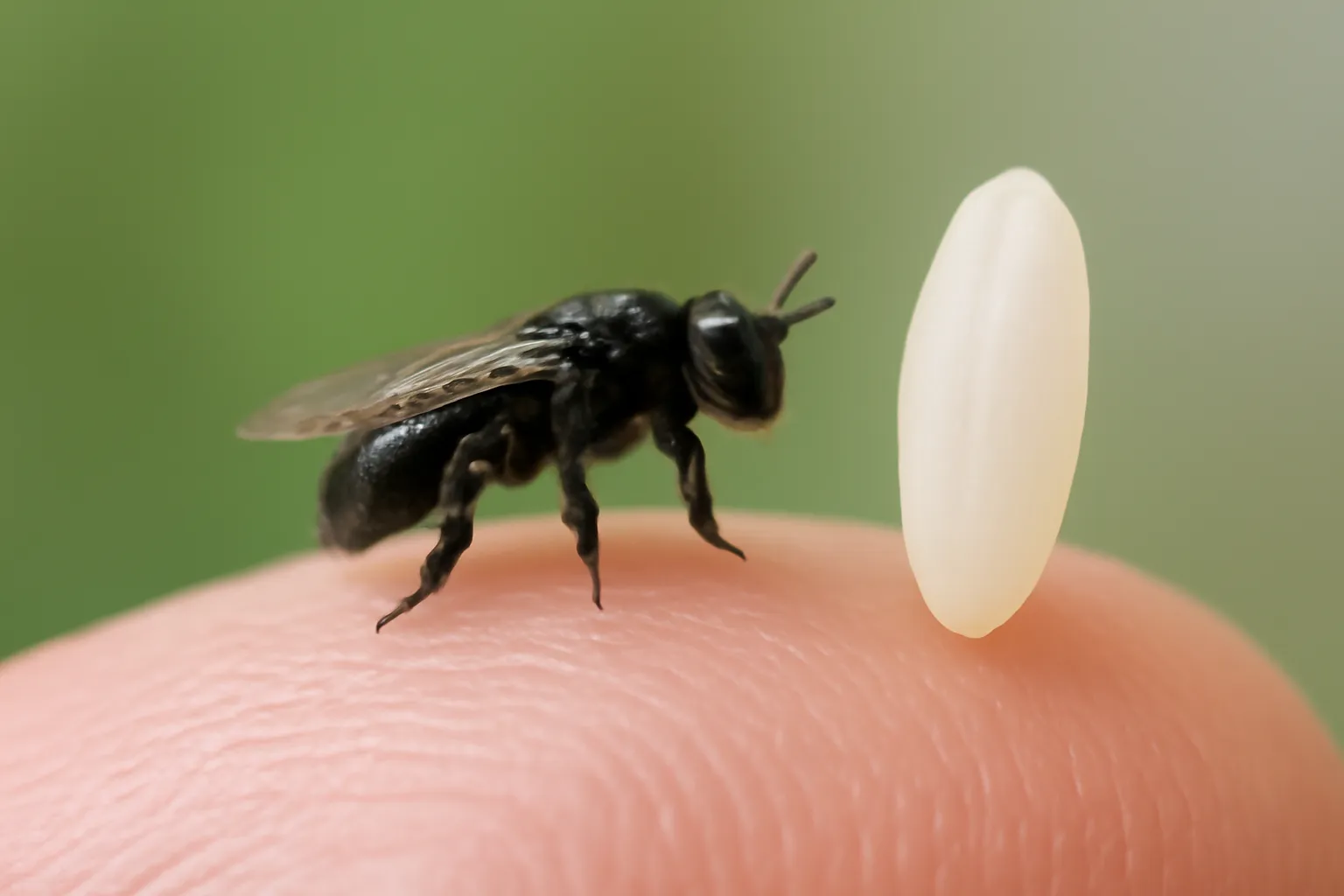
Lisotrigona: The Smallest Stingless Bee, Explained
Lisotrigona is a genus of stingless bees so small that a worker is shorter than a grain of rice. They live in small colonies, store very little honey
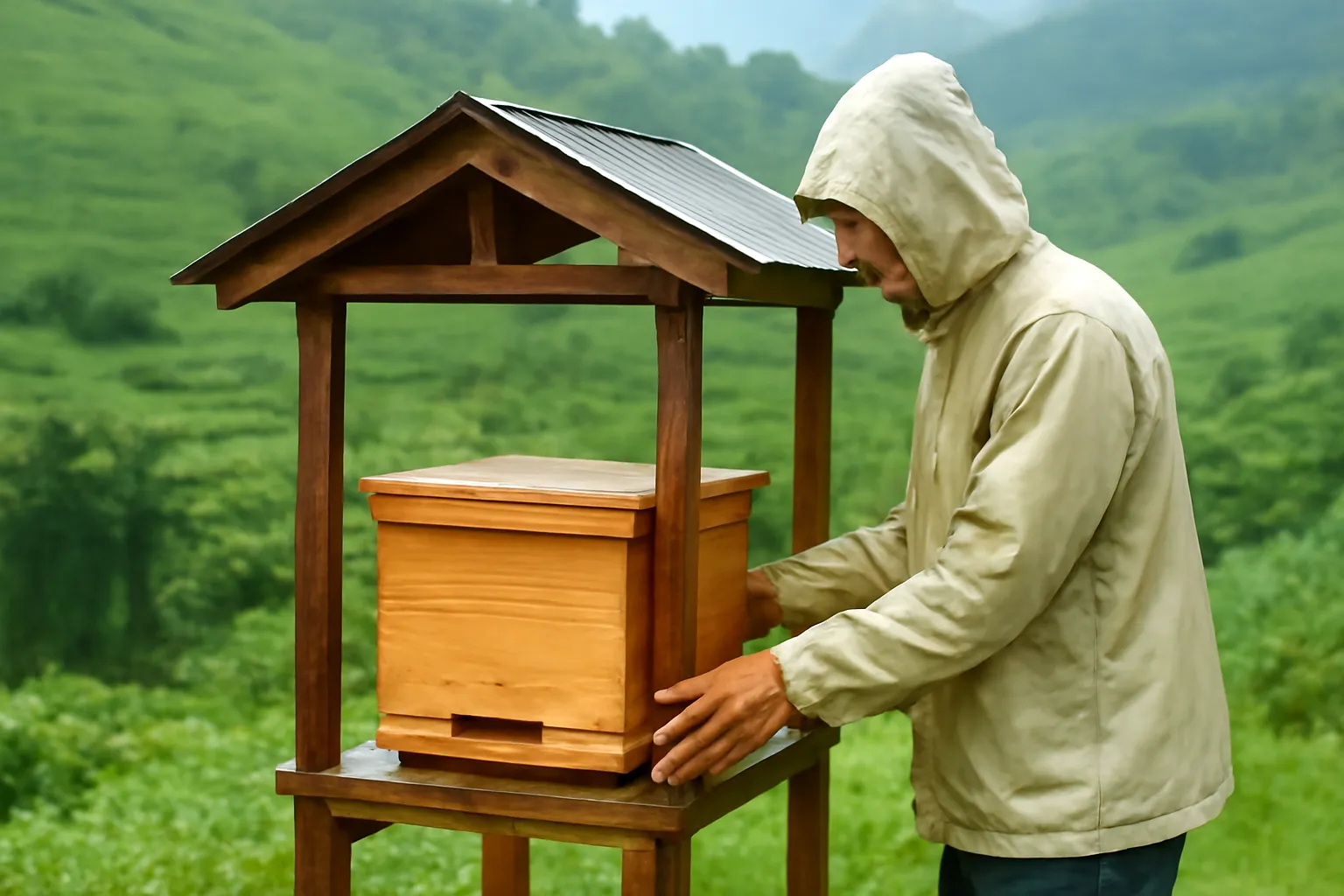
Settling a Stingless Bee Colony in the Rainy Season
You can settle a new stingless bee colony during the rainy season, but the risks are real: a wet box, little forage and a colony living on its stores.
 ›
×
›
×

MoraBee is the international name of Ong Moc, a stingless bee farm in Ta Dung, Lam Dong, among forest and coffee gardens: unblended honey in clean jars, starter colonies, and farm visits.
Vietnamese stingless bee honey from the highlands
A brand by Tên Miền Đẳng Cấp
© 2026 MoraBee. All rights reserved. · Copyright · OD-3864-C503