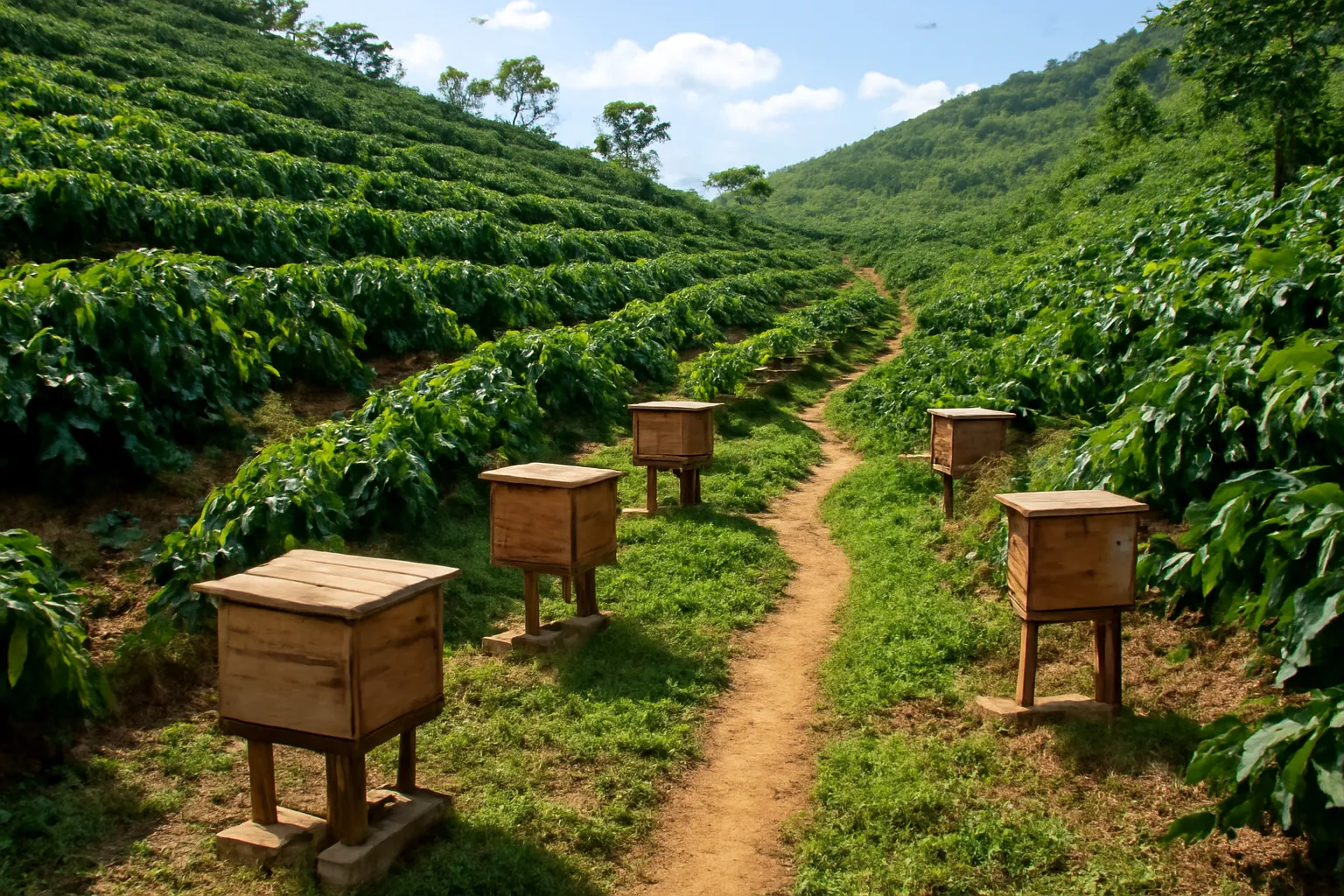
Stingless Bee Hives on Sloping Land: Stands That Stay Put
On sloping land a stingless bee hive is safe when its stand stands level on a footing that rain cannot wash out, when water runs around the stand rather than under it, and when you can reach the box without slipping. Tipping is the big risk: a stingless bee nest knocked onto its side breaks its honey and brood pots, and the colony may not recover.
Ta Dung is a land of hills. Coffee is planted on slopes that look gentle in the dry season and turn to slick red mud after a single afternoon storm. The ideas below come from working on that kind of ground, where flat land is rare and a well-placed hive is mostly a matter of patient digging.
Why slopes are hard on stingless bee colonies
Stingless bees build their nest as a cluster of soft wax pots and brood cells, held together with resin and attached to the box walls. That structure expects the box to stay upright. A box that leans slowly over a few weeks makes the bees rebuild; a box that falls in the night breaks pots, floods the brood with honey and brings ants in from every direction by morning.
Slopes add three pressures. First, the ground moves: heavy rain carries soil downhill and undermines anything standing on it. Second, wind comes up the valley and hits a raised box from the side. Third, the keeper moves around the hive on an angle, and a careless step with a lid in one hand is enough to knock it.
In the highlands these pressures peak together in the rainy season, when storms are frequent, the ground is soft and the weeds grow fast enough to hide a cracked footing. A stand that looked fine in the dry months can lean noticeably by the middle of the rains.
The aim, then, is not just to put the hive somewhere high. It is to give it a small, flat, well-drained platform of its own, then check it often enough to catch movement early.
Building a stand that does not tip
Cut a small flat shelf. Dig into the slope to make a level pad for each stand rather than lengthening one leg. Cut soil is firmer than filled soil.
Use a stone or concrete footing. A flat stone or a cast block under the post spreads the load and stops it sinking into wet soil.
Set the post deep. A single post sunk into firm ground, packed with stones, holds better than a tall four-legged frame resting on the surface.
Keep it low. A stand at knee to waist height is high enough for ants and toads to struggle and low enough that wind has little leverage.
Check level with a phone or a bottle. A level app or a water bottle laid on the lid is enough. Recheck after the first big storms.
Brace on the downhill side. If the post must be tall, add a diagonal brace pointing downhill, where a fall would go.
Fix the box to the stand. A strap or two screws stops a gust or an animal from sliding the box off the top.
Treat the wood or use metal. Posts in damp ground rot and attract termites. Treated timber, a metal post or a concrete base lasts longer.
Avoid tree roots. Stands next to big trees move as roots grow and are under falling branches in storms.
Leave space to stand beside it. You need a flat spot for your own feet next to each hive, not just for the box.
Keep a gap from the slope above. Soil and leaves slide down; a gap stops them piling against the box.
Fit an ant guard. Slopes do not change the ant problem. A smooth band on the post still matters.
Water, mud and erosion after downpours
Most stands that fail on slopes fail because water ran under them. In a heavy storm, water gathers on the hillside above and follows the easiest line downhill, often straight through the pad you dug. Over a few weeks it carries away the soil under one side of the footing, and the stand leans.
The fix is a shallow drain on the uphill side of each pad, curved so it guides water around the stand and lets it go on downhill. It does not need to be deep; a spade-width channel lined with a few stones is usually enough. Clear it after storms, because leaves and coffee prunings block it fast.
Ground cover helps more than people expect. Grass and low plants on the slope below and around the pad hold the soil together. Bare, freshly weeded slopes erode quickly, which is one more reason to mow rather than strip the ground around hives.
If a pad keeps washing out despite drains, the spot is wrong. Move the hive along the contour to a point where the slope is gentler or the ground is naturally firmer, rather than building a bigger structure on a bad site.
Paths, access and the keeper’s own safety
Walk the route in the rain once. A path that is easy in sunshine may be unusable after a storm. Test it before you depend on it.
Cut steps into steep sections. A few steps with a stake or stone edge make carrying boxes and tools far safer.
Keep hands free. Carry tools in a bag on your back so you can hold on when the ground is slick.
Group hives along a contour. A line of hives at roughly the same height means less climbing between them.
Avoid placing hives below the path. If you slip, you should not fall onto the hives, and soil you kick loose should not land on them.
Good boots matter. Red highland clay is very slippery when wet. Footwear with deep grip is worth more than any gadget.
Plan for moving a hive. At some point you will carry a box out. Make sure the path is wide enough for you and the box together.
Light for early mornings. Closing hives before a spray day often means walking in the dark. A headlamp keeps both hands free.
Tell someone where you are. On a large hill farm, let someone know when you go to remote hives in bad weather.
Keep the path clear of tools. A hoe left in the grass is a trip hazard and a lost tool.
Mark hives you cannot see from the path. A small post or ribbon makes it easy to find boxes hidden by fast-growing weeds.
A short seasonal routine for hillside hives
Before the rains, walk every stand. Check level, look at the footing, clear drains and trim back anything leaning toward the box. Replace rotting posts now, while the ground is dry and you can dig cleanly.
During the rainy months, do a quick round after each big storm. You are looking for three things: a stand that has moved, a drain that has blocked, and anything that has fallen near the hive. Most fixes take a few minutes if you catch them the same day.
As the dry season comes, the ground firms up and the bees get busier ahead of coffee flowering. This is a good time for any bigger change, such as moving a hive to a better spot or building a new pad, because the colony has a strong foraging season ahead to recover from the disturbance.
Over a few years you learn which spots on your hill stay dry, which ones flood and which ones catch wind. That knowledge is more valuable than any design, and it is worth writing down.
Frequently asked questions
Can I put a stingless bee hive directly on the ground on a hill?
It is not recommended. On the ground the box is exposed to ants, toads, damp and running water, and on a slope it can slide when the soil washes out.
Which side of the hill is best for a stingless bee hive?
A spot that gets morning sun and some shade in the afternoon, sheltered from the strongest wind, usually suits the bees. Local conditions vary, so watch how the colony behaves in its first weeks.
How often should I check hive stands on sloping land?
Check after every heavy storm in the rainy season and at least once a month otherwise. Most problems start small and grow quickly in wet weather.
What should I do if a hive has already tipped over?
Set it upright gently, close any gaps and keep the entrance narrow so the colony can defend itself. Do not try to rebuild broken pots; clean away running honey from outside and let the bees repair the nest.
Is it better to have one tall stand or several short ones?
Short individual stands are usually more stable on slopes. A tall shared rack carries more wind load, and if it falls, every hive on it falls with it.
Written by the team behind a working stingless bee farm about 40 km from Ho Chi Minh City, Vietnam. Articles come from day-to-day work at the farm; technical figures are stated as ranges, not promises.
About the team →
Coffee Spraying Season: Protecting Stingless Bee Hives
Stingless bee hives can live safely among coffee gardens if you know when neighbours spray, keep bees away from treated blossom, and follow the label
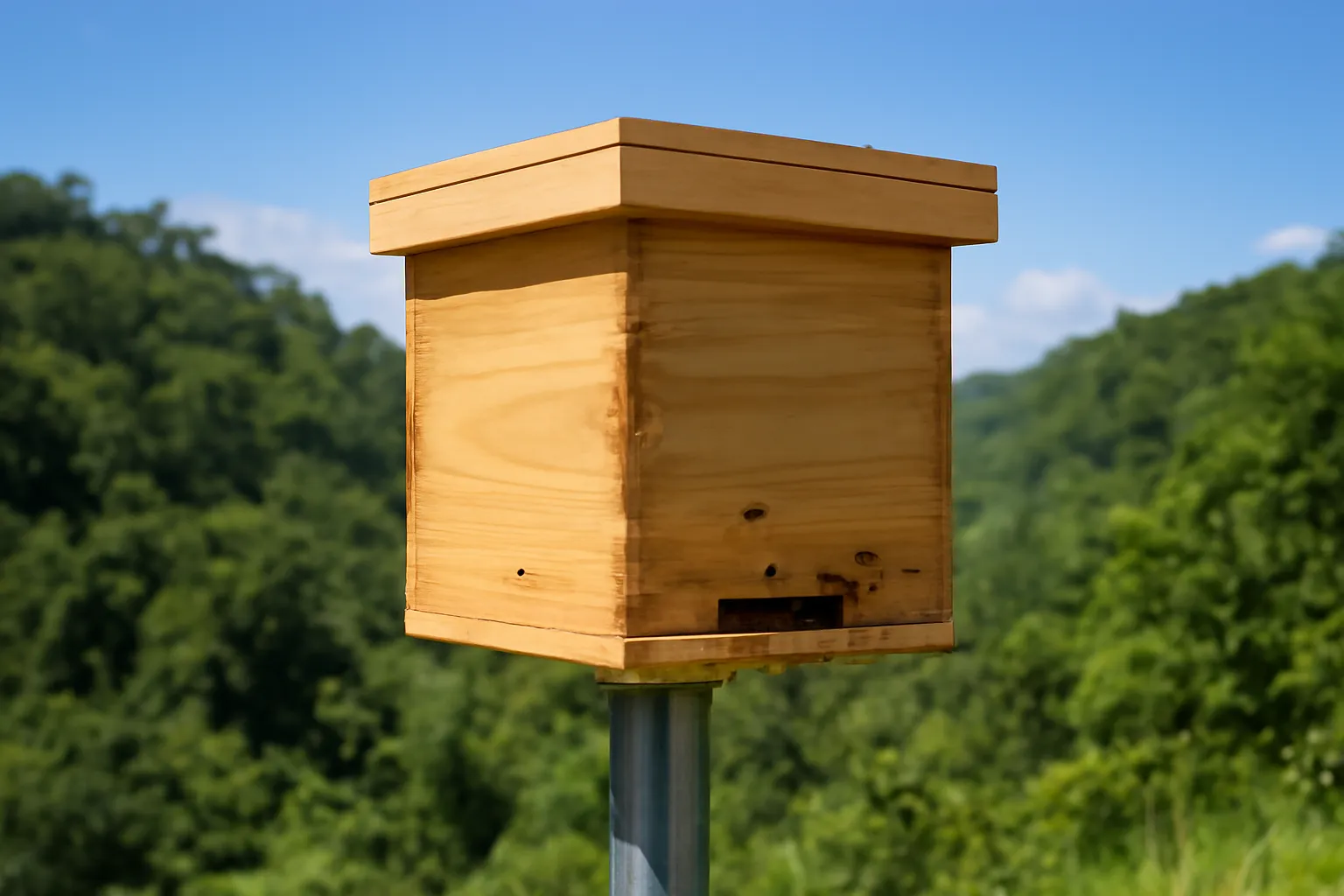
Animals That Raid Stingless Bee Hives Near the Forest
At the forest edge the real hive raiders are ants, lizards, toads and a few climbing mammals; a smooth stand, a tight lid and a narrow entrance stop m
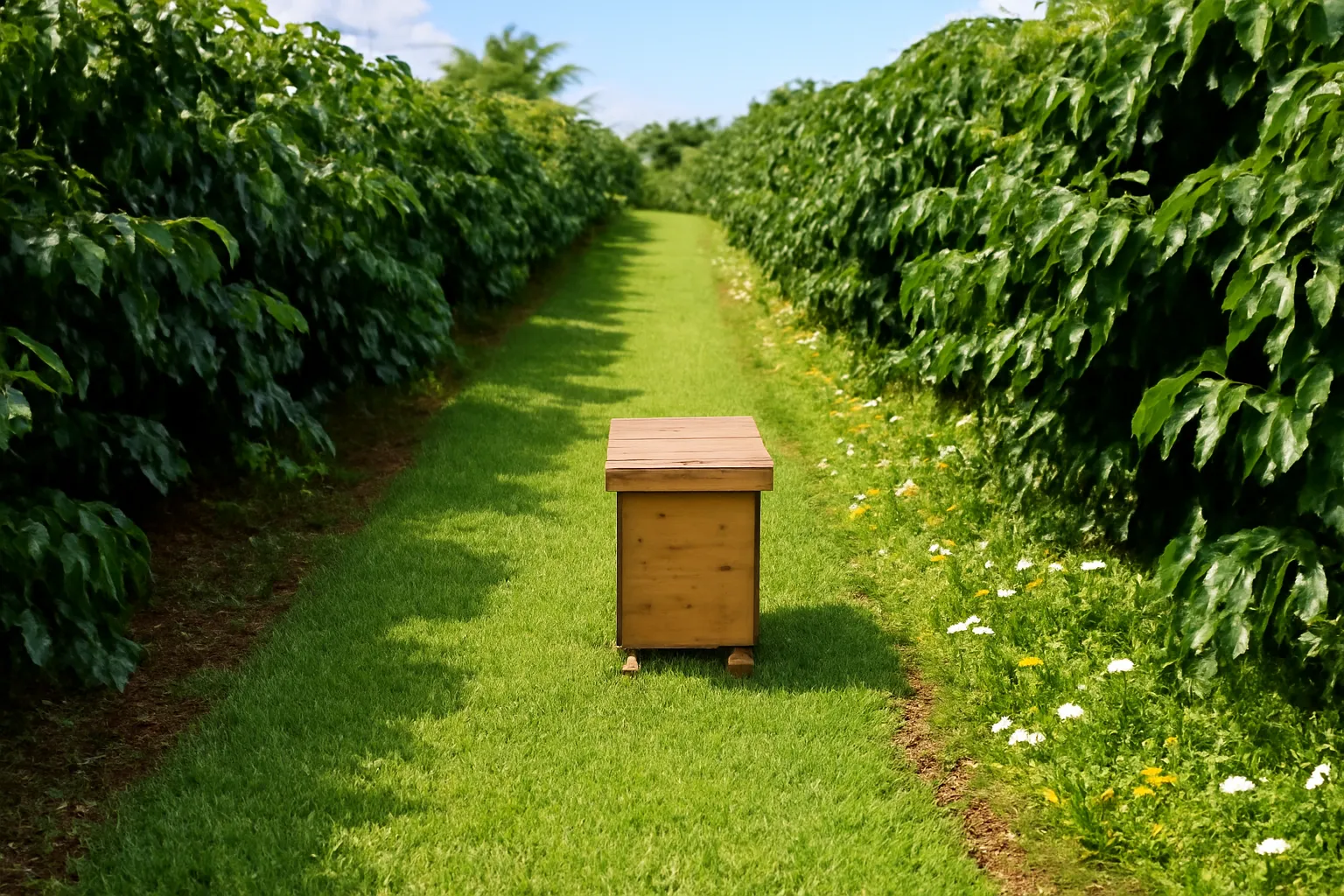
Herbicide in Coffee Gardens: What It Means for Bees
Herbicides seldom kill stingless bees outright, but they strip away the ground flowers that feed colonies between coffee blooms and can drift onto hiv
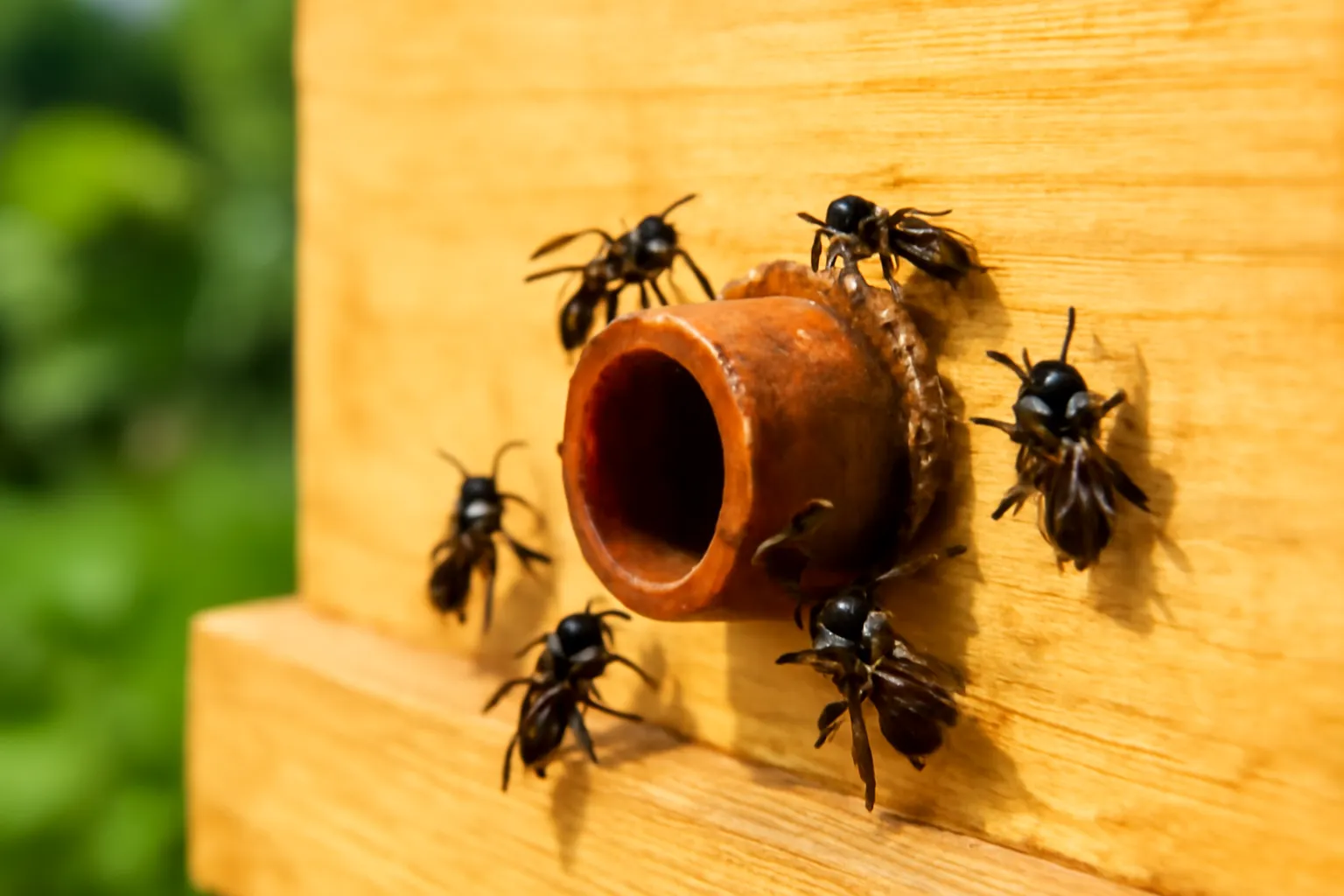
Do Honey Bees Rob Stingless Bees? Signs and Prevention
Honey bees can rob stingless bee colonies, mostly in lean months or after honey has been spilled; a narrow resin entrance, clean harvests and good spa
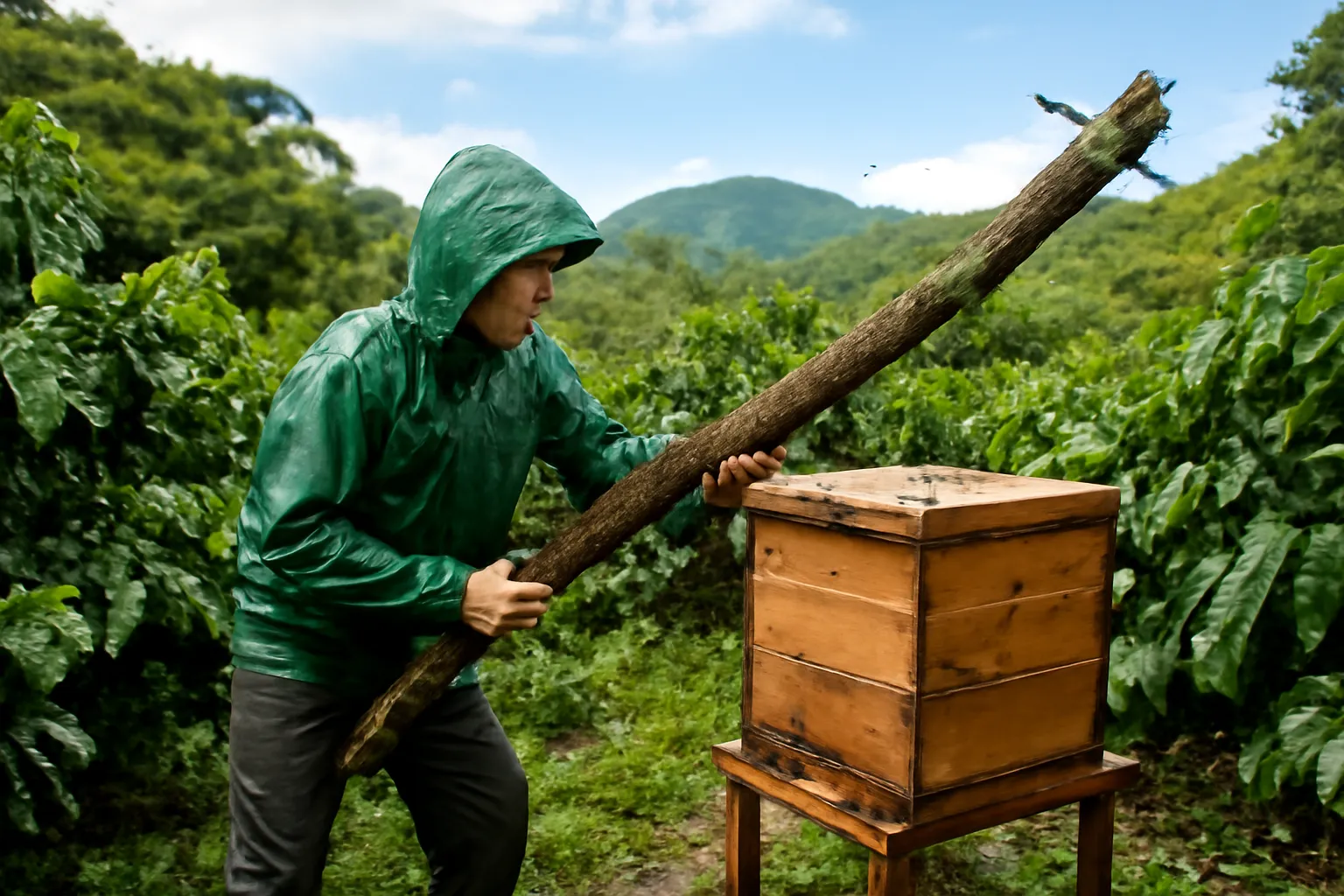
Storm Season Checklist for Highland Stingless Bee Hives
Before the highland storm season, give every hive a tight roof, a firm stand and a clear drain; after each storm, check for water inside, moved boxes,
 ›
×
›
×

MoraBee is the international name of Ong Moc, a stingless bee farm in Ta Dung, Lam Dong, among forest and coffee gardens: unblended honey in clean jars, starter colonies, and farm visits.
Vietnamese stingless bee honey from the highlands
A brand by Tên Miền Đẳng Cấp
© 2026 MoraBee. All rights reserved. · Copyright · OD-3864-C503