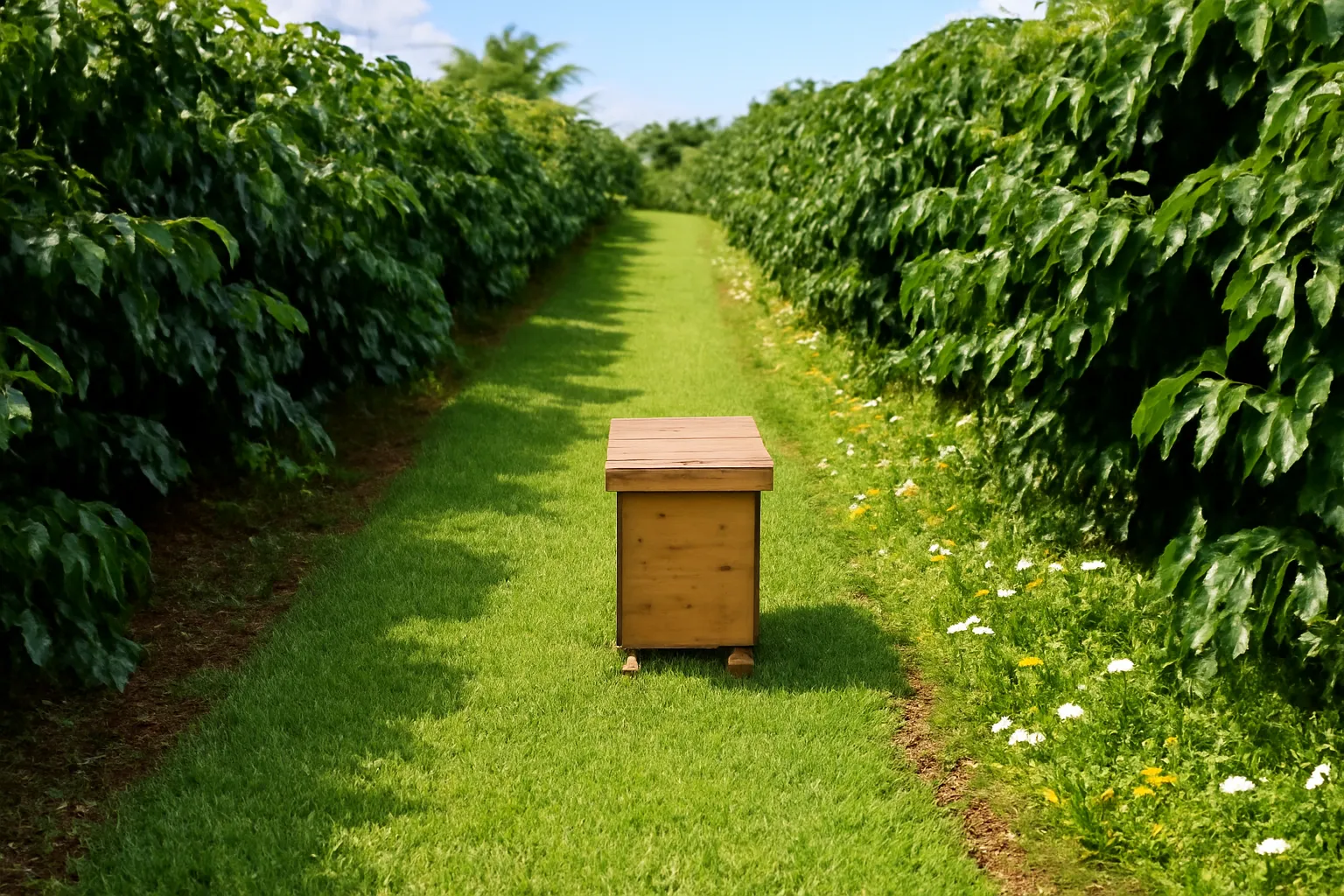
Herbicide in Coffee Gardens: What It Means for Bees
Most herbicides are not designed to kill insects, and they rarely kill stingless bees directly. The bigger harm is quieter: weed killers remove the ground flowers that feed colonies between coffee flowerings, and spray can still drift onto hives or water. Mowing, leaving flowering edges and asking neighbours to keep spray away from hives deal with most of it.
Walk through coffee gardens around Ta Dung and you see two styles side by side: rows with bare brown ground underneath, and rows with a low green carpet of weeds, some flowering. For a stingless bee colony those are two very different places to live, even though the coffee trees look the same.
Why the ground under coffee matters so much
Coffee flowers heavily but briefly. For the rest of the year, stingless bees around a coffee garden feed on whatever else is blooming: trees at the forest edge, hedges, vegetables and, very often, the small flowers growing between the rows. In the highlands that includes plants like Spanish needle, the white daisy-like weed Vietnamese call xuyen chi, and other low plants that bloom on and off through the year.
Stingless bees fly shorter distances than honey bees, so what grows close to the hive matters a lot. A large honey bee colony can travel further to find food; a small stingless bee colony depends heavily on what is within a short flight. When the ground nearby is sprayed bare, the gap between coffee flowerings becomes a hungry season.
That hunger does not always show quickly. Colonies tend to slow down rather than die: fewer foragers, smaller honey stores, less new brood. A keeper may blame the weather or the queen when the real reason is that the garden next door switched from slashing to spraying.
This is also why the honey from a forest-and-coffee landscape tastes of more than coffee. The mix of small flowers in the understorey is part of the character of highland honey.
How herbicides can still reach the bees
Loss of forage. The main effect. Bare ground means fewer flowers within flight range between coffee blooms.
Drift onto the hive. Fine spray on a windy day can settle on the box and the entrance, where bees walk constantly.
Contaminated water. Bees drink from puddles, dishes and leaves. Spray landing in those sources reaches the colony directly.
Flowers sprayed while open. If weeds are sprayed while in flower, bees may be working them at that moment.
Additives in the tank. Spreaders and wetting agents added to weed killers can affect insects that get soaked. The label tells you what is in the product.
Mixed sprays. A tank may contain an insecticide as well as a herbicide. Ask what is in it.
Repeated use. One spray changes the ground for weeks; regular spraying keeps it bare for most of the year.
Erosion. Bare slopes wash away in heavy rain, damaging stands and footings around hives.
Hotter ground. Bare soil heats up more in the sun, warming the air near low hives.
Hand sprayers near boxes. Workers spraying around posts and fences can hit stands directly without noticing.
Read every label. Products, formulations and warnings change. The label is the reference for safety, protective gear and waiting times.
Mowing versus spraying: an honest comparison
Spraying is fast and cheap in labour, which is why it spread. A worker with a backpack sprayer covers ground quickly, and the effect lasts. Mowing or slashing takes more time, the weeds grow back, and on steep hills a brush cutter is tiring and sometimes dangerous. Any keeper who asks a neighbour to stop spraying should understand that trade-off.
What mowing does well is keep the ground alive. Cut low, the weeds stop competing strongly with the coffee but come back with flowers, hold the soil on slopes and keep the ground cooler. Many coffee growers have moved toward keeping some ground cover for those soil reasons alone, with bees as a side benefit.
A middle path is common and realistic. Spray or hoe a narrow ring around each coffee trunk where weeds compete most, and mow the wider strip between rows. That leaves living cover and some flowers in most of the garden.
For a keeper, the best ask is often small: leave the flowering strip along the row end where hives sit, and keep spray at least a few rows away from the boxes. That costs a grower little and makes a real difference to the colony.
What a stingless bee keeper can do
Map the forage. Note what flowers around your hives each month. You will see where the gaps are.
Ask for an unsprayed edge. A strip of weeds left to flower near the hives is a simple, specific request.
Offer help with mowing. In some gardens, a few hours of your labour makes mowing worth it for the owner.
Plant your own buffer. Flowering shrubs or herbs around the hive site keep some forage even if the garden is sprayed.
Protect water. Give bees a clean, covered water source near the hive so they do not drink from sprayed puddles.
Close hives on spray days. If spraying happens near the boxes, close entrances early and shade the hive, as you would for any spray.
Keep spray away from stands. Weeds around hive posts can be cut by hand. Ask workers not to spray around them.
Watch colony strength. Compare forager traffic and stores before and after spraying seasons.
Feed only if needed. In a real hungry gap, supplementary feeding can bridge it, but it does not replace flowers.
Move hives if needed. If a garden becomes bare all year, find a spot with more living ground nearby.
Share what you notice. Telling neighbours that the bees work their weeds often changes how they see those weeds.
Talking about weeds with a grower who sprays
Weeds mean something different to a coffee grower than to a beekeeper. To the grower they compete with young trees for water and fertiliser, hide snakes in the grass and make harvest work harder. Starting a conversation by calling them flowers can sound naive. Start instead from the grower’s concerns: soil washing off the slope, the cost of repeated spraying, the heat of bare ground in the dry season.
Then be specific about what you would like. Not an end to spraying, but perhaps a strip left at the row end near the hives, a change from spraying to slashing in one corner, or a message before a sprayer comes near the boxes. Small, concrete requests are easy to agree to and easy to keep.
Show rather than argue. On a sunny morning, walk the row with the grower and point at the bees working the low flowers. Many people have never noticed the tiny dark bees at all, and seeing them busy in the weeds changes the conversation.
Keep your side of the bargain too. If you asked for an unsprayed strip, help keep it tidy so it does not look neglected, and share some honey when there is a harvest. Good relations with neighbours are part of keeping bees in a farming landscape.
Frequently asked questions
Is glyphosate dangerous for stingless bees?
Products based on glyphosate are designed to kill plants, not insects, but they still remove forage and can carry additives. Treat any herbicide spray near hives with care and follow the label.
Which weeds in coffee gardens do stingless bees visit?
They visit many small flowers in the ground layer, including Spanish needle and other low daisy-type weeds common in the highlands. What they use depends on what is blooming near the hive.
Can I spray weeds around my own hive stands?
It is better to cut them by hand or with a mower. Spraying right beside a box puts the product where bees walk and drink.
Does ground cover in coffee gardens attract pests?
Ground cover can harbour some pests, but it also supports predators and protects the soil. Many growers manage it by mowing rather than removing it.
Will bees leave a hive if the area is sprayed bare?
Stingless bee colonies rarely abandon a hive just because forage is poor; they usually weaken. Moving the hive or adding forage nearby is the practical answer.
Written by the team behind a working stingless bee farm about 40 km from Ho Chi Minh City, Vietnam. Articles come from day-to-day work at the farm; technical figures are stated as ranges, not promises.
About the team →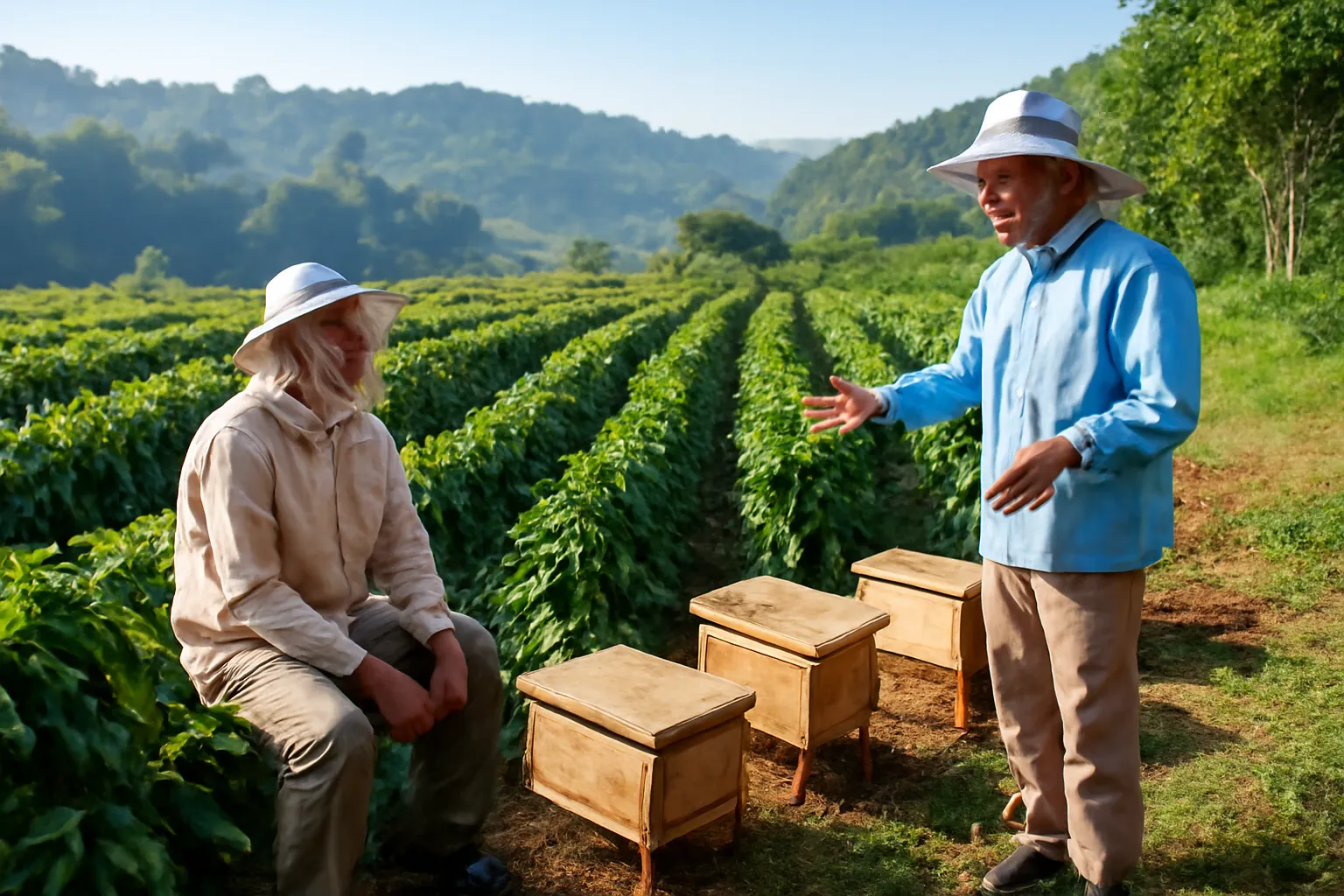
Coffee Spraying Season: Protecting Stingless Bee Hives
Stingless bee hives can live safely among coffee gardens if you know when neighbours spray, keep bees away from treated blossom, and follow the label
Animals That Raid Stingless Bee Hives Near the Forest
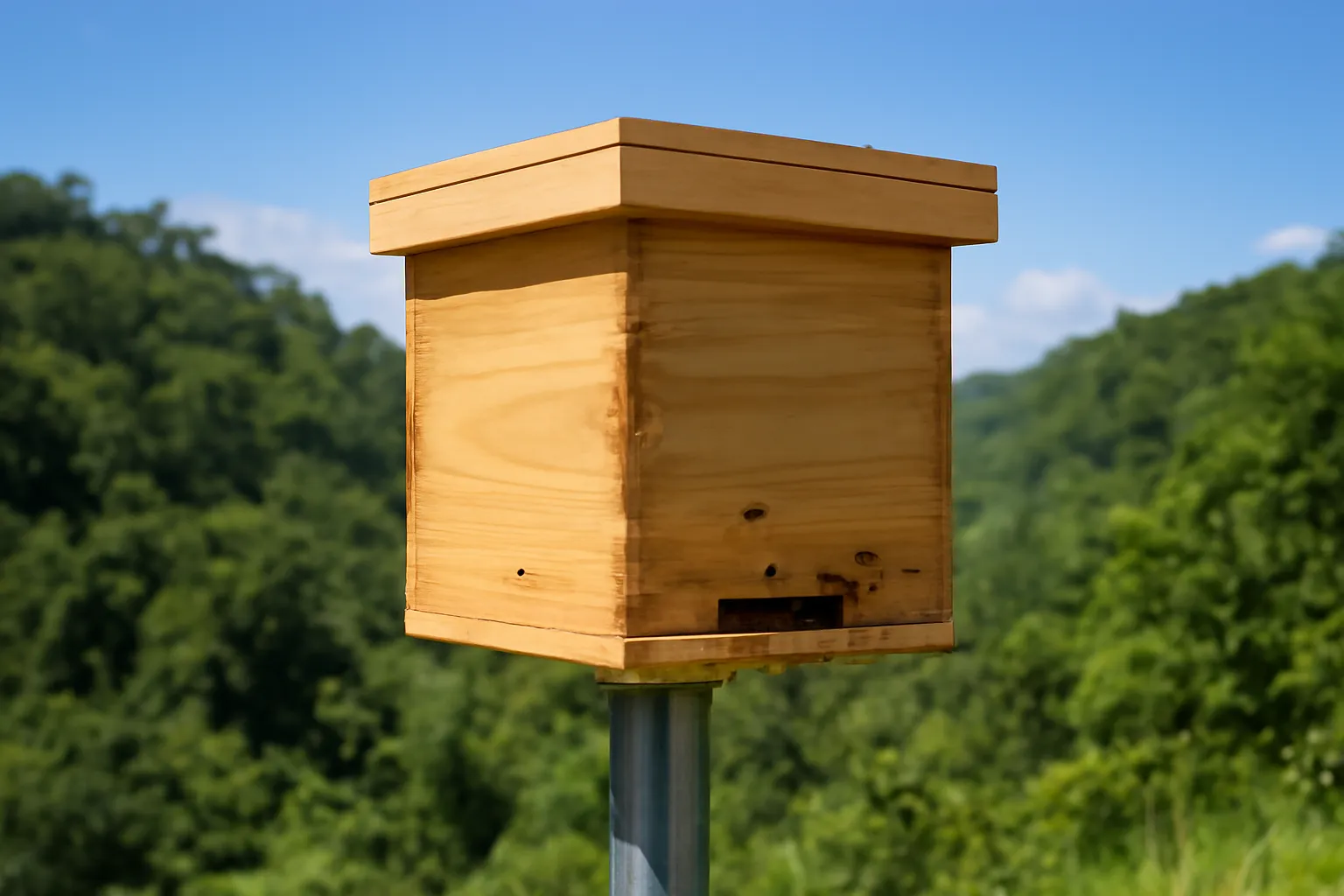
At the forest edge the real hive raiders are ants, lizards, toads and a few climbing mammals; a smooth stand, a tight lid and a narrow entrance stop m
Stingless Bee Hives on Sloping Land: Stands That Stay Put
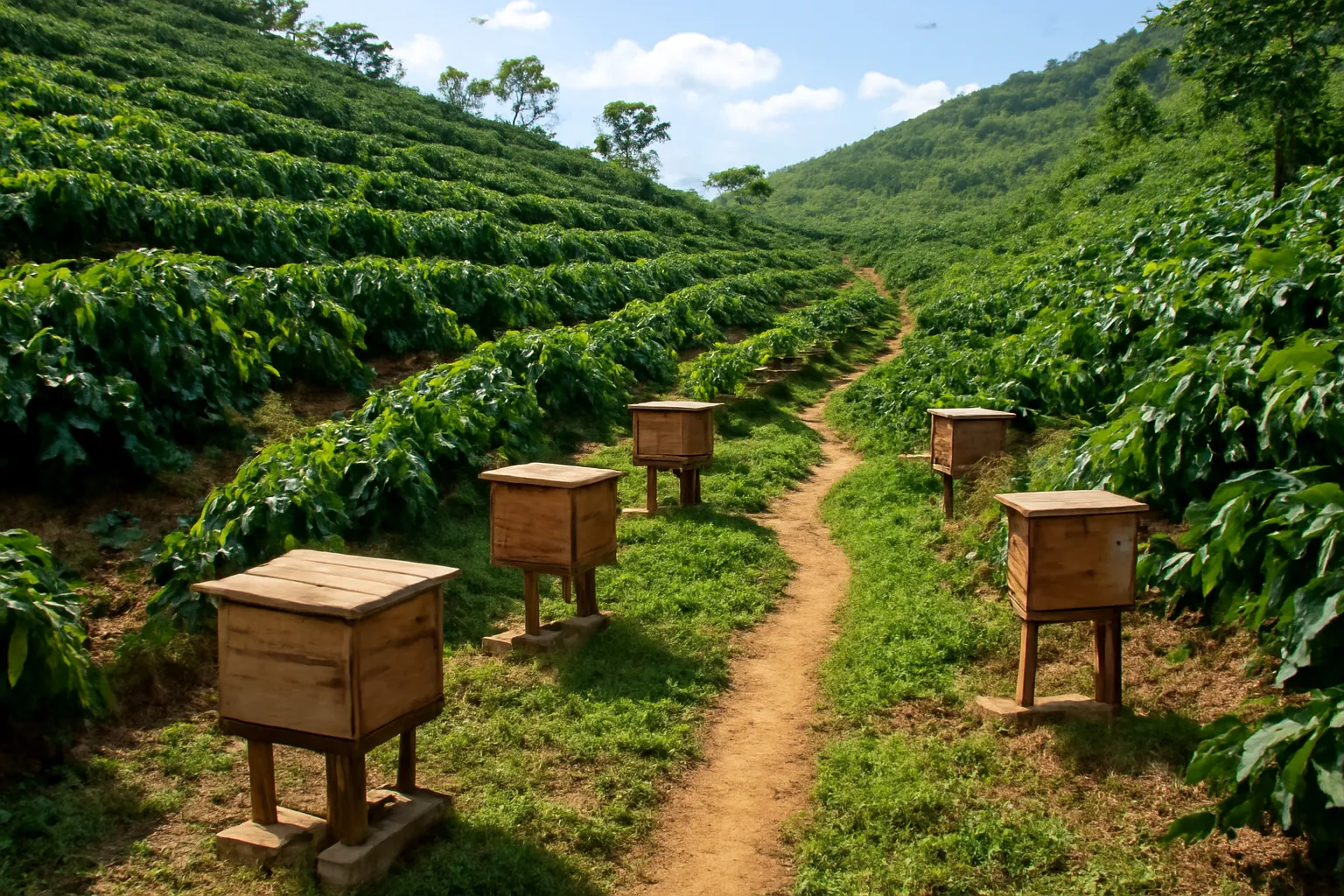
On steep coffee hills, hives stay safe when each stand sits level on a firm footing, water is led around it rather than under it, and the keeper has a
Do Honey Bees Rob Stingless Bees? Signs and Prevention
Honey bees can rob stingless bee colonies, mostly in lean months or after honey has been spilled; a narrow resin entrance, clean harvests and good spa
Storm Season Checklist for Highland Stingless Bee Hives
Before the highland storm season, give every hive a tight roof, a firm stand and a clear drain; after each storm, check for water inside, moved boxes,
 ›
×
›
×

MoraBee is the international name of Ong Moc, a stingless bee farm in Ta Dung, Lam Dong, among forest and coffee gardens: unblended honey in clean jars, starter colonies, and farm visits.
Vietnamese stingless bee honey from the highlands
A brand by Tên Miền Đẳng Cấp
© 2026 MoraBee. All rights reserved. · Copyright · OD-3864-C503