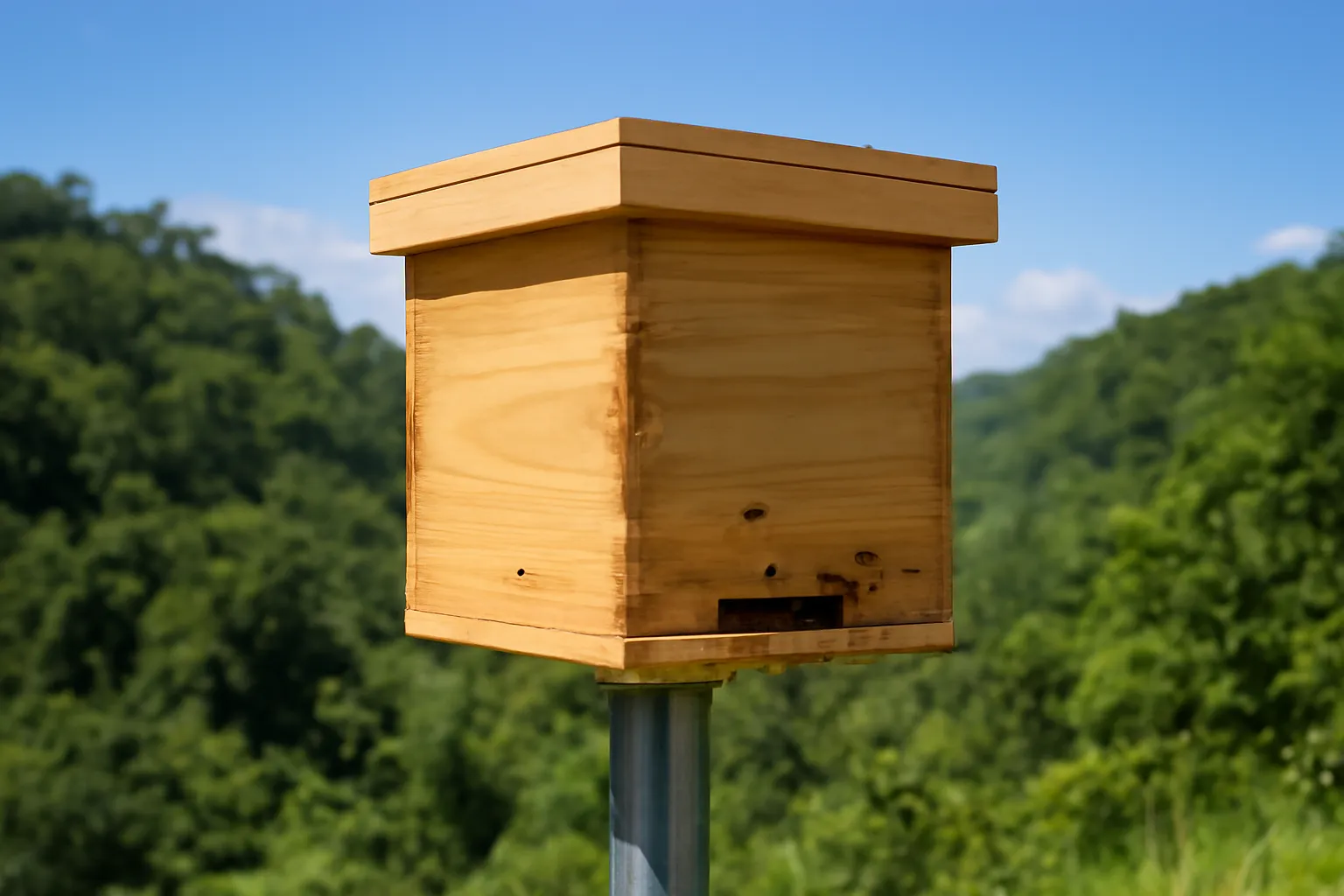
Animals That Raid Stingless Bee Hives Near the Forest
Near the forest, the animals that actually break into a stingless bee box are mostly ants, followed by the occasional climbing mammal that smells honey. Lizards, geckos, toads and spiders usually pick off bees at the entrance rather than raiding the nest. A smooth stand the ants cannot climb, a lid that cannot be lifted and a narrow entrance stop the great majority of trouble.
Keeping hives in Ta Dung means keeping them next to a lot of life. That is part of why the honey tastes the way it does. It also means learning to tell a real threat from an animal that is simply hunting near the hive, so you spend your effort where it counts.
Why the forest edge is different from a garden in town
A forest edge is busy. Insects, small reptiles, frogs and birds gather where trees meet open ground because there is more light, more flowers and more prey. A hive placed there sits in the middle of that traffic. Most visitors are not interested in the bees at all, but a few have learned that a box humming with insects means food.
Stingless bees defend themselves differently from honey bees. They cannot sting; they bite, smear resin and crowd an intruder. That works well against a single fly or a small beetle, and badly against a column of thousands of ants. Their best defence is a small entrance they can block with resin and a box with no other way in.
The second difference is moisture. Highland forest edges stay damp for much of the year, and damp wood softens, cracks and grows gaps faster. A box that was tight when you set it up can open a seam after one rainy season. Many raids start from a gap the keeper did not notice.
So the work is less about chasing animals and more about the hive itself: what it stands on, how it closes and what the bees have to guard.
Which animals are a real threat, and which just look?
Ants. The main raiders by far. Some species march in, overwhelm guards and carry off brood and honey in a night. Weaver ants in trees above can also take foragers.
Hornets. Large wasps hover at the entrance and snatch returning foragers. They seldom get inside, but heavy hornet pressure can thin a colony during their season.
Geckos and lizards. They sit near the entrance and pick off bees. Annoying, rarely fatal for a strong colony. If one lives on the stand, the stand is too easy to climb.
Toads and frogs. At night they wait under the hive and eat bees that fall or walk out. Raise the hive and keep the ground below clear.
Spiders. Webs across the flight path catch foragers. Brush them away on your rounds; no chemicals.
Assassin bugs. Some predatory bugs sit at the entrance tube and stab bees one by one. Remove them by hand when you see them.
Rats. They can gnaw a soft or rotting box to reach honey pots. A sound box and a guarded post usually keep them out.
Squirrels. Curious and able to chew. Mostly a problem with thin or damaged boxes.
Monkeys. Where they still roam, they can lift loose lids and tip boxes. Strap or screw lids down if you have seen them nearby.
Birds. Some birds take foragers in flight. They almost never threaten the colony itself.
Dogs and cattle. Not predators, but they knock stands over. Fence the hive area or set stands where animals do not pass.
Beetles and flies. Small scavenger flies and beetles enter weak or damaged colonies. They are a sign of another problem as much as a cause.
The stand: where most protection begins
A hive on the ground is open to every ant colony in the soil and every toad in the grass. Raising it on a single post or a small stand changes that immediately. One leg is easier to protect than four, and a stand that does not touch any branch, wall or fence leaves crawling animals only one route.
Wrap the top part of the post with a smooth band of metal sheet or a section of plastic pipe. Ants and lizards struggle to climb smooth surfaces, and the band is easy to wipe clean. Some keepers add a ring of sticky barrier below the band; if you do, keep it fresh, because dust and leaves quickly make a bridge across it.
Water dishes under stand legs work well in dry weather but fill with leaves and mosquito larvae in the rainy months. In wet highland conditions, a smooth guard is often easier to keep working than a moat.
Finally, trim plants back. A single grass stem touching the box is a bridge for ants. Walk around the hive once a week and clear anything that has grown into contact.
Making the box itself hard to break into
A lid that sits flat. Warped lids leave gaps along one side. Plane or replace them before the rainy season.
Strap or screw lids. Against monkeys, wind and curious animals, a rubber strap or two screws keeps the lid on.
Thick wood. Thin plywood softens and invites chewing. Solid wood boxes last longer in damp climates.
Seal seams from outside. Fill cracks with wax or a bee-safe sealant. The bees will add resin inside, but they should not have to.
A narrow entrance tube. Bees guard a small opening far better than a wide one. Most colonies build their own resin tube; let them.
Roof overhang. A small roof keeps rain off the seams so the wood swells and shrinks less.
No honey spills. After any inspection, wipe drips from outside the box. Spilled honey brings ants from far away.
Check after storms. Branches knock lids loose. A quick walk after heavy rain catches problems early.
Mark the boxes. Number hives so you can note which ones get attacked repeatedly. Repeated trouble usually means a placement problem.
Keep weak colonies close. Put small or recovering colonies where you pass every day so you notice raids sooner.
Avoid poison baits near the hive. Ant or rat baits on the stand can also harm bees. Physical barriers are safer.
How to tell what visited the hive overnight
Most raids leave traces if you look in the morning. An ant attack shows as a thin trail along the post, dead bees and ant bodies mixed together at the entrance, and sometimes resin smeared thickly around the tube where the guards fought. If the trail is still active, follow it back: it usually leads to a branch, a weed or a nest in the soil close by.
A mammal visit looks different. The box may be tilted on its stand, the lid pushed sideways, tooth or claw marks on soft corners, and broken wax pots with honey dripping out of a seam. Rats tend to work at one low corner; monkeys and squirrels go for the lid. Repair and reinforce that same day, because an animal that found honey once will come back.
Predators that hunt at the entrance leave fewer signs. A gecko or toad leaves droppings below the hive, a hornet is seen rather than traced, and spider webs are obvious on a dewy morning. These deserve attention but not alarm. Count the foragers coming and going in the warm hours over a few days; if traffic holds steady, the colony is absorbing the loss.
Take a photo of anything unusual. Comparing pictures over weeks is far more reliable than memory, and it helps when you ask another keeper what you are looking at.
Frequently asked questions
Do snakes eat stingless bees?
Snakes are not known as bee predators. They may hunt the lizards, toads or rats that gather near hives, which is another reason to keep the area under hives clear.
What should I do during an ant raid?
Act quickly: break the ant trail with water or by removing the bridge, wipe the post clean, and narrow the entrance. Do not spray insecticide on or near the box.
Can stingless bees defend themselves against lizards?
Not really. They rely on numbers to absorb the loss of a few foragers. A lizard living on the stand should be moved away and the stand made harder to climb.
Is it legal to kill forest animals that bother my hives?
Rules on wildlife depend on the species and the area, especially near protected forest. Protecting the hive physically is always the better route than harming animals.
Why do raids happen more at night?
Ants, toads and rats are active after dark when the bees are inside and the guards are fewer. Night is when gaps in the box matter most.
Should I move a hive that keeps being attacked?
Yes, if better barriers do not help. A spot a few metres away from a tree line or ant nest can change everything.
Written by the team behind a working stingless bee farm about 40 km from Ho Chi Minh City, Vietnam. Articles come from day-to-day work at the farm; technical figures are stated as ranges, not promises.
About the team →
Coffee Spraying Season: Protecting Stingless Bee Hives
Stingless bee hives can live safely among coffee gardens if you know when neighbours spray, keep bees away from treated blossom, and follow the label
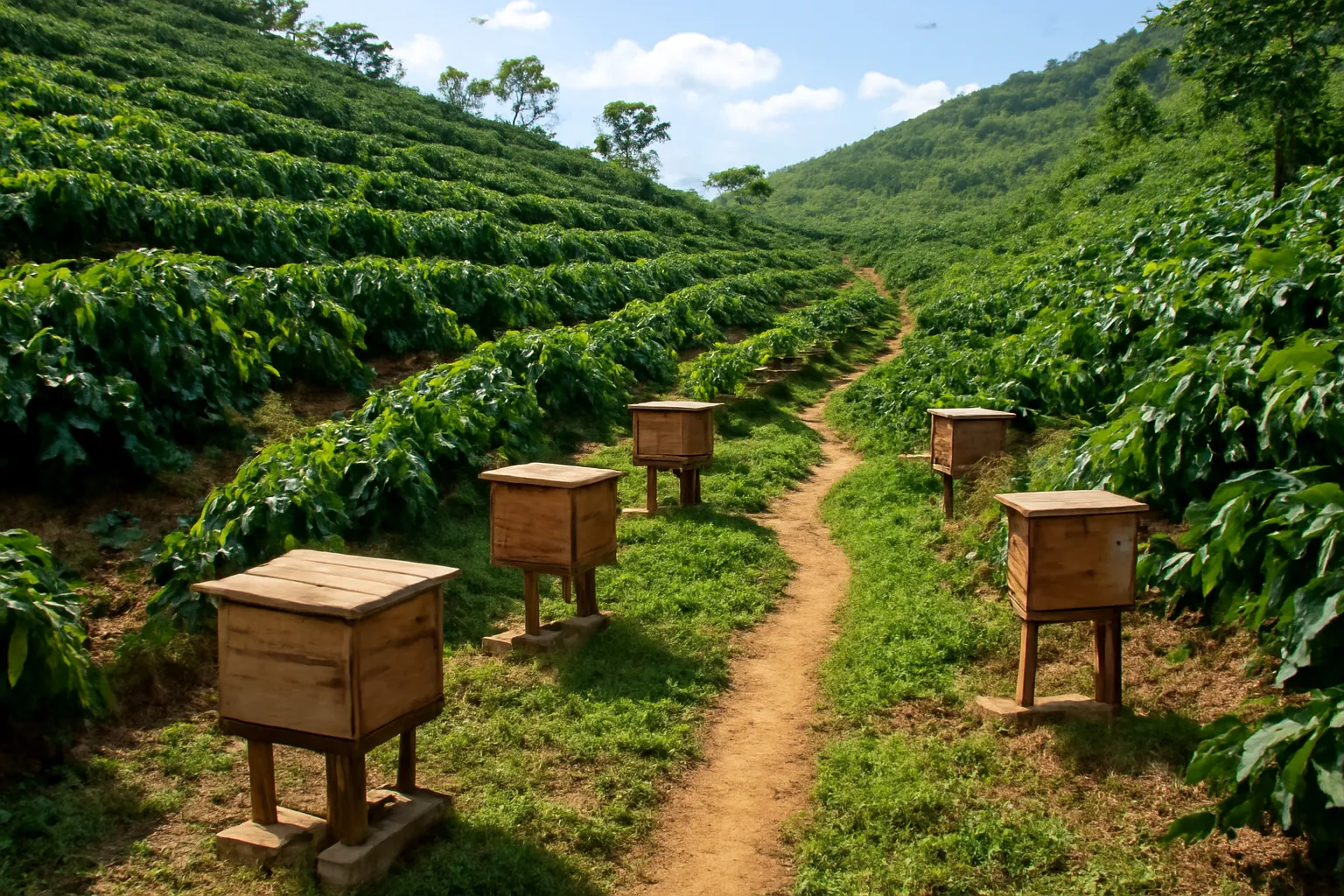
Stingless Bee Hives on Sloping Land: Stands That Stay Put
On steep coffee hills, hives stay safe when each stand sits level on a firm footing, water is led around it rather than under it, and the keeper has a
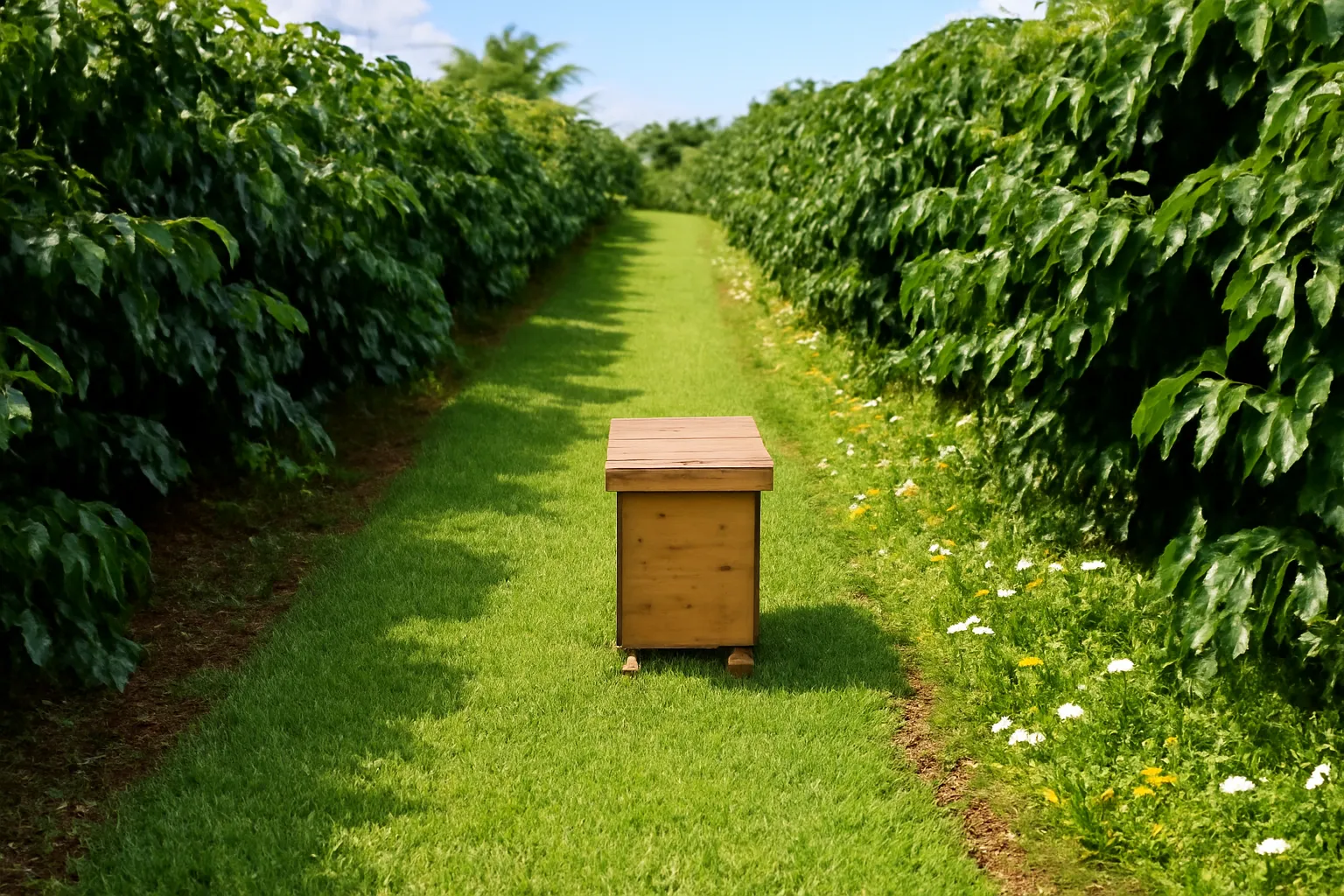
Herbicide in Coffee Gardens: What It Means for Bees
Herbicides seldom kill stingless bees outright, but they strip away the ground flowers that feed colonies between coffee blooms and can drift onto hiv
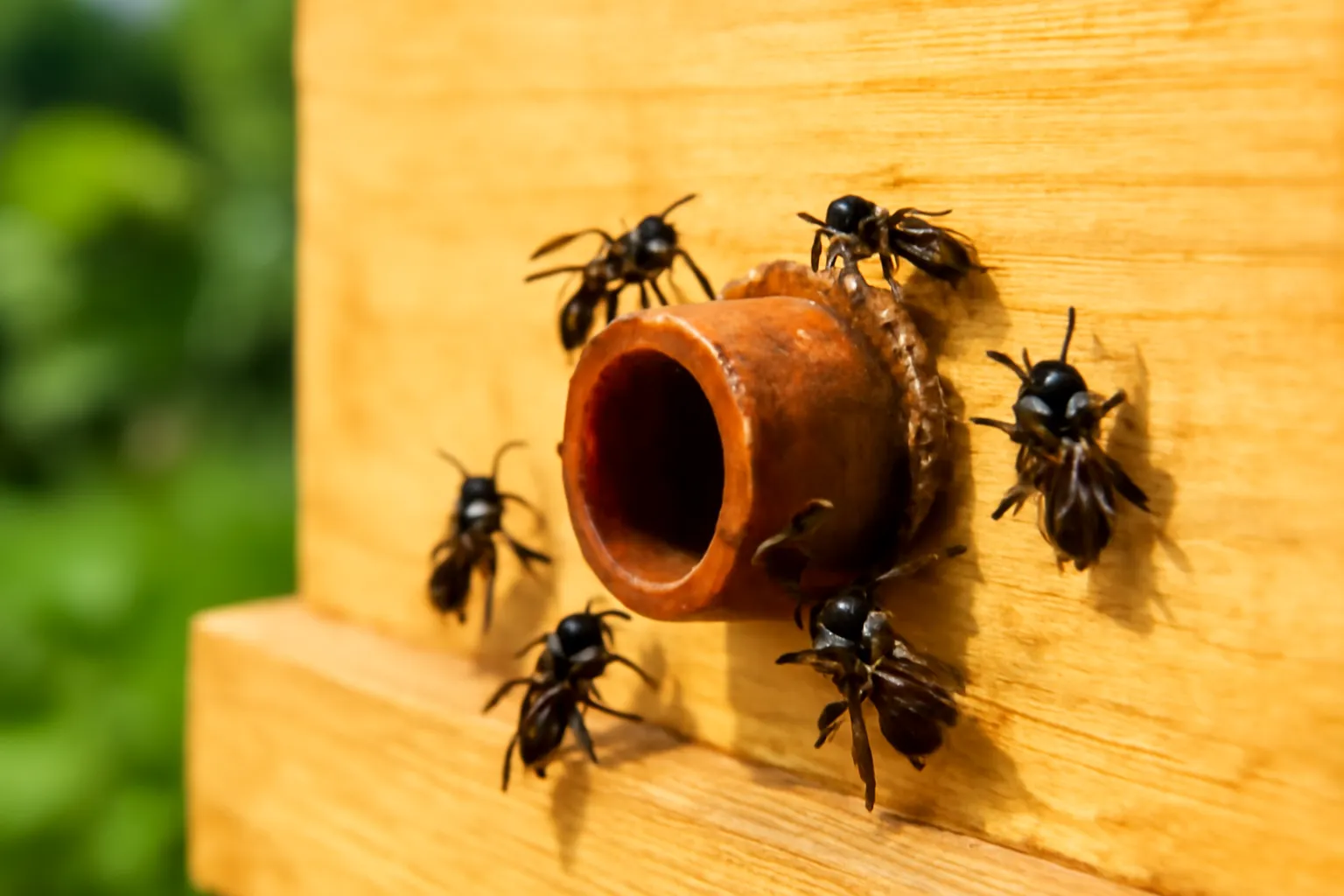
Do Honey Bees Rob Stingless Bees? Signs and Prevention
Honey bees can rob stingless bee colonies, mostly in lean months or after honey has been spilled; a narrow resin entrance, clean harvests and good spa
Storm Season Checklist for Highland Stingless Bee Hives
Before the highland storm season, give every hive a tight roof, a firm stand and a clear drain; after each storm, check for water inside, moved boxes,
 ›
×
›
×

MoraBee is the international name of Ong Moc, a stingless bee farm in Ta Dung, Lam Dong, among forest and coffee gardens: unblended honey in clean jars, starter colonies, and farm visits.
Vietnamese stingless bee honey from the highlands
A brand by Tên Miền Đẳng Cấp
© 2026 MoraBee. All rights reserved. · Copyright · OD-3864-C503