Do Honey Bees Rob Stingless Bees? Signs and Prevention
Yes, honey bees sometimes rob stingless bee colonies. It happens mostly when flowers are scarce, when a stingless bee nest is weak, or when honey has been spilled during an inspection or harvest. A narrow entrance the stingless bees can guard, clean harvesting habits and some distance between the two kinds of hive prevent most of it.
Honey bees are kept in many parts of the Central Highlands, often moved around coffee and other crops during flowering. If you keep stingless bees in Ta Dung, there is a fair chance that honey bees from a neighbour’s apiary or a wild colony are flying over the same garden. Most of the time the two simply share the flowers. Robbing is the exception, and it is worth knowing what it looks like.
Why honey bees and stingless bees end up competing
Honey bees, the genus Apis, are larger than stingless bees and live in much bigger colonies. They search widely for food and, like any bee, are drawn to the smell of concentrated sugar. A stingless bee nest is full of small wax pots of honey, and when the air near the entrance smells of it, a honey bee forager may try to get inside.
In good flowering months this rarely happens, because there is easier food everywhere. The trouble begins in the lean weeks between flowerings, at the end of the dry season or in long spells of rain, when honey bees are hungry and searching hard. A spill of honey, a box left open, or a weak colony with few guards gives them a chance.
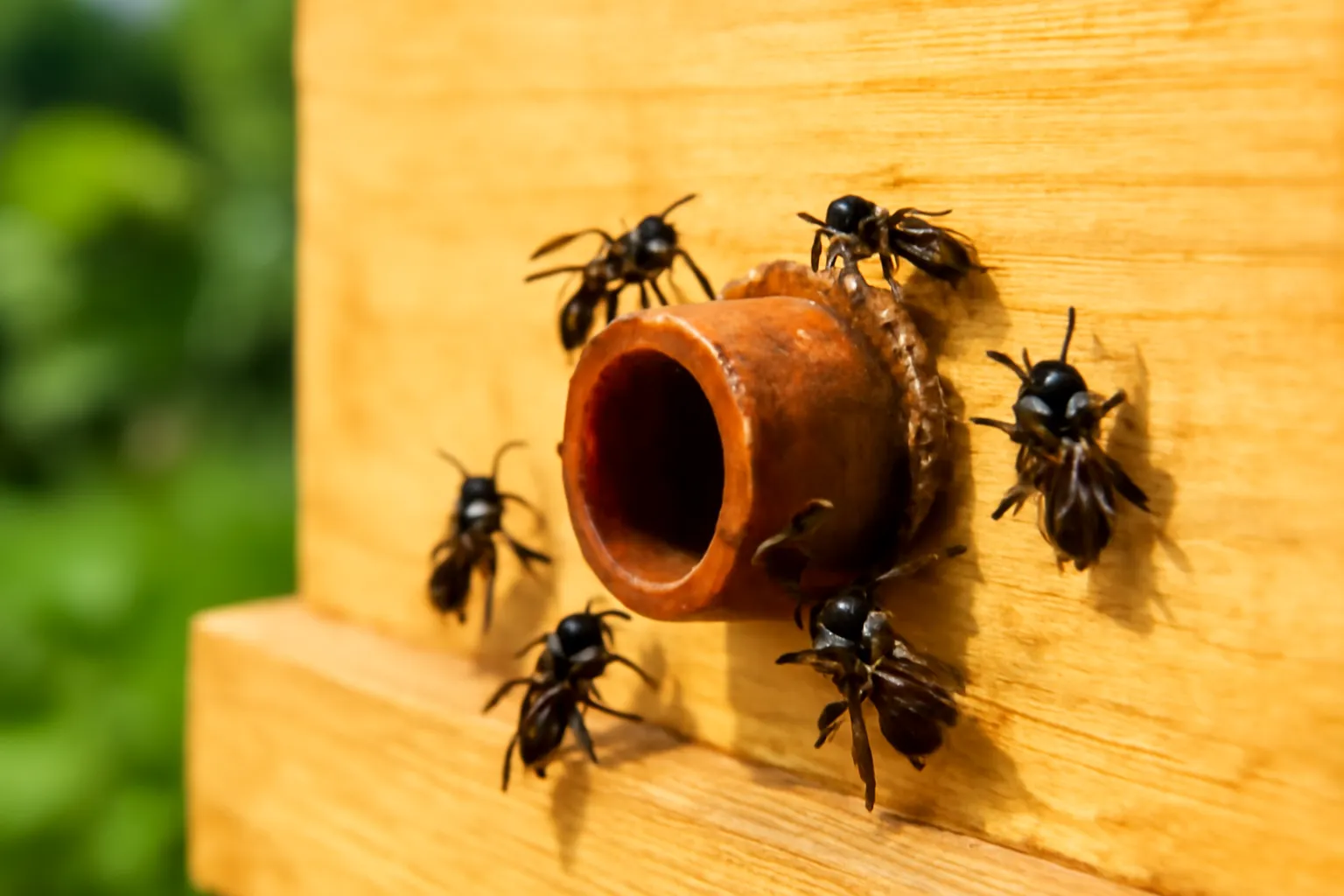
Stingless bees cannot sting, but they are far from helpless. Guards gather at the entrance tube, bite and grapple with intruders, and smear sticky resin on them. A strong colony with a small, well-guarded entrance usually wins. A weak colony with a wide opening may lose its stores over a few days.
Robbing is not only an Apis problem. Stingless bee colonies can also rob each other, which looks similar but involves small dark bees on both sides. The same prevention works for both.
Signs of robbing at the entrance
Larger, lighter bees at the entrance. Honey bees are noticeably bigger and more striped than the small dark stingless bees. Several of them around one entrance is a warning.
Zigzag hovering. Robbers fly back and forth in front of the entrance, testing it, rather than flying straight in.
Fighting on the landing area. Bees locked together, rolling on the box or the ground in front of it.
Dead bees of both kinds. A small heap of mixed dead bees below the hive after a day of activity.
Frantic activity at odd times. A sudden rush of traffic in late afternoon, when flight is usually calmer, can mean robbers are at work.
Wax crumbs at the entrance. Robbers tearing at pots leave flakes of wax and resin outside.
Sticky honey on the box. Honey leaking from the entrance or seams often follows broken pots.
Unusually heavy outgoing bees. Honey bees leaving the entrance heavy and slow, rather than arriving loaded, are carrying stolen honey.
Fewer guards. After a robbing episode, the entrance can look strangely empty.
Ants follow. Spilled honey and a weakened colony soon attract ants.
Lighter box. Lifting the hive and feeling it suddenly lighter than last week is a late but clear sign.
What to do when robbing starts
Act the same day. Narrow the entrance immediately so only one or two bees can pass at a time. A piece of wood, a lump of wax, or simply pressing the resin tube gently smaller works. Stingless bees will often finish the job themselves with resin once they have a smaller opening to defend.
Remove anything that smells of honey nearby. Wipe the box, clean drips from the stand and ground, and take away tools or containers with honey on them. If you were in the middle of a harvest, stop and close up.
If robbers keep coming, close the entrance fully for a few hours in the hottest part of the day, keeping the box shaded and ventilated, and reopen in the evening when robbers have gone home. Some keepers drape a damp light cloth over the front of the hive, which confuses robbers but still lets the residents find their way.
For a colony that is attacked repeatedly, moving it a few hundred metres away from the honey bee colonies is often the most effective step. Whatever you do, do not spray anything at the robbers: any product that harms honey bees also harms your stingless bees.
Preventing robbing before it starts
Keep entrances small. Most stingless bee colonies build their own narrow resin tube. Do not widen it.
Harvest in the cool evening. Fewer foragers are flying, and robbers are less active.
Work cleanly. Use a tray under pots, close the box quickly and never leave harvested honey uncovered nearby.
Do not feed in open dishes. Open sugar syrup or honey brings every bee in the area. Feed inside the hive if feeding at all.
Keep colonies strong. Strong colonies guard their entrances well. Combine or protect weak ones.
Space your hives from Apis hives. Keep stingless bee boxes away from honey bee apiaries where you can choose.
Talk to honey bee keepers. Let them know where your stingless bees are, especially when they bring hives in for flowering.
Watch lean seasons. The end of the dry season and long rainy spells deserve more frequent checks.
Seal cracks. Robbers find gaps that guards cannot reach. Seal seams on the outside of the box.
Avoid inspections in a dearth. Opening the nest releases honey smell. Keep inspections short and necessary.
Never leave broken pots outside. Wax and honey from a harvest should be cleaned up and taken indoors.
Can honey bees and stingless bees share a garden?
In most places they can, and often they do without incident. The two kinds of bee prefer somewhat different flowers and forage in different ways. Many coffee gardens in the highlands have both, and keepers on both sides benefit from good flowering in the same landscape.
The main shared risk is crowding in lean times. When many honey bee colonies arrive for a flowering and stay after it ends, hungry foragers may test every source of sugar around them, including stingless bee nests. Planning with neighbours, keeping some distance and watching closely in those weeks makes a difference.
If you are thinking of keeping both yourself, place them apart and treat stingless bee hives with extra care during honey bee inspections and harvests, which release more honey smell.
The calm approach is the useful one: robbing can happen, it is usually preventable, and a strong, well-housed stingless bee colony is good at defending itself.
Frequently asked questions
Can stingless bees rob honey bees?
Stingless bees rarely rob honey bee hives, which are larger and well defended. They are more likely to rob other stingless bee colonies that are weak.
Will robbing kill a stingless bee colony?
A single short episode usually does not, but repeated robbing can drain stores and leave the colony too weak to recover. Act quickly at the first signs.
Are wild honey bees or managed honey bees more of a problem?
Either can rob. Large apiaries brought in for flowering put more foragers in one area, so robbing pressure may be higher nearby when flowers run out.
Should I reduce the entrance permanently?
Most stingless bee colonies keep the entrance narrow themselves. Leave their resin tube as they build it rather than widening or enlarging it.
Does robbing affect the honey I harvest?
A robbed colony has less honey, and broken pots may let in ants or flies. Do not harvest from a colony that is recovering from robbing.
Written by the team behind a working stingless bee farm about 40 km from Ho Chi Minh City, Vietnam. Articles come from day-to-day work at the farm; technical figures are stated as ranges, not promises.
About the team →
Coffee Spraying Season: Protecting Stingless Bee Hives
Stingless bee hives can live safely among coffee gardens if you know when neighbours spray, keep bees away from treated blossom, and follow the label
Animals That Raid Stingless Bee Hives Near the Forest
At the forest edge the real hive raiders are ants, lizards, toads and a few climbing mammals; a smooth stand, a tight lid and a narrow entrance stop m

Stingless Bee Hives on Sloping Land: Stands That Stay Put
On steep coffee hills, hives stay safe when each stand sits level on a firm footing, water is led around it rather than under it, and the keeper has a
Herbicide in Coffee Gardens: What It Means for Bees
Herbicides seldom kill stingless bees outright, but they strip away the ground flowers that feed colonies between coffee blooms and can drift onto hiv
Storm Season Checklist for Highland Stingless Bee Hives
Before the highland storm season, give every hive a tight roof, a firm stand and a clear drain; after each storm, check for water inside, moved boxes,
 ›
×
›
×

MoraBee is the international name of Ong Moc, a stingless bee farm in Ta Dung, Lam Dong, among forest and coffee gardens: unblended honey in clean jars, starter colonies, and farm visits.
Vietnamese stingless bee honey from the highlands
A brand by Tên Miền Đẳng Cấp
© 2026 MoraBee. All rights reserved. · Copyright · OD-3864-C503